



Article by
M. Skipper
Founder & Lead · Craft'n Build Creator Studio
A beautiful moodboard is not a design; it's a suggestion. Most practitioners realize too late that aesthetic intuition cannot substitute for the rigorous structural logic required in professional interior architecture. You might find yourself frustrated by surface-level tutorials that focus on "vibes" while ignoring the technical depth needed to execute a complex renovation. Choosing the right interior design skill building courses is the difference between being a decorator who guesses and a designer who knows. It's about moving past the fear of producing flawed layouts and adopting a methodology that prioritizes technical precision from the initial sketch.
We understand that the transition from creative enthusiast to master practitioner requires a disciplined approach to tools like CAD and AI. You want a repeatable workflow that doesn't crumble when faced with real-world engineering constraints. This 2026 buying guide promises to help you navigate the landscape of professional education so you can master the "why" behind every structural decision. We'll explore how to integrate modern digital tools into a traditional, logic-first framework, ensuring you have the confidence to lead high-level projects with absolute authority.
Key Takeaways
- Shift your perspective from surface-level decorating to a logic-first architectural methodology that ensures structural integrity in every project.
- Learn to identify high-quality interior design skill building courses that prioritize technical drawing, 3D CAD mastery, and disciplined AI integration.
- Use a specialized "Rigor Rubric" to evaluate programs, prioritizing technical reference guides over simple video lectures for lasting professional utility.
- Discover how to bridge specific professional gaps by choosing specialized deep-dive modules rather than generic, surface-level certifications.
- Establish a repeatable, professional-grade workflow that seamlessly bridges the gap between traditional craftsmanship and modern digital innovation.
Beyond Aesthetics: Why Logic-Driven Interior Design Skill Building Courses Are Essential
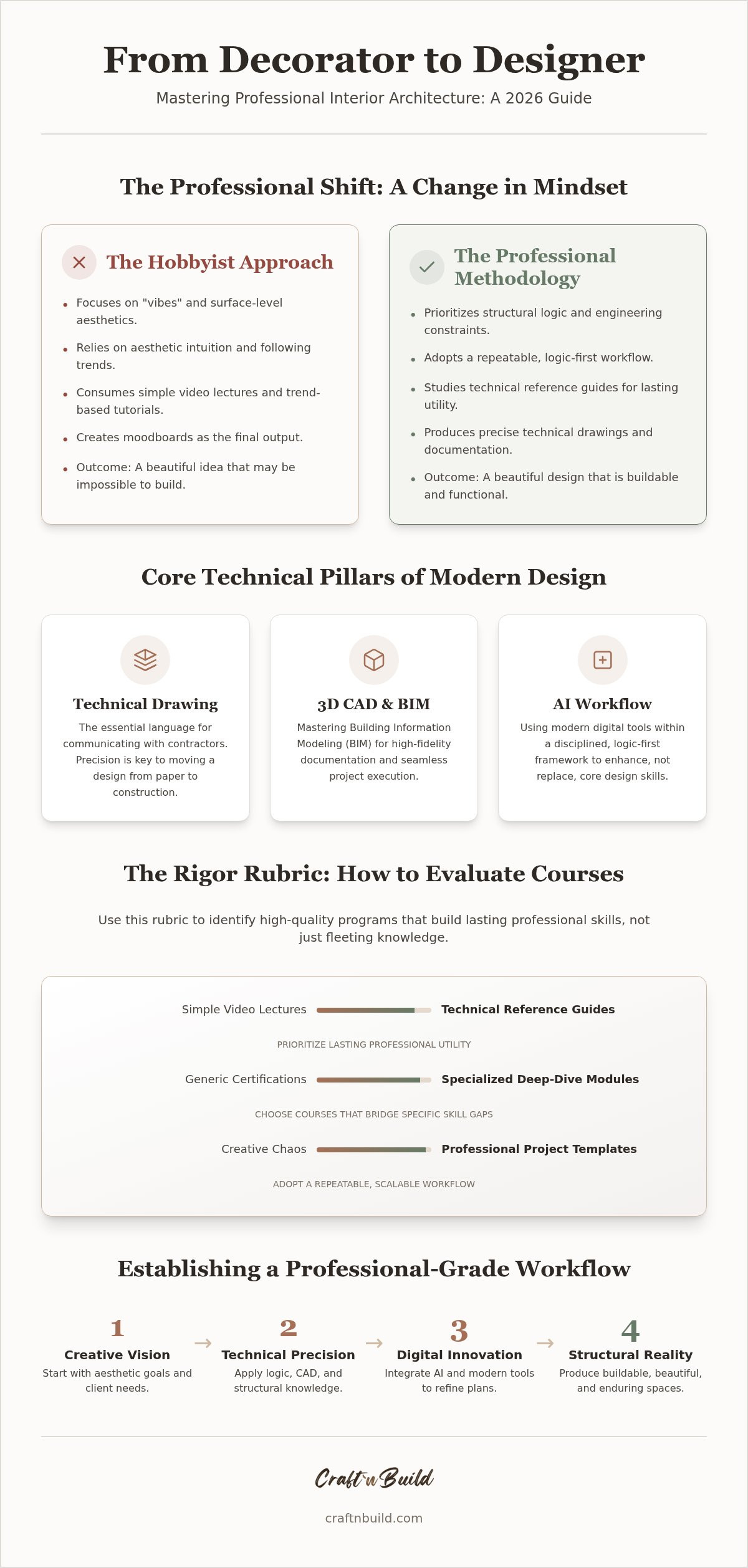
Professional interior design is a discipline of structural logic. It's not merely a collection of aesthetic choices. While hobbyists focus on the surface, the 2026 market demands a deep understanding of engineering and manufacturing constraints. This shift from "decorating" to "interior architecture" defines the modern professional. Without a foundational methodology, intuitive styling often leads to project failure. Designs that look excellent on a screen may be impossible to build or functionally flawed. To understand the full scope of these responsibilities, one can look at a comprehensive overview of the interior design profession to see how the field has evolved into a technical science.
Success in this industry requires a logic-first mindset. It's about understanding how materials behave and how spaces function under pressure. High-quality interior design skill building courses bridge the gap between creative vision and structural reality. They provide the technical scaffolding that allows a designer to produce work that is both beautiful and buildable. In a global market projected to reach nearly USD 196 billion by 2026, the demand for designers who can navigate complex technical requirements has never been higher.
The Gap Between Hobbyist and Professional Education
Hobbyist courses often prioritize trends and color palettes. These are ephemeral. Professional education, however, focuses on space planning and structural logic. Technical precision is the only way to ensure design integrity when a project moves from paper to the construction site. You must move from visual inspiration to technical documentation. If you can't provide a contractor with a precise drawing, your design remains a dream, not a reality. True mastery comes from learning the "why" behind every structural decision, ensuring your work stands up to professional scrutiny.
The Role of Methodology in Modern Design
Methodology is the backbone of studio efficiency. A repeatable design workflow reduces errors and allows you to scale your practice with confidence. Serious learners should prioritize interior design skill building courses that offer professional project templates. These tools provide the structural anchors needed for complex projects. They turn a chaotic creative process into a streamlined system of production. For those ready to commit to this level of rigor, The Design Key: Master Professional Interior Architecture in 2026 provides the necessary framework for professional mastery. Adopting a logic-first approach isn't just about better designs; it's about building a sustainable, authoritative career.
The Technical Pillars of Interior Architecture Skill Development
Professional interior design in 2026 is built on three technical pillars: Technical Drawing, 3D CAD, and AI Workflow. These aren't optional extras. They are the essential language of the modern studio. Mastering these through interior design skill building courses allows you to communicate with contractors and manufacturers with absolute clarity. While some schools still focus primarily on history and fabrics, the industry has moved toward Building Information Modeling (BIM) and high-fidelity technical documentation. This shift requires a commitment to technical precision that goes far beyond aesthetic intuition.
Material knowledge is often dismissed as a builder's concern. This is a mistake. Understanding processes like ammonia fuming of hardwoods or the intricacies of joinery is a fundamental design skill. It's the difference between picking a color and specifying a finish that reflects true craftsmanship. A designer who understands how brass hardware is cast or how a joint is formed can design for longevity and structural integrity. Similarly, a professional must grasp the technicalities of ventilation and lighting to ensure the space is both habitable and logically sound.
Look for courses that provide downloadable CAD assets. Hands-on practice with professional-grade furniture concepts is essential for developing a logic-first workflow. You can explore how these pillars fit into a larger career path by reviewing our interior design programs.
Mastering Technical Drawing and Floor Planning
Precision in floor plans is the skeleton of every project. If the layout is logically flawed, no amount of styling can save the result. Using tools like The Floor Plan Design Key helps you master logical layouts before moving into 3D environments. This transition from 2D sketches to 3D CAD furniture design is where your vision gains structural weight. It's about moving from a "look" to a "build" by ensuring every millimeter is accounted for in the technical documentation.
Integrating AI into the Design Workflow
AI implementation is transforming the ideation phase. It's not about "generating pretty pictures." It's about systematic logic. Designers use AI to simulate lighting conditions or test spatial constraints rapidly. The AI Implementation Trilogy serves as a professional benchmark for this integration. It teaches you to use AI for high-level problem solving rather than superficial renders. This ensures your workflow remains efficient and technically grounded, allowing you to handle the complexities of modern interior architecture with confidence.
How to Evaluate Professional Interior Design Programs for Rigor and Depth
Selecting the right interior design skill building courses is a strategic investment in your technical authority. You must look beyond marketing promises of creative freedom and evaluate the actual rigor of the curriculum. A professional program should function as a master practitioner's manual, not a collection of moodboard tips. It's vital to prioritize instruction that emphasizes the "why" before the "how." Without understanding the underlying logic of a space, you're simply replicating patterns without purpose. This disciplined approach ensures that your designs are structurally sound and logically defensible.
Demand "Technical Reference Guides" over simple video content. These guides serve as permanent anchors in your professional library. They provide the precise data points, clearances, and material specifications that you'll need long after the course ends. Check the quality of the project templates provided. Are they studio-ready documents that a contractor can actually read? If the templates are merely for show, the course lacks the depth required for real-world execution. Technical precision is the only way to ensure your vision survives the transition from concept to construction.
Rubric for Professional Course Selection
When evaluating a curriculum, use a strict set of criteria to ensure it meets professional standards. A systematic approach to your own education mirrors the organized nature of a professional design workflow.
- Specialized Logic: Look for deep dives into high-stakes areas like Kitchen Design, Bathroom Design, and Utility Room logic.
- Technical Assets: A rigorous course must include professional CAD downloads and detailed site survey guides.
- Practitioner Authority: Verify the instructor's background. You need a master who has spent years in the field, not someone who only teaches theory.
Avoiding the "Style-Only" Trap
Be wary of programs that over-emphasize "finding your style" or "curating your aesthetic." These are often red flags for a lack of technical substance. Style is a byproduct of mastery; it shouldn't be the primary focus of your education. Professional value lies in learning technical standards and structural logic. Masterclasses focusing on specific artisanal techniques, such as ammonia fuming of hardwoods, add more value than broad overviews. For a deep dive into the necessary precision, study the Interior Design Technical Drawing Course: Mastering Structural Logic and Precision. This ensures your growth is rooted in the logic-first mindset that defines the 2026 industry.
Mapping Your Career Path: Selecting Courses Based on Skill Gaps
Professional growth in interior architecture is a deliberate process of closing technical gaps. You don't need another generalist overview; you need a targeted curriculum that addresses your specific shortcomings. Identifying whether your weakness lies in technical precision, digital workflow, or material expertise is the first step toward mastery. High-quality interior design skill building courses should allow you to stack knowledge systematically, moving from foundational logic to advanced execution. This modular approach ensures you aren't wasting time on concepts you've already mastered while leaving critical engineering principles unaddressed.
Specialized deep dives offer far more value than broad certifications in a competitive 2026 market. For instance, a focused Kitchen Design course provides the granular technical data and clearance requirements that a general program simply cannot cover. Stacking these specialized modules allows you to build a custom professional curriculum tailored to the high-end projects you intend to lead. Every course you select should provide technical reference guides that act as permanent anchors for your studio's workflow. You can begin exploring these specialized paths by reviewing our interior design programs.
For the Aspiring Professional: Foundations in Logic
If you're transitioning from aesthetic intuition to professional practice, start with a total methodology overhaul. Prioritize The Design Key Full Master Programme to establish a logic-first framework for every project. This foundation must include a disciplined approach to color, such as the Colour System, which focuses on building professional palettes based on light science and material integrity. Mastery also requires learning how to handle The Brief, ensuring absolute client alignment before a single drawing is produced.
For the Experienced Designer: Technical Refinement
Experienced practitioners should focus on bridging the gap between traditional manual craft and modern digital tools. Integrating Design Concepts in 3D CAD format into your workflow adds structural weight to your concepts. Refine your expertise in high-stakes areas by mastering the Bathroom Design and Bedroom keys, which cover advanced construction principles. Finally, implement the AI Implementation Trilogy to increase studio efficiency without sacrificing technical rigor. This combination of traditional logic and modern innovation is the hallmark of a master designer in 2026.
The Craft'n Build Collection: Master the Art of Making
Craft'n Build operates as a master practitioner's studio. Our interior design skill building courses are designed for those who reject superficiality. We provide a modular mastery system that respects both the tactile history of craftsmanship and the digital precision of 2026. This isn't a collection of disparate tutorials; it's a structured curriculum where traditional artistry meets modern architectural function. By bridging design insight with hands-on CAD application and professional project templates, we ensure your education translates directly to professional-grade output.
The Skill Building Online Courses collection serves as the definitive resource for serious apprentices. Every module is a commitment to intentional, sustainable design. We don't just teach you to pick finishes. We teach you to understand the engineering logic that makes those finishes viable. This methodology ensures your studio produces work that is structurally sound and aesthetically timeless. It's about refining raw elements into finished products through a systematic, logic-first approach.
Standout Courses for Serious Makers
The collection focuses on high-stakes environments where technical errors are costly. The Design Key Series offers deep dives into specific room logic, including the Kitchen Design, Bathroom Design, and Entry keys. These modules provide the structural anchors necessary for professional execution. For those navigating the cutting edge, the AI Implementation Trilogy provides the definitive guide for integrating systematic logic into architectural workflows. We also offer masterclasses in artisanal skills, such as brass hardware investment casting, allowing you to specify custom elements with absolute technical authority.
Investing in Your Professional Future
Professional-level resources are an investment in your studio's reputation. When you provide a client with a technically documented project, you aren't just selling a look. You're selling reliability. There is a quiet, profound satisfaction that comes from structural integrity and technical mastery. It's the confidence of knowing your designs will work exactly as intended when the builders arrive on site. Choosing to build your expertise through specialized interior design skill building courses is a declaration of your commitment to the craft. Browse the full collection of Skill Building Online Courses and start building with intention.
Building an Authoritative Career in Interior Architecture
Transitioning from a stylist to a professional architect requires more than just an eye for color; it demands a rigorous, logic-first methodology. By selecting high-quality interior design skill building courses, you move beyond superficial trends and master the structural precision that defines 2026 industry standards. We've explored how integrating professional-grade CAD downloads and systematic AI workflows into your practice ensures your designs are both buildable and logically sound. This disciplined approach is the foundation of a repeatable, efficient studio workflow that commands respect from contractors and clients alike. It's about moving from "what looks good" to "what works structurally."
Investing in your technical depth today secures your studio's reputation for years to come. Every floor plan and material choice should be backed by the quiet satisfaction of mastery and architectural integrity. We're here to guide you through this transition from creative enthusiast to authoritative practitioner. True craftsmanship is a journey of constant refinement and technical growth. We invite you to adopt this master practitioner mindset and begin the work of building with absolute structural integrity.
Master the Art of Making: Explore Our Skill Building Online Courses
Frequently Asked Questions
What is the difference between a general interior design course and a skill-building course?
A general course often prioritizes trends, color theory, and historical styles. In contrast, interior design skill building courses focus on the technical "how" and "why" of architectural execution. You'll move beyond moodboards to master space planning, structural logic, and manufacturing constraints. These courses provide a disciplined methodology that ensures your creative vision is buildable. They bridge the gap between intuitive styling and the technical rigor required for professional-grade interior architecture.
Do I need prior CAD experience to take professional interior design skill building courses?
You don't need prior CAD experience to begin your journey with professional skill-building. Most programs are designed to guide serious apprentices from manual sketches to digital precision. The curriculum typically introduces software as a tool for logic rather than just a drawing medium. You'll learn to use 3D CAD concepts to refine raw elements into finished products. The focus remains on the underlying design principles while you build technical proficiency in industry-standard tools.
How does AI implementation actually work in a professional design workflow?
AI implementation functions as a systematic tool for high-level problem solving rather than simple image generation. In a professional workflow, designers use AI to simulate lighting conditions, rapidly test spatial constraints, and streamline the ideation phase. It's about data-driven logic that enhances studio efficiency. By adopting a professional framework like the AI Implementation Trilogy, you ensure that digital innovation remains grounded in structural reality and technical precision rather than superficial aesthetics.
Are these courses suitable for self-taught designers or just architects?
These courses are specifically crafted for any serious-minded individual dedicated to mastering the craft, whether self-taught or academically trained. The "Master Practitioner" guide approach works for apprentices who value preparation and deep material knowledge over quick certifications. While the content is rigorous and technical, it remains accessible to those willing to adopt a logic-first mindset. The goal is to empower every designer to execute complex, high-level projects with absolute confidence and structural integrity.
What technical assets should I expect to receive with a professional-level course?
A professional-level course should provide a robust library of technical assets that function as permanent studio anchors. You should expect to receive high-fidelity technical reference guides, professional-grade CAD furniture concepts, and studio-ready project templates. These assets ensure that your learning translates directly into real-world application. Having access to downloadable CAD assets allows you to practice with the same precision required in a modern architectural studio, moving your work from concept to construction.
Can I take individual modules, or do I have to enroll in a full program?
You have the flexibility to take individual modules or enroll in a full master programme depending on your specific skill gaps. Our modular mastery system allows you to stack interior design skill building courses like Kitchen or Bathroom Design to create a custom curriculum. This approach ensures you aren't repeating concepts you already know while focusing on the technical refinement you actually need. It's a purposeful path toward mastery that respects your professional timeline and studio requirements.
How do these courses address the actual construction and engineering of furniture?
These programs address furniture through the lens of manufacturing logic and material science rather than just visual style. You'll explore the engineering behind joinery, the nuances of hardwood fuming, and the technicalities of brass hardware casting. Understanding these processes is a fundamental design skill that ensures structural integrity. By learning how a joint is formed or how a finish is applied, you can specify custom elements with the authority of a master practitioner.
Is there a focus on sustainable design and material integrity in these programs?
Material integrity and intentional design are core philosophical anchors in every course. We advocate for a "logic-first" mindset that prioritizes long-term utility and the refinement of raw elements into durable products. This approach naturally leads to more sustainable outcomes by reducing errors and focusing on high-quality craftsmanship. You'll learn to specify materials based on their intrinsic value and structural properties, ensuring that every project is both environmentally conscious and technically sound.
Partners
Craft'n Build welcome affiliate marketers, https://craftnbuild.com/pages/affiliate-partner-programme-1


Share:
Interior Design Project Templates: Professional Frameworks for Architectural Success
Interior Design Project Templates: Professional Frameworks for Architectural Success