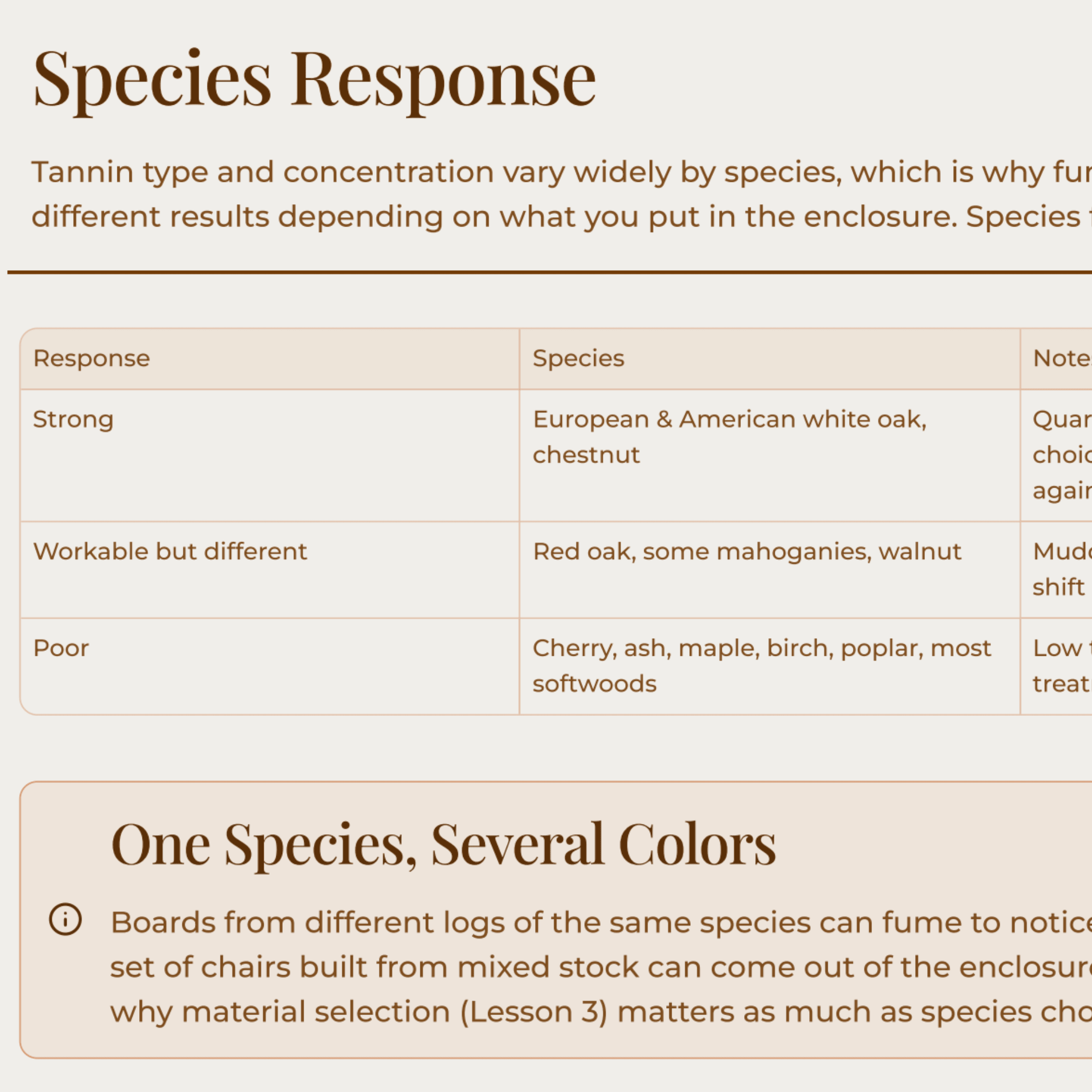
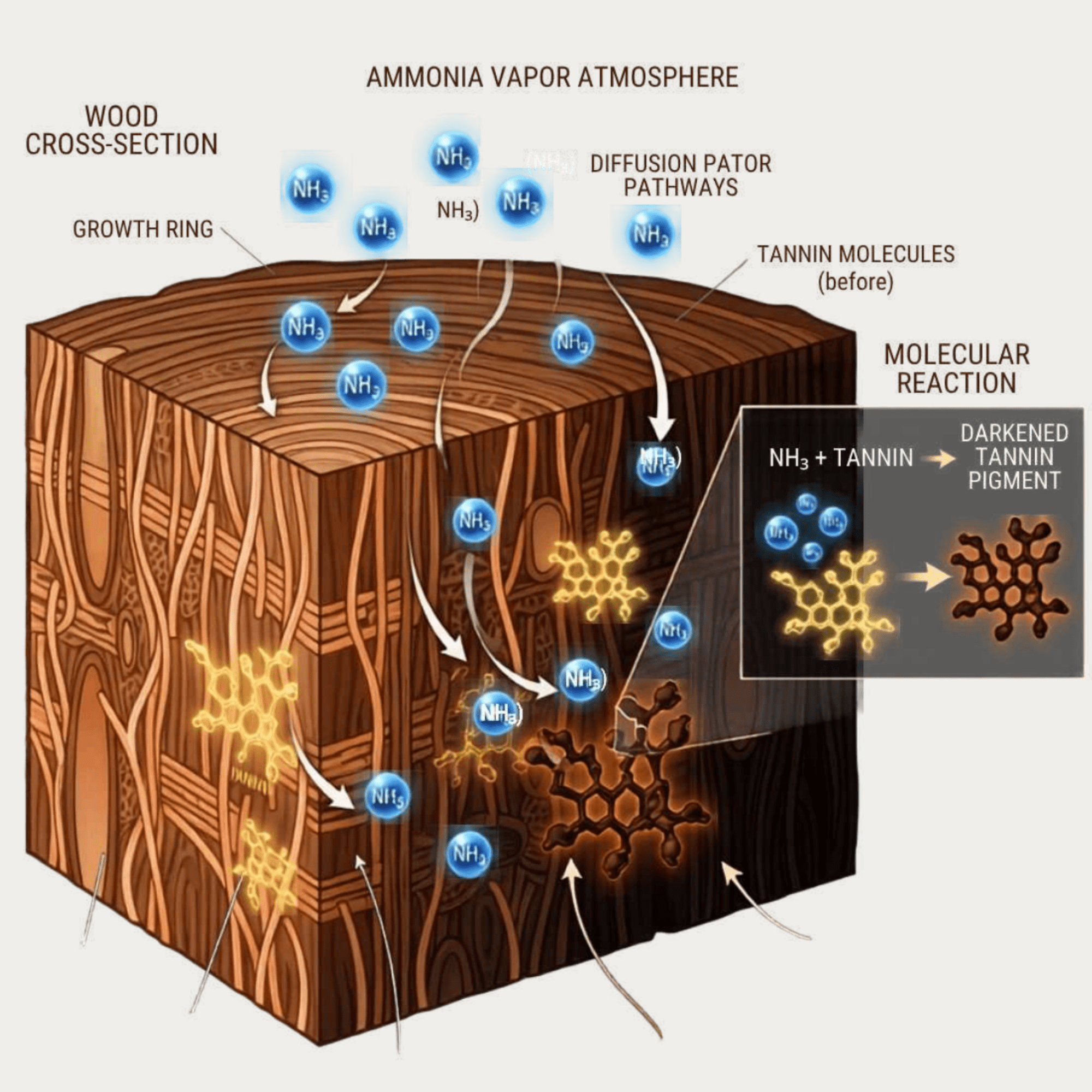
Ammonia fuming of hardwoods is a chemical process used to modify the colour of wood by reacting ammonia vapour with tannins within the wood fibers. This process does not add colour directly; instead, the ammonia vapour causes a reaction with tannins, resulting in a permanent colour change that forms inside the wood fiber. The reaction's outcome depends on the tannin content, moisture level, and wood species, producing various shades from board to board. The colour produced is resistant to sanding and glue squeeze-out, which can cause light ghosting. Proper preparation, control of reaction conditions, and safety measures are essential for achieving consistent results in ammonia fuming.
Materials required for ammonia fuming include selected hardwood species rich in tannins, such as oak, walnut, or chestnut. The process necessitates working-strength ammonia, typically sourced from chemical suppliers within the EU. Compatibility of enclosure materials, such as polyethylene or other non-reactive, airtight containers, is crucial to withstand ammonia vapour without degradation. Sourcing hardwoods with suitable tannin levels and understanding their moisture content helps in predicting outcome accuracy and achieving desired colour variations.
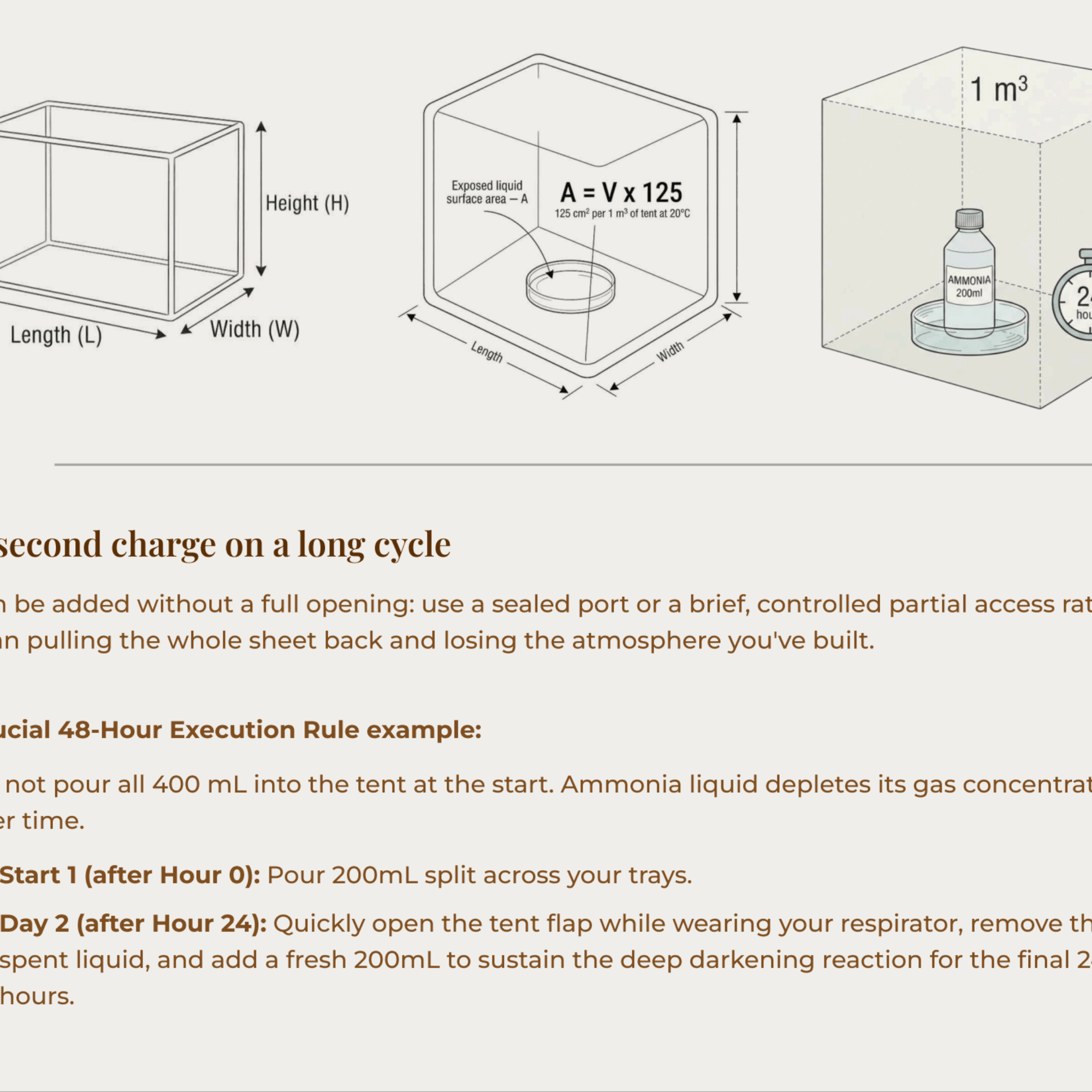
The dimensions for effective ammonia fuming depend on the size of the workpiece. Enclosures—such as sealed tents or chambers—must accommodate various board sizes. These enclosures should be made from airtight, non-reactive materials like polyethylene and fitted with tools and seals to contain vapour safely. Safety gear, including respirators, goggles, and gloves, is essential to protect against ammonia vapour exposure during the process. Proper setup ensures vapour containment and safety compliance.
Key features include:
- Use of working-strength ammonia sourced from the EU for predictable chemical reactions
- Controlled reaction conditions, including humidity and temperature, for consistency
- Airtight, non-reactive enclosures made from polyethylene or similar materials to contain ammonia vapour safely
- Pre-fuming surface preparation, including full assembly and finish-sanding, to ensure colour accuracy
- External monitoring of vapour cycles without compromising enclosure integrity
- Post-fuming procedures such as outgassing, neutralisation, and safe decommissioning of the setup
- Finishing options like oil, shellac, or lacquer to modify the final appearance and enhance contrast
Ammonia fuming is ideal for creating darkened, high-contrast wood surfaces suitable for architectural millwork, aged-looking furniture, or decorative panels that require rich, permanent colour variations. It is suited for professional woodworkers, artisans, and furniture makers seeking durable, visually striking finishes on hardwoods with high tannin content, offering a budget-friendly alternative to repeated staining or finishing steps while providing long-lasting results.
This comprehensive guide covers sourcing ammonia and hardwoods, safety protocols, enclosure setup, preparation steps, execution techniques, and finishing methods. It does not include unrelated treatments such as ebonizing or lime pre-treatments, which involve different chemicals and safety procedures. The resource provides detailed lessons, tables, and checklists hosted online to ensure a thorough understanding of safe and effective ammonia fuming processes for professional and serious woodworkers.
The package offers an in-depth, always-updated online reference, emphasizing safety through proper PPE, handling procedures, and process monitoring. It does not include physical media such as PDFs or videos but delivers a reliable, current resource suitable for