




Article by
M. Skipper
Founder & Lead · Craft'n Build Creator Studio
A moodboard is not a collection of aesthetic inspirations; it's the first technical document in a disciplined design workflow. You've likely felt the frustration of presenting a beautiful visual concept only to have a client question its practical substance or your professional authority. It's a common pain point. Without professional moodboard templates that prioritize structural logic, the gap between a "pretty picture" and a rigorous interior architecture framework feels insurmountable. When your visual ideas don't translate into a furniture cut list or a functional floor plan, the design process loses its integrity.
This article will teach you how to bridge that gap. By implementing a method-driven system, you can transform raw inspiration into a logical design concept that commands respect. We'll examine a repeatable framework for 2026 that moves beyond simple collage work. You'll learn how to establish a "logic-first" mindset that ensures your initial concepts lead seamlessly into technical drawings and precise execution. Mastery of this process ensures that every material choice and spatial arrangement is backed by professional authority and technical precision.
Key Takeaways
- Understand how a professional design concept functions as a logic-gate, bridging the gap between raw inspiration and technical execution.
- Identify the specific hierarchy of elements, including materiality and focal points, necessary to build a rigorous framework for interior architecture.
- Learn why utilizing professional moodboard templates specifically built for architects prevents the common technical errors found in generic graphic design tools.
- Master a systematic workflow that integrates the Mood Board Design Key to establish structural logic before beginning 3D CAD development.
- Transition from creating superficial visual collages to implementing a disciplined methodology that commands authority in client presentations.
Beyond Aesthetics: Why Professional Moodboard Templates are Logic-Gates
A professional moodboard is not a collage of inspiration; it's a disciplined logic-gate. It dictates every technical decision that follows in the design workflow. While many beginners view a moodboard as a way to "evoke a feeling," the professional practitioner understands it as the first technical document in a project. If a visual concept cannot be translated into a furniture cut list or a precise floor plan, it's a failure of methodology. Using professional moodboard templates ensures that your creative vision is anchored in structural logic from the very start.
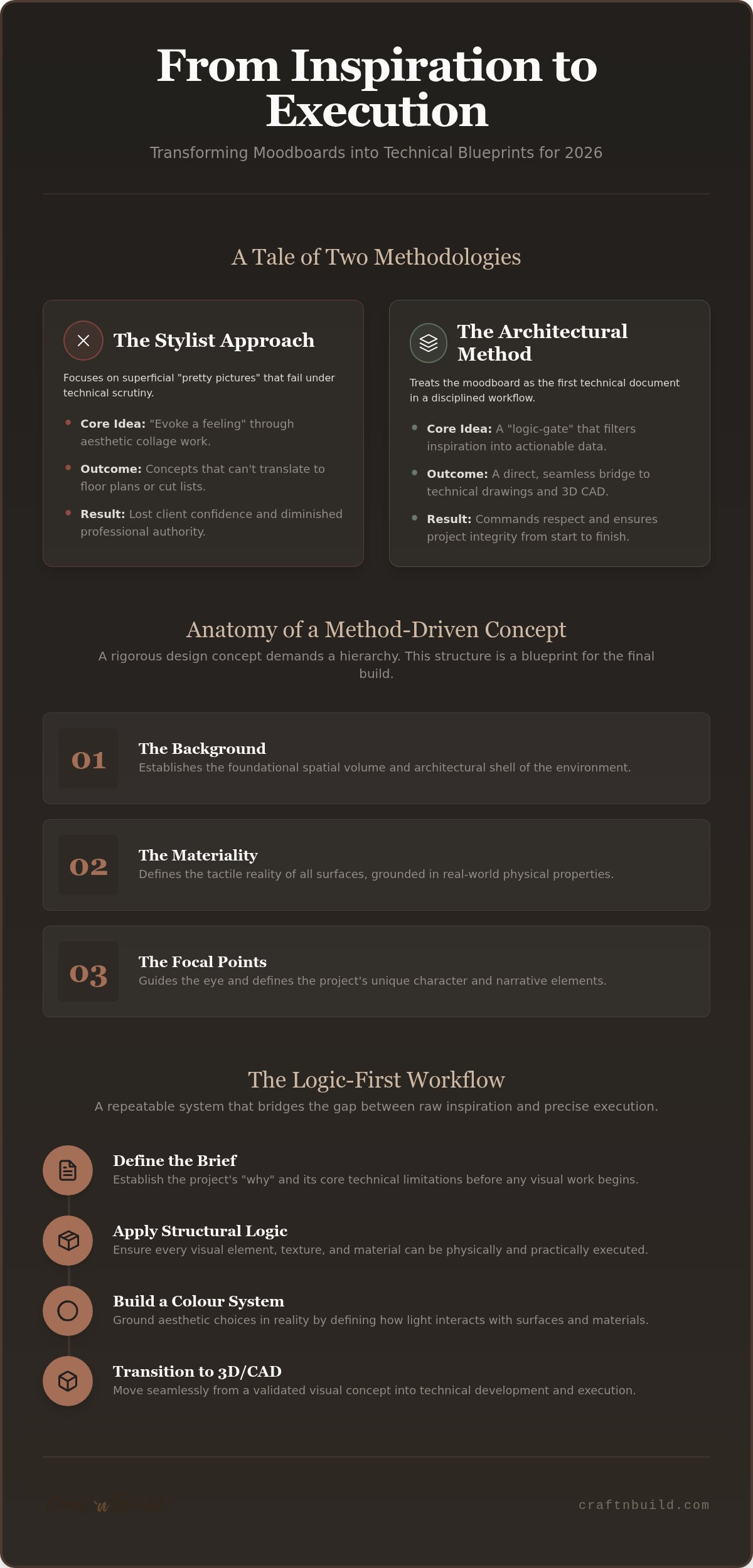
The "stylist" approach often relies on superficiality, creating "pretty pictures" that fall apart during the technical drawing phase. This leads to client rejection and lost authority. In contrast, the architectural methodology treats the moodboard as a bridge. It filters raw ideas into actionable data. Every material, texture, and focal point on the board must have a reason for existing. It's about the "why" before the "how." When you adopt a logic-first mindset, your moodboard becomes a reliable roadmap rather than a vague suggestion.
The Role of Methodology in Concept Development
A systematic approach prevents design drift. This is the phenomenon where a project loses its original intent as you move into the complexities of manufacturing and engineering. To maintain integrity, you must establish a foundation before selecting a single swatch. This begins with a rigorous understanding of the project's requirements. By utilizing The Brief - The Design Key Series, you define the structural constraints that will govern your visual choices. This ensures your professional moodboard templates aren't just aesthetic exercises but are grounded in the functional needs of the space.
- Define the Brief: Establish the "why" and the technical limitations first.
- Apply Structural Logic: Ensure every visual element can be physically executed.
- Maintain Consistency: Use the template to keep the design language unified across all phases.
Moving from Inspiration to Architectural Success
Raw inspiration is often chaotic. A professional template acts as a filter, refining these elements into a structured curriculum for the project. In the 2026 design landscape, the ability to move seamlessly from a visual concept to a 3D CAD environment is what separates the amateur from the expert. You don't just want a board that looks good; you want one that works. Architectural success is the intersection of utility and aesthetics. By focusing on deep material knowledge and systematic logic, you create presentations that command respect and ensure the structural integrity of the finished product.
The Anatomy of a Method-Driven Design Concept
A rigorous design concept requires more than a random assortment of images. It demands a hierarchy. When you use professional moodboard templates, you organize visual data into three distinct tiers: the background, the materiality, and the focal points. The background establishes the spatial volume. Materiality defines the tactile reality of the surfaces. Focal points guide the eye and define the project's character. This structure isn't just for show; it's a blueprint for the final build. Every image you include must serve a structural purpose. If a texture is shown, it must be achievable through specific manufacturing processes.
Integrating a systematic Colour System directly into your template ensures that your aesthetic choices are grounded in reality. You aren't just picking colors; you're building a logic that dictates how light interacts with surfaces. This prevents the common error of selecting a palette that fails under real-world lighting conditions. It's about creating a repeatable system that brings order to the creative process.
Material Knowledge as a Design Constraint
Professional design requires a deep respect for the physical properties of materials. Your moodboard should account for constraints like wood movement or the load-bearing limits of stone. High-quality professional moodboard templates allow you to represent these tactile qualities accurately. You move beyond the superficial swatch. Instead, you create a direct path from a visual material reference to a practical Furniture Cut List. This transition is vital for maintaining the integrity of your design from concept to the workshop floor.
The Logic of Professional Color Palettes
Building a color system is a technical task. It's about how pigments and materials work together across a cohesive environment. Use your templates to test this logic before you invest time in 3D CAD modeling. This ensures that the palette you've developed remains consistent from the initial moodboard through to the advanced stages of The Design Key Full Master Programme. By establishing this consistency early, you eliminate guesswork. You provide your clients with a sense of steady reliability. If you're ready to master these technical workflows, explore our interior design programs to refine your professional practice.
Professional Frameworks vs. Aesthetic Collages: A 2026 Comparison
In the 2026 design economy, time is your most valuable commodity. While "free" tools offer instant gratification, they often lead to expensive errors during the execution phase. A simple graphic design collage lacks the technical substance required for interior architecture. It doesn't account for the structural realities of a build. When you choose professional moodboard templates, you're investing in a framework that accounts for engineering constraints from the first pixel. This is the difference between a stylist and a professional practitioner.
Generic templates prioritize rapid customization over deep design thinking. They focus on grid layouts rather than technical data. A professional framework, however, integrates essential systems like ventilation and lighting directly into the visual concept. You aren't just placing images; you're documenting spatial requirements. This proactive approach eliminates the need for mid-project corrections that erode profitability and client confidence. It's about building a foundation that supports the entire project lifecycle.
Evaluation Framework for Professional Templates
Not every template meets the standard for professional practice. To ensure your workflow remains rigorous, evaluate your tools against these three criteria:
- Technical Annotation: Does the template provide space to define material specifications and manufacturing methods?
- Scalability: Is the visual concept easily translatable for Floor Plan Design?
- AI Integration: Does it facilitate a seamless transition into AI-driven rendering and automated workflows?
If your current tools don't meet these standards, you're likely losing time in translation. A disciplined template acts as a filter, ensuring only viable ideas move forward into the technical drawing phase.
The Long-Term Value of Professional Rigor
Adopting professional moodboard templates isn't just about the current project. It's about building a repeatable library of professional-grade assets. This systematic approach fosters deep trust with clients. They see a methodology that values precision over superficiality. By aligning your concept phase with the standards found in our Interior Design Project Templates, you establish a reputation for steady reliability. You stop being a person with "good taste" and start being an authoritative expert who delivers structural integrity. This transition is vital for project retention and long-term success in a competitive market.
Implementing Systematic Logic into Your Design Workflow
A disciplined workflow begins with a structured sequence. It's not enough to simply have the right tools; you must apply them through a repeatable methodology. When you integrate professional moodboard templates into your practice, you move from a place of guesswork to one of technical certainty. This process transforms your initial vision into a rigorous framework that survives the transition to reality. It's about ensuring every creative decision is backed by a logical reason.
Step 1: Define the Brief. Before you place a single image, you must understand the structural constraints. This foundation ensures that your creative choices are grounded in the functional requirements of the project. Step 2: Establish Visual Logic. Use The Mood Board Design Key to organize your concept. This step allows you to set a clear design language that dictates the project's direction. Step 3: Technical Audit. Evaluate every material and joinery detail for feasibility. If a concept cannot be manufactured, it shouldn't remain on the board. Step 4: Test in 3D. Finally, transition your concept into 3D CAD format. This stage validates your visual logic within a spatial environment and identifies potential conflicts before they reach the site.
Bridging the Gap to Technical Drawing
Your moodboard must function as a data source for your technical drawings. Every texture and focal point should imply a specific dimension or material specification. By extracting this information early, you ensure that the "why" of your concept survives the "how" of the CAD model. This bridge is essential for maintaining precision. Using professional moodboard templates as a reference point allows you to transition seamlessly into Interior Design Technical Drawing. It's about ensuring that the structural logic you established during the concept phase is accurately represented in the final construction documents.
AI Implementation for Modern Workflows
In 2026, efficiency is tied to how well you integrate modern tools into traditional workflows. You can use AI Implementation tools to generate material variations that adhere to your established template logic. This allows you to explore multiple aesthetic directions without losing the underlying structural integrity. AI executes the variations, but the professional template provides the structural logic. This synergy allows you to maintain authority while leveraging the speed of digital innovation. If you want to refine these technical skills and elevate your practice, you should join our interior design programs to master these advanced methodologies.
Elevate Your Practice with The Design Key Programs
Professionalism is a conscious choice to prioritize precision over superficiality. Throughout this guide, you've seen how professional moodboard templates function as more than visual aids; they're the foundational logic-gates of a successful project. However, the tool is only as effective as the methodology behind it. To truly command authority in client presentations and ensure the structural integrity of your builds, you must adopt a comprehensive system that governs every phase of the design process. This is the transition from being a serious learner to becoming a professional practitioner.
The Design Key is the definitive framework for those who respect the intrinsic value of craftsmanship and technical precision. It's a curriculum designed for the disciplined innovator who understands that high-level results require a rigorous approach. By moving beyond the "stylist" mindset, you gain the ability to execute complex tasks with steady reliability. You stop guessing and start building with a logic-first perspective that bridges the gap between traditional manual skills and modern digital execution.
Mastering the Full Interior Architecture Curriculum
In a competitive 2026 market, aesthetic style is easily replicated, but technical methodology is rare. True professional authority comes from deep material knowledge and the ability to defend every design choice with structural logic. This is the core philosophy taught within The Design Key Full Master Programme. The curriculum doesn't just show you how to use a template; it teaches you how to think like an interior architect. You'll learn to view a space as a series of integrated systems where utility and aesthetics intersect perfectly. This systematic approach ensures that your creative vision is always supported by a proven, repeatable path to success.
Next Steps for the Disciplined Innovator
Implementation is the final stage of mastery. You can start refining your practice today by moving away from "beginner" tools that prioritize speed over substance. Replace generic collages with professional moodboard templates that allow for technical annotation and material specifications. This shift in your workflow will immediately improve client trust and project retention. Your presentations will no longer feel like a collection of "pretty pictures" but will instead serve as an authoritative roadmap for the entire build. If you're ready to adopt this rigorous methodology and elevate your professional standing, explore our professional interior design programs to find the curriculum that matches your ambition.
Mastering the Architectural Workflow
Success in interior architecture requires a shift from superficial styling to a disciplined, logic-first methodology. You've learned that a visual concept must function as a technical roadmap, ensuring every material and spatial choice is grounded in reality. By utilizing professional moodboard templates, you bridge the gap between raw inspiration and the precise requirements of 3D CAD and construction documentation. This systematic approach doesn't just improve your workflow; it establishes your authority as an expert who values structural integrity over mere aesthetics.
The transition to a professional practitioner involves embracing deep design thinking and rigorous frameworks. It's about moving past the limitations of beginner tools to adopt a curriculum that reflects real-world professional standards. If you're ready to refine your craft and lead with technical precision, the next step is clear. Master the art of professional interior architecture with our comprehensive design programs. You have the ability to execute complex projects with steady reliability. We're here to provide the methodology that makes it possible.
Frequently Asked Questions
What makes a moodboard template "professional" versus generic?
Professional templates prioritize technical substance and structural logic over mere aesthetics. Unlike generic graphic design tools that focus on grid layouts for social posts, professional moodboard templates allow for material specifications, manufacturing annotations, and engineering constraints. They serve as the first technical document in a workflow; this ensures that every visual element is achievable in a real world build rather than remaining a simple collage.
How do I use a professional moodboard to inform my CAD designs?
Use the moodboard as a primary data source by extracting material properties and spatial hierarchies before beginning technical drawing. Each image on the board should imply specific dimensions or tactile qualities that dictate how you model elements in 3D. This methodology ensures your CAD designs remain faithful to the initial concept while maintaining the structural integrity required for manufacturing and final installation.
Can I use AI to help create professional moodboard templates in 2026?
AI can execute material variations and lighting simulations within your established template logic in 2026. While AI handles the rapid generation of visual options, professional moodboard templates provide the necessary structural constraints to keep the design viable. This synergy allows you to explore multiple aesthetic directions without losing the disciplined methodology required for interior architecture. It's about using technology to support your professional authority.
Do professional moodboards need to include technical data like lighting or ventilation?
Integrating technical data like lighting temperatures or ventilation requirements into your moodboard is essential for architectural success. A professional framework treats these systems as design constraints rather than afterthoughts. By documenting these requirements during the concept phase, you prevent mid project errors. This ensures that your visual presentation accounts for the functional realities of the space and the comfort of the inhabitants.
How does a professional template improve client communication in interior architecture?
Professional templates improve communication by presenting a rigorous, method driven concept rather than a subjective collection of images. This approach establishes your authority as an expert and builds client trust through transparency. When you can explain the structural logic behind every material and focal point, you eliminate ambiguity. It reduces the risk of client rejection because every choice is backed by professional reasoning.
Is it worth investing in a professional design program for moodboarding alone?
Investing in a professional program is about mastering a complete methodology, not just a single visual tool. While moodboarding is a vital step, its value lies in how it connects to the entire project lifecycle. A disciplined curriculum ensures you develop a logic first mindset. This elevates your entire practice beyond basic styling, ensuring that your concepts lead seamlessly into technical drawings and successful project execution.
How do I transition from a visual concept to a furniture cut list?
Transitioning requires auditing your moodboard for technical feasibility and material specifications. Every texture or swatch shown must be linked to specific manufacturing processes and material properties. By using professional moodboard templates that account for these details, you can extract the actionable data needed to build accurate furniture cut lists. This prevents errors during the fabrication phase and maintains the integrity of your original design.
What are the essential elements of a method-driven design board?
A method driven board must include a clear hierarchy of elements: background, materiality, and focal points. It should also incorporate technical annotations, material specifications, and a systematic color logic. These elements ensure the board functions as a bridge to technical execution. They filter raw inspiration into a structured curriculum that guides every subsequent decision in the design workflow, from floor plans to final builds.
Partners
Craft'n Build welcome affiliate marketers, https://craftnbuild.com/pages/affiliate-partner-programme-1


Share:
Interior Design Skill Building Courses: A 2026 Professional Buying Guide
Interior Design Documentation: 2026 Professional Framework