




Artículo de
M. Skipper
Fundador y director · Craft'n Build Creator Studio
Tu «buen ojo para el diseño» es la herramienta menos importante de tu arsenal profesional. Aunque la intuición estética puede ayudarte a elegir un tejido, no te ayudará a calcular las tolerancias estructurales de un tabique a medida ni a coordinar los requisitos técnicos de obra de una renovación de alta gama. Muchos profesionales se sienten poco preparados porque han invertido en cursos de diseño de interiores en línea centrados en el estilismo superficial en lugar de la lógica disciplinada de la arquitectura de interiores. Es frustrante descubrir que el talento para decorar no se traduce en la capacidad de elaborar una lista de corte de mobiliario o un dibujo técnico preciso.
Reconocemos que la verdadera confianza nace del dominio, no solo de los moodboards. Esta guía demostrará por qué la arquitectura profesional se apoya en sistemas técnicos por encima del estilo subjetivo y cómo elegir un curso que ofrezca conocimientos aplicables en el mundo real. Presentaremos los flujos de trabajo profesionales que convierten conceptos iniciales en espacios terminados y estructuralmente sólidos, para garantizar que tengas las herramientas necesarias para liderar cualquier proyecto con autoridad. Al centrar tu atención en la lógica estructural y la precisión técnica, dejarás atrás la superficialidad y adoptarás la metodología de un profesional experto.
Conclusiones clave
- Distingue entre la decoración de interiores superficial y el rigor estructural de la arquitectura de interiores para garantizar que tu trabajo cumpla los requisitos profesionales de obra.
- Identifica los módulos técnicos esenciales que deben ofrecer los cursos profesionales de diseño de interiores en línea, centrándote específicamente en el conocimiento de los materiales y los principios de ensamblaje.
- Domina una mentalidad de «la lógica primero» que integre herramientas modernas como la IA y el CAD en un flujo de trabajo arquitectónico disciplinado, en lugar de depender únicamente del software.
- Aprende a evaluar los planes de estudio para detectar «señales de alerta», como una dependencia excesiva de las tendencias estéticas y la falta de formación en dibujo técnico.
- Gana la confianza necesaria para ejecutar proyectos complejos yendo más allá del «buen gusto» hacia una metodología de diseño profesional y reproducible.
El mito de la intuición estética: por qué los cursos de diseño de interiores en línea deben priorizar la lógica técnica
La intuición estética es un mito que impide a muchas personas talentosas alcanzar la maestría profesional. Sugiere que el diseño es un don con el que se nace, en lugar de una disciplina que se desarrolla. Esta creencia es peligrosa. Lleva a los aspirantes a diseñadores a ignorar los fundamentos técnicos de su oficio. El éxito profesional en un entorno de estudio no se basa únicamente en el «buen gusto». Se construye sobre una base de lógica sistemática y precisión técnica. Para pasar de aficionado a profesional, debes comprender que todo proyecto exitoso depende de la integridad estructural antes de considerar siquiera una paleta de colores. Por eso es fundamental elegir los cursos de diseño de interiores en línea adecuados: necesitas un plan de estudios que valore la ingeniería tanto como la elegancia.
La diferencia entre decorar y hacer arquitectura
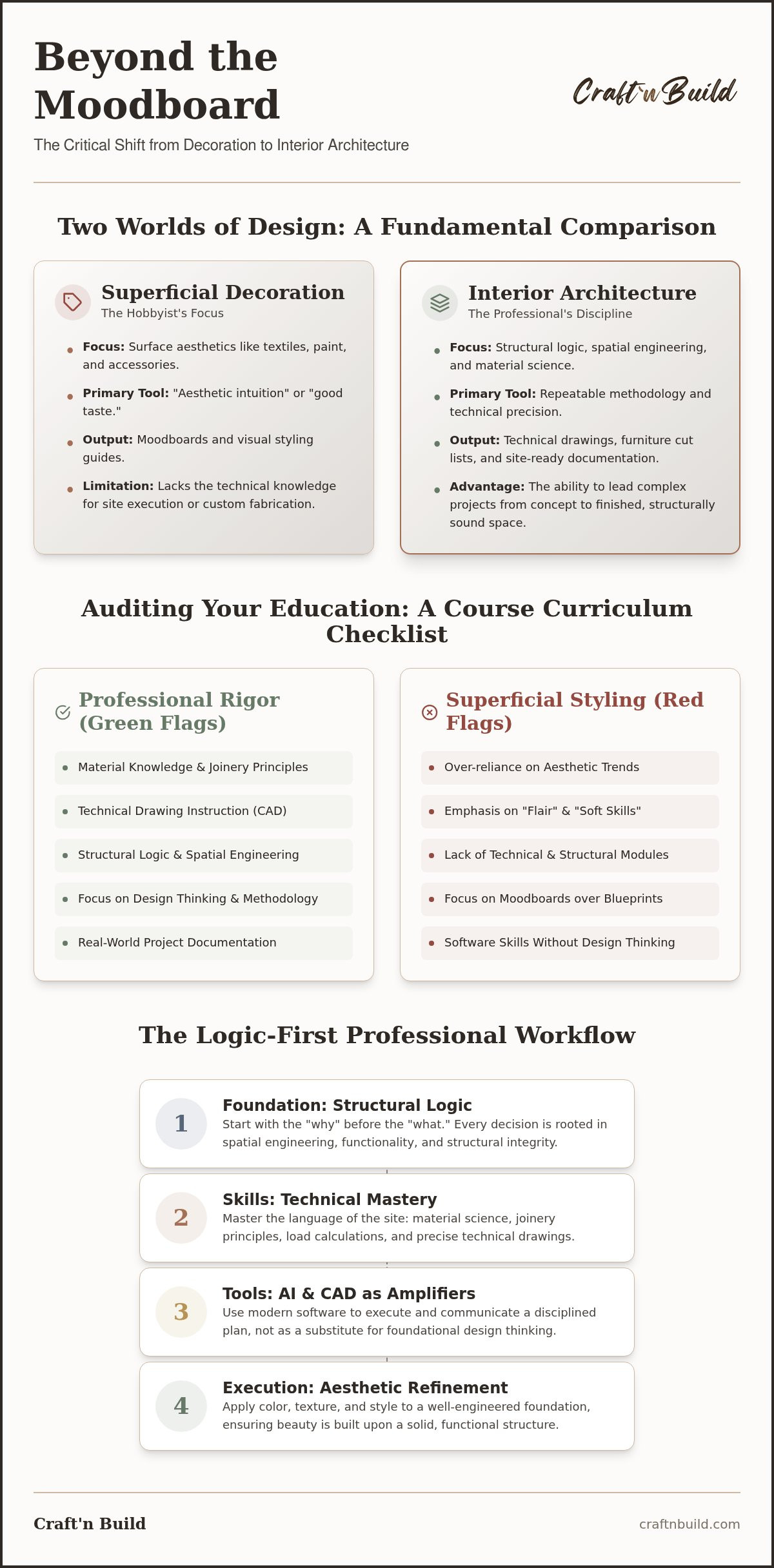
La estética superficial se centra en la capa visual, como los textiles y la pintura. La arquitectura de interiores, en cambio, implica la manipulación estructural y técnica del espacio. Una consiste en estilizar una habitación; la otra, en diseñarla desde el punto de vista de la ingeniería. La arquitectura de interiores es una disciplina técnica de ingeniería espacial. Al investigar sobre la formación en diseño de interiores, queda claro que los programas profesionales priorizan la lógica espacial por encima de la decoración superficial. Esta mentalidad centrada en la lógica garantiza que cada decisión de diseño cumpla una función práctica. No solo estás eligiendo un sofá; estás calculando el espacio libre necesario para moverse con comodidad y la carga estructural del suelo que lo sostiene.
Por qué el «talento» no puede sustituir a la metodología
El talento creativo es subjetivo y efímero. No ofrece respuestas cuando un contratista pregunta por los detalles de las uniones o los requisitos de carga. Si tu formación carece de rigor técnico, es probable que tus proyectos se estanquen durante la fase de construcción. Muchos cursos de diseño de interiores en línea ofrecen únicamente contenido introductorio de estilismo, lo que deja a los estudiantes sin preparación para las exigencias de una obra real. Los resultados profesionales requieren una metodología reproducible como The Design Key. Este programa va más allá de las tendencias para centrarse en el pensamiento de diseño y la lógica estructural. Al adoptar un marco disciplinado, obtienes la confianza necesaria para crear planos técnicos que los contratistas puedan utilizar realmente para construir. La lógica sistemática es la única forma de garantizar que tu visión sobreviva a la transición de un concepto digital a una realidad física.
Desmontando el discurso de las «habilidades interpersonales»: lo que realmente enseñan los programas profesionales de diseño de interiores en línea
Muchas personas creen que el diseño de interiores consiste en un conjunto de habilidades interpersonales, como elegir telas u organizar muebles. Esto es un error. Un plan de estudios riguroso se centra en el dominio técnico y la lógica estructural. Mientras que los cursos para aficionados se detienen en la estética, los cursos de diseño de interiores en línea profesionales priorizan el núcleo técnico que permite a un diseñador comunicarse con arquitectos y constructores. Esto implica ir más allá de simples paneles de inspiración y crear una documentación exhaustiva del proyecto que resista el escrutinio profesional. Debes aprender a hablar el lenguaje de la obra, no solo el de la sala de exposición.
La base de la ingeniería del diseño de muebles
Un mueble no es solo un objeto bello; es un producto diseñado mediante ingeniería. Debes comprender el movimiento de la madera, la física de las cargas estructurales y las uniones específicas necesarias para garantizar la durabilidad. Sin estos principios de construcción, un diseño sigue siendo un boceto que no puede fabricarse. Comprender la intersección entre utilidad y estética es fundamental. Necesitas saber cómo reaccionará una unión a la humedad y cómo una repisa en voladizo soportará el peso sin combarse. Los conocimientos técnicos profundos de Furniture Design Methodology revelan que conocer los materiales es la diferencia entre un prototipo endeble y una pieza profesional. Los programas de alto nivel te enseñan a transformar elementos en bruto en productos terminados que resistan las exigencias del uso diario. Se trata de la tranquila satisfacción que proporciona la integridad estructural.
Dibujo técnico y lógica de los planos de planta
El dibujo técnico es el lenguaje universal de la industria del diseño. Tiende un puente entre tu concepto y la ejecución del carpintero. La precisión en The Floor Plan Design Key garantiza que se tenga en cuenta cada milímetro. Un plano de planta es más que una distribución; es un estudio de la lógica espacial. Requiere comprender las zonas de paso, el flujo ergonómico y los límites estructurales. La documentación profesional evita errores costosos durante la carpintería en obra, ya que proporciona un conjunto claro de instrucciones para el equipo de construcción. Este nivel de detalle es lo que distingue a un profesional de un decorador. No estás dibujando solo una habitación. Estás creando un plano para alcanzar el éxito espacial.
Al elegir un camino, es fundamental buscar la acreditación de títulos o programas de diseño de interiores en línea que reflejen estos rigurosos estándares. Dominar estas habilidades técnicas es lo que te otorga la autoridad para dirigir un proyecto con confianza. Si estás listo para superar los tutoriales introductorios, considera explorar marcos integrales de diseño centrados en estos pilares técnicos esenciales.
Aficionado frente a profesional: evaluación de la metodología de los cursos de diseño de interiores en línea
Seleccionar los cursos de diseño de interiores en línea adecuados es una cuestión de criterio profesional. No estás comprando solo contenido; estás invirtiendo en una metodología. Un curso para aficionados suele ocultar su falta de profundidad tras imágenes atractivas, mientras que un curso profesional revela la lógica estructural subyacente en cada decisión de diseño. Busca programas que aborden el diseño como un proceso disciplinado y repetible, en lugar de como un estallido esporádico de creatividad. El objetivo es superar la capa superficial del «buen gusto» y adoptar los rigurosos estándares necesarios en un entorno de estudio profesional.
El plan de estudios de «primero el estilo» frente al de «primero la lógica»
El enfoque «primero el estilo» es un error común en el sector. Anima a los estudiantes a centrarse en crear «paneles de inspiración» y «encontrar su estilo». Aunque estas actividades tienen su lugar, no resuelven problemas específicos del espacio ni abordan las tolerancias estructurales. Un plan de estudios basado en la «lógica primero» prioriza las guías de referencia técnica y los marcos profesionales. Por eso The Design Key Full Master Programme da prioridad a la integridad estructural frente a las tendencias superficiales. Este enfoque se ajusta a los estándares de un programa profesional de certificación en diseño de interiores, que exige dominar la planificación espacial y la ciencia de los materiales. Si la descripción de un curso está llena de palabras de moda sobre la «inspiración», pero no menciona normas técnicas, es una señal de alarma de que el contenido está dirigido a aficionados.
Evalúa a tus instructores con precisión técnica. ¿Son profesionales en activo o meros estilistas estéticos? Un profesional en activo comprende la fricción entre un plano digital y un espacio físico. Te enseña el «porqué» del «cómo», asegurándose de que entiendas las limitaciones de fabricación de tus diseños. Utiliza esta lista de comprobación al evaluar un programa:
- ¿El plan de estudios incluye dibujo técnico y normas de CAD?
- ¿Se presta atención a las propiedades de los materiales y las cargas estructurales?
- ¿El instructor tiene experiencia gestionando fases de construcción en proyectos reales?
- ¿Los resultados se centran en documentación fabricable en lugar de limitarse a las «sensaciones»?
Evaluación de recursos técnicos y plantillas
Dominar algo es inalcanzable sin las herramientas adecuadas. Un curso riguroso debe proporcionar plantillas de proyectos que reproduzcan los flujos de trabajo de un estudio profesional. Estos recursos garantizan que tu documentación sea coherente, precisa y esté lista para la revisión de un contratista. La precisión es la base de la confianza en este sector. Además, la inclusión de conceptos de diseño CAD en 3D es esencial para los profesionales modernos. Estas herramientas te permiten probar la lógica estructural de tus muebles y distribuciones espaciales en un entorno digital antes de cortar cualquier material. Si un programa no proporciona estos recursos técnicos, no te está preparando para trabajar directamente con clientes. El diseño profesional requiere un enfoque sistemático que convierta conceptos iniciales en productos refinados y fabricables.
El mito de la IA y el CAD: por qué las habilidades de software sin pensamiento de diseño fracasan en proyectos reales
A menudo se confunde el dominio del software con la experiencia en diseño. Es una trampa común para quienes entran en el sector a través de cursos de diseño de interiores en línea introductorios. Saber hacer clic en un botón de un programa CAD no significa que entiendas la ingeniería espacial. El profesionalismo exige pensamiento de diseño: la capacidad de identificar y resolver problemas estructurales antes de dibujar una sola línea digital. Sin esta base, las habilidades con el software no son más que formas costosas de cometer errores más rápido. Primero debes dominar la lógica de la construcción para garantizar que tus herramientas digitales cumplan una función práctica.
La IA como acelerador del flujo de trabajo, no como sustituto de la creatividad
La inteligencia artificial está transformando la industria, pero su valor reside en la eficiencia, no en el pensamiento original. Al utilizar Implementación de IA para arquitectos y diseñadores, el objetivo es optimizar los flujos de trabajo profesionales y automatizar las tareas repetitivas. Existe una enorme diferencia entre una imagen de una habitación generada por IA y la lógica de diseño asistida por IA necesaria para construirla. La IA es una herramienta de ejecución, mientras que el diseñador aporta la arquitectura estratégica. Puede sugerir una paleta de colores o una variación de la distribución, pero no puede sustituir la comprensión del profesional sobre la integridad de los materiales y las intenciones del cliente. Utiliza estas herramientas para avanzar más rápido, no para pensar menos.
CAD: del modelo digital a la construcción física
El modelado CAD en 3D suele considerarse una herramienta de visualización para las presentaciones a clientes. En un estudio profesional, es una herramienta para la fabricación y la resolución de problemas estructurales. Utilizar conceptos de diseño en formato CAD 3D permite conectar un render digital con una lista de cortes para muebles. Todo modelo debe respetar una lógica estructural. Si no puedes construirlo digitalmente con tolerancias precisas, desde luego tampoco podrás construirlo en el lugar. Este rigor técnico garantiza que tus diseños no sean simples conceptos, sino instrucciones construibles para carpinteros e ingenieros. Estás transformando elementos sin procesar en productos terminados dentro de un entorno digital, poniendo a prueba la fricción entre el plano digital y el espacio físico antes de cortar cualquier material. La precisión es la única manera de mantener la integridad estructural de tu visión.
Si está listo para dominar la intersección entre las herramientas modernas y la artesanía tradicional, explore nuestros programas de diseño de interiores para construir una base profesional basada en la lógica.
Cómo seleccionar su formación: cómo encontrar cursos de diseño de interiores en línea con rigor profesional
Pasar de una mentalidad de decorador a una mentalidad de diseñador requiere un cambio fundamental en la forma de percibir su función. Ya no basta con «tener intuición» para una habitación; debe ser capaz de garantizar técnicamente su éxito. Al evaluar cursos de diseño de interiores en línea, el principal indicador de calidad debe ser el enfoque del programa en la responsabilidad técnica. Un profesional experto no se limita a preguntar si un espacio es bonito. Investiga las tolerancias estructurales, las especificaciones mecánicas y las holguras ergonómicas que garantizan la durabilidad de un proyecto. Este cambio de mentalidad marca la frontera entre la decoración de aficionados y la arquitectura de interiores profesional.
Especialización para obtener resultados profesionales
Las encuestas generales e introductorias a menudo no ofrecen la profundidad necesaria para trabajos residenciales de alto riesgo. El crecimiento profesional es mucho más eficaz cuando se busca una especialización específica en zonas espaciales complejas. Por ejemplo, dominar el diseño de cocinas o la iluminación proporciona los conocimientos técnicos específicos necesarios para coordinarse con contratistas y electricistas. Del mismo modo, especializarse en el diseño de baños garantiza que pueda desenvolverse en la intersección crítica entre impermeabilización, fontanería y carga estructural. Estos módulos especializados convierten la intuición vaga en un recurso técnico repetible que puede aplicar en cualquier proyecto.
La base de esta transición profesional es The Brief. Este documento es el eje del éxito del cliente, ya que sirve como hoja de ruta técnica que transforma deseos abstractos en una realidad viable. Los cursos profesionales de diseño de interiores en línea deben enseñarte a extraer y documentar estos requisitos con precisión. Sin un brief riguroso, incluso los modelos CAD más avanzados permanecen desconectados de las necesidades reales del cliente y de las limitaciones físicas del lugar. La preparación no es un obstáculo; es la herramienta más poderosa del innovador disciplinado para garantizar la integridad del proyecto.
El camino a seguir: de estudiante comprometido a profesional experto
Si ya has superado los tutoriales superficiales y estás listo para adoptar una metodología rigurosa, el camino a seguir está claro. Elige una formación que valore la preparación, un conocimiento profundo de los materiales y la precisión técnica. Explora los programas profesionales de diseño de interiores de Craft'n Build y únete a una comunidad de profesionales comprometidos con el valor intrínseco de la artesanía. Los resultados que buscas están al alcance de cualquiera que esté dispuesto a adoptar un marco disciplinado y profesional.
Avanza más allá de la intuición hacia el dominio
El éxito profesional en este campo no depende de la suerte ni de un talento innato. Es el resultado de una metodología disciplinada que prioriza la lógica estructural por encima de las tendencias superficiales. Hemos analizado cómo los cursos de diseño de interiores en línea deben cerrar la brecha entre la decoración como pasatiempo y la ingeniería espacial técnica. Ahora entiendes que el software no es más que una herramienta de ejecución; el verdadero valor de un diseñador reside en su capacidad para aplicar el pensamiento de diseño y resolver problemas estructurales antes de trazar siquiera una línea digital. Al adoptar una mentalidad basada en la lógica, te aseguras de que tu visión creativa sea viable, funcional y perdurable.
El camino hacia resultados de nivel profesional requiere un compromiso con el rigor. Mereces una formación que proporcione marcos técnicos de nivel profesional y el profundo enfoque en la lógica espacial que utilizan los verdaderos estudios de diseño. Al utilizar plantillas y recursos que reflejan los flujos de trabajo de proyectos reales, te acercas a la satisfacción serena del dominio. Ha llegado el momento de pasar de la mentalidad de decorador a la de un profesional experto. Cada proyecto que lideres debe estar basado en la integridad estructural y la precisión técnica.
Domina la arquitectura de interiores profesional con los programas de The Design Key y comienza hoy tu camino hacia la excelencia técnica. Tu crecimiento es un proceso de perfeccionamiento, y una base sólida marca la diferencia.
Preguntas frecuentes
¿Realmente valen la pena los cursos de diseño de interiores en línea para desarrollar una carrera profesional?
Sí, los cursos de diseño de interiores en línea son muy eficaces si priorizan la lógica técnica sobre el estilismo introductorio. Una carrera profesional requiere la capacidad de producir documentación precisa que los contratistas puedan seguir. Busca programas que vayan más allá de las tendencias visuales y se centren en los requisitos estructurales y mecánicos de un espacio real. El verdadero valor reside en aprender marcos de trabajo repetibles que garanticen que tus diseños sean viables y funcionales; para comprender el desarrollo estratégico de plataformas educativas de tan alto impacto, puedes descubrir Knowledgefront.
¿Cuál es la diferencia entre un curso de diseño de interiores y un programa de arquitectura de interiores?
El diseño de interiores suele abordar las capas visuales y táctiles de un espacio, como los textiles, la selección de mobiliario y las paletas de colores. La arquitectura de interiores es una disciplina técnica de ingeniería espacial que se ocupa de la manipulación estructural. Requiere un conocimiento profundo de los códigos de construcción, las tolerancias de carga y la integración de sistemas mecánicos en el flujo de trabajo del diseño profesional para garantizar la integridad estructural.
¿Necesito tener buenos conocimientos de matemáticas para tener éxito en los cursos de diseño de interiores en línea?
No necesitas cálculo avanzado, pero debes sentirte cómodo con la geometría y la aritmética básica. La precisión es la base del diseño profesional. Usarás las matemáticas para calcular holguras, determinar cargas estructurales y crear planos de planta precisos. Es más importante tener una mentalidad orientada a la lógica que ser un genio de las matemáticas; se trata de la satisfacción serena de garantizar que cada medida sea técnicamente sólida.
¿Puedo aprender dibujo técnico de nivel profesional en un curso en línea?
Puedes dominar el dibujo técnico en línea si el curso proporciona estándares CAD rigurosos y plantillas de proyectos profesionales. El dibujo de nivel profesional se basa en la claridad y la precisión de la comunicación. Requiere aprender el lenguaje universal del sector, incluidos grosores de línea y símbolos arquitectónicos específicos, para garantizar que tus conceptos digitales se traduzcan en instrucciones precisas y realizables para carpinteros e ingenieros en la obra.
¿La IA sustituirá la necesidad de recibir formación profesional en diseño de interiores?
La IA funciona como un acelerador del flujo de trabajo, no como un sustituto de la formación profesional. Aunque puede generar imágenes u optimizar distribuciones, carece de la comprensión del profesional sobre la integridad de los materiales y las intenciones del cliente. La formación profesional proporciona la arquitectura estratégica y el pensamiento de diseño necesarios para dirigir proyectos complejos con autoridad. La IA es una herramienta de ejecución; el diseñador aporta la lógica.
¿Cómo sé si un curso de diseño de interiores en línea es demasiado básico para mis necesidades?
Revisa el plan de estudios en busca de «señales de alerta», como un énfasis excesivo en «encontrar tu estilo» o en las tendencias de las redes sociales. Si el curso carece de guías técnicas de referencia o de formación en dibujo técnico, probablemente sea demasiado básico para tus aspiraciones profesionales. Los programas profesionales priorizan los fundamentos de ingeniería del diseño de mobiliario y la lógica sistemática de la planificación espacial por encima de los tableros de inspiración superficiales y el contenido introductorio de estilismo.
¿Qué software técnico aprenderé en un curso profesional?
Debes esperar aprender software CAD 3D para el modelado estructural y herramientas de renderizado en tiempo real para las presentaciones a clientes. Los cursos de diseño de interiores en línea profesionales también abarcan la implementación de IA en los flujos de trabajo de diseño y las plataformas de gestión de proyectos. Estas herramientas digitales son esenciales para conectar un render conceptual con una lista física de cortes de mobiliario, garantizando que cada modelo digital respete la lógica estructural.
¿Cuánto se tarda en completar un programa de diseño de interiores en línea de nivel profesional?
Un programa de nivel profesional suele requerir varios meses de estudio disciplinado para alcanzar un verdadero dominio. El plazo depende de la complejidad de los módulos, como el diseño de cocinas o baños, y de tu formación técnica previa. Es un proceso metódico que prioriza un conocimiento profundo de los materiales y la integridad estructural por encima de una finalización apresurada y superficial. El dominio es un camino de perfeccionamiento constante que no debe acelerarse.
Socios
Craft'n Build da la bienvenida a los profesionales del marketing de afiliación, https://craftnbuild.com/pages/affiliate-partner-programme-1


Compartir:
¿Vale la pena hacer un curso de diseño de interiores en 2026? La realidad profesional
Pensamiento de diseño basado en la lógica para la arquitectura de interiores 2026