


THE DESIGN KEY SERIES
The Mood Board


Secure checkout — all major payment methods accepted
The Design Key — Master Programme
1 of 12 courses toward the Master Programme. Every course counts.Every single course counts towards the full Master Programme.
Pairs well with
What You'll Learn
-
Decision making
-
CMF framework
-
Curate with intention
-
Presentation
-
Design direction
-
Prevents mistakes
Four starting points — one method.
Who is this course for

Working designers
Put a repeatable method under the instinct you already have, and sharpen the process you use every day.

Aspiring designers
Build real professional skills from the ground up. No degree, no prior experience needed.

Project owners
Understand the process well enough to brief sharply, judge the work, and manage the people delivering it.

Homeowners
Approach your own space the way a professional would, and stop guessing on decisions that cost real money.
No credentials required. No experience assumed. Just a commitment to learn how design actually works — because the method is the same for all of you.
If you have any questions, you are always welcome to contact us. We'll get back to you as soon as possible, within 24 hours on weekdays.
-
Shipping Information
Use this text to answer questions in as much detail as possible for your customers.
-
Customer Support
Use this text to answer questions in as much detail as possible for your customers.
-
FAQ’s
Use this text to answer questions in as much detail as possible for your customers.
-
Contact Us
Use this text to answer questions in as much detail as possible for your customers.
How to get the most from this course
Four steps to turn watching into doing.
Set up to work, not just watch
Have pen and paper beside you. This is a course you do, not one you passively watch — the method only sticks when you work it by hand.

Have pen and paper beside you. This is a course you do, not one you passively watch — the method only sticks when you work it by hand.
Take one module at a time
Each module is a complete idea. Work through one per sitting, finish its exercise before moving on, and let it settle rather than racing to the end.

Apply it to a real space as you go
Use your own home, a past project, or an imagined brief. Run each method on something real so it becomes a skill, not just notes.

Expect about a week, at your pace
Most people complete a course in around a week at a relaxed module-a-day rhythm — faster if you push, slower if you savour it. There's no clock; lifetime access means you set the speed.

See the actual work
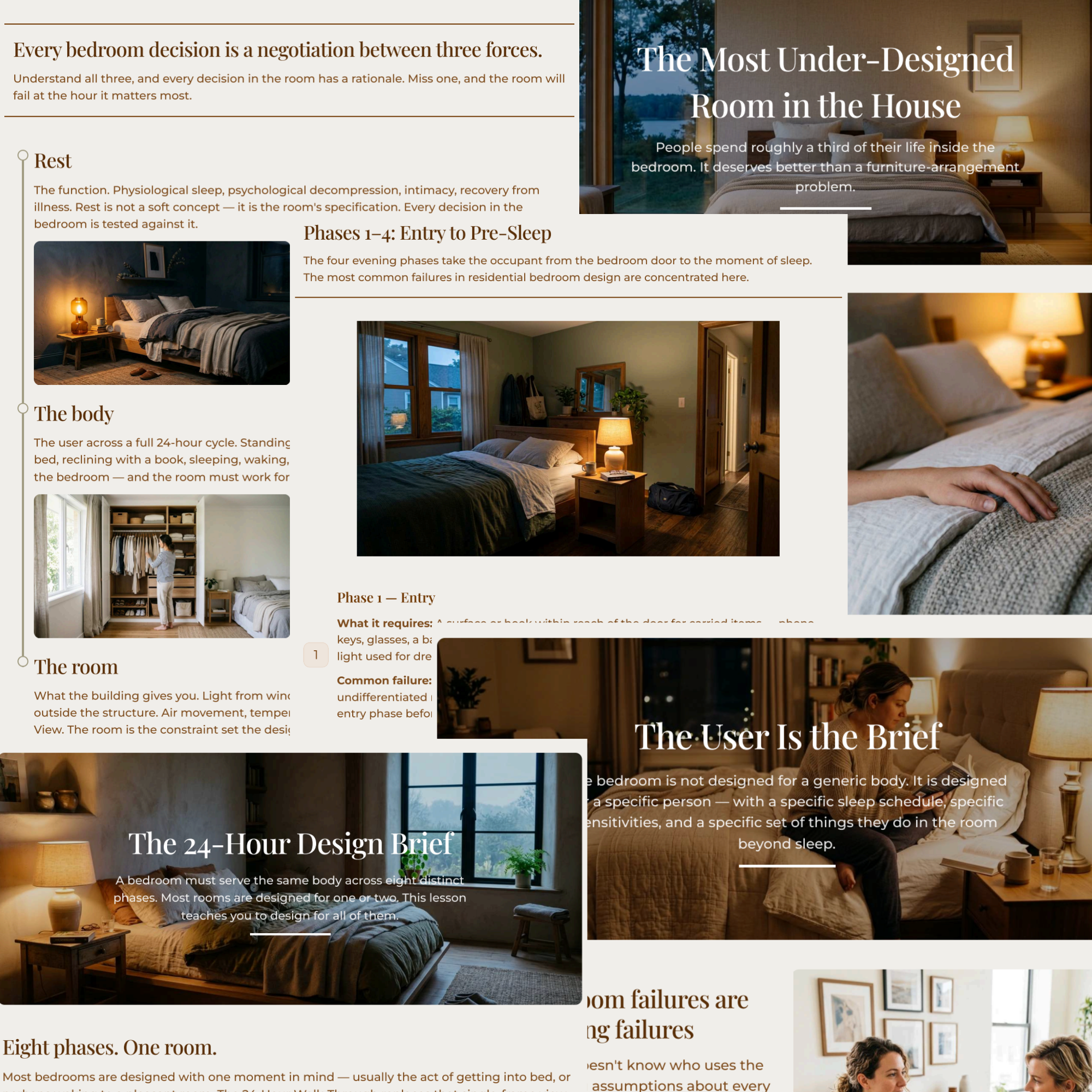
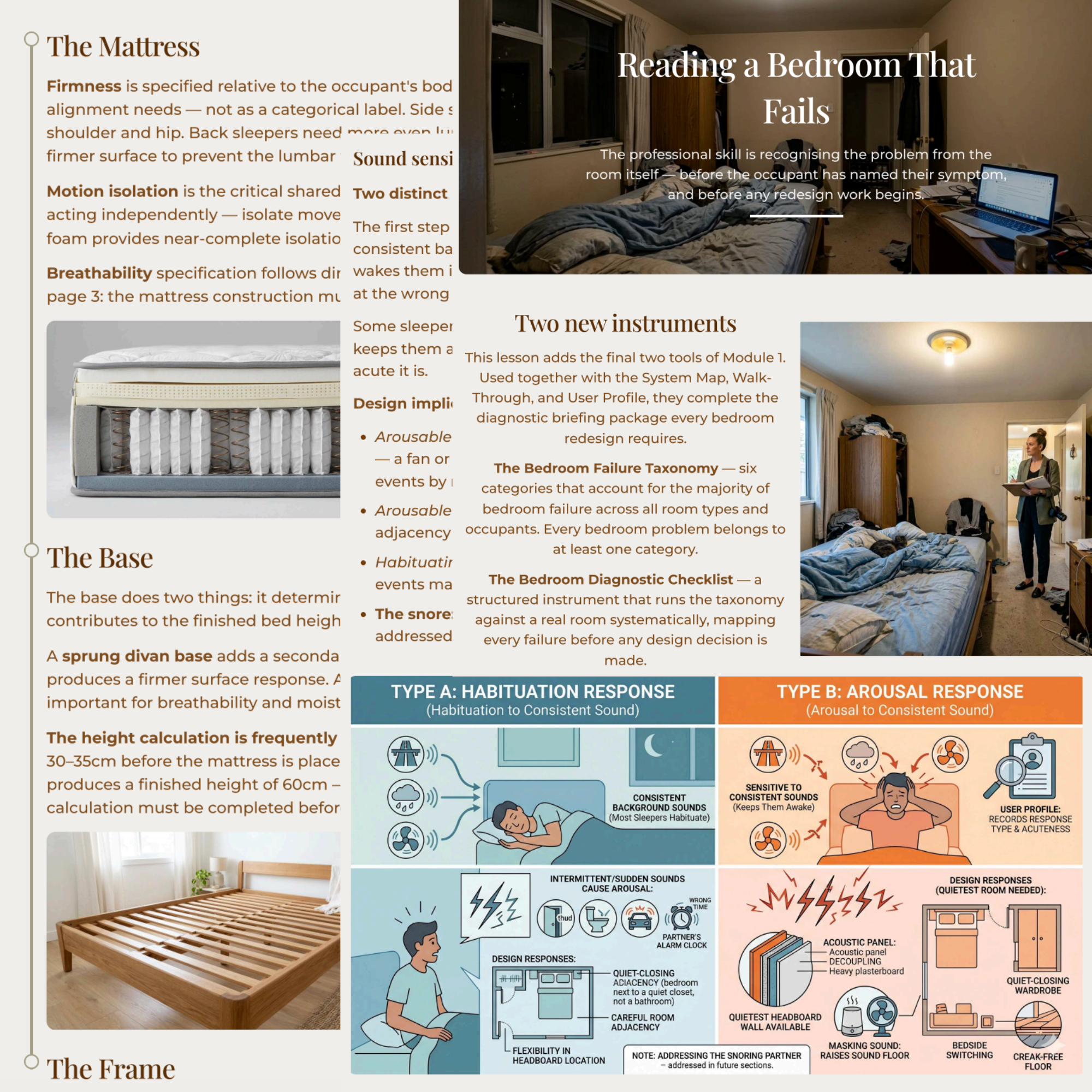
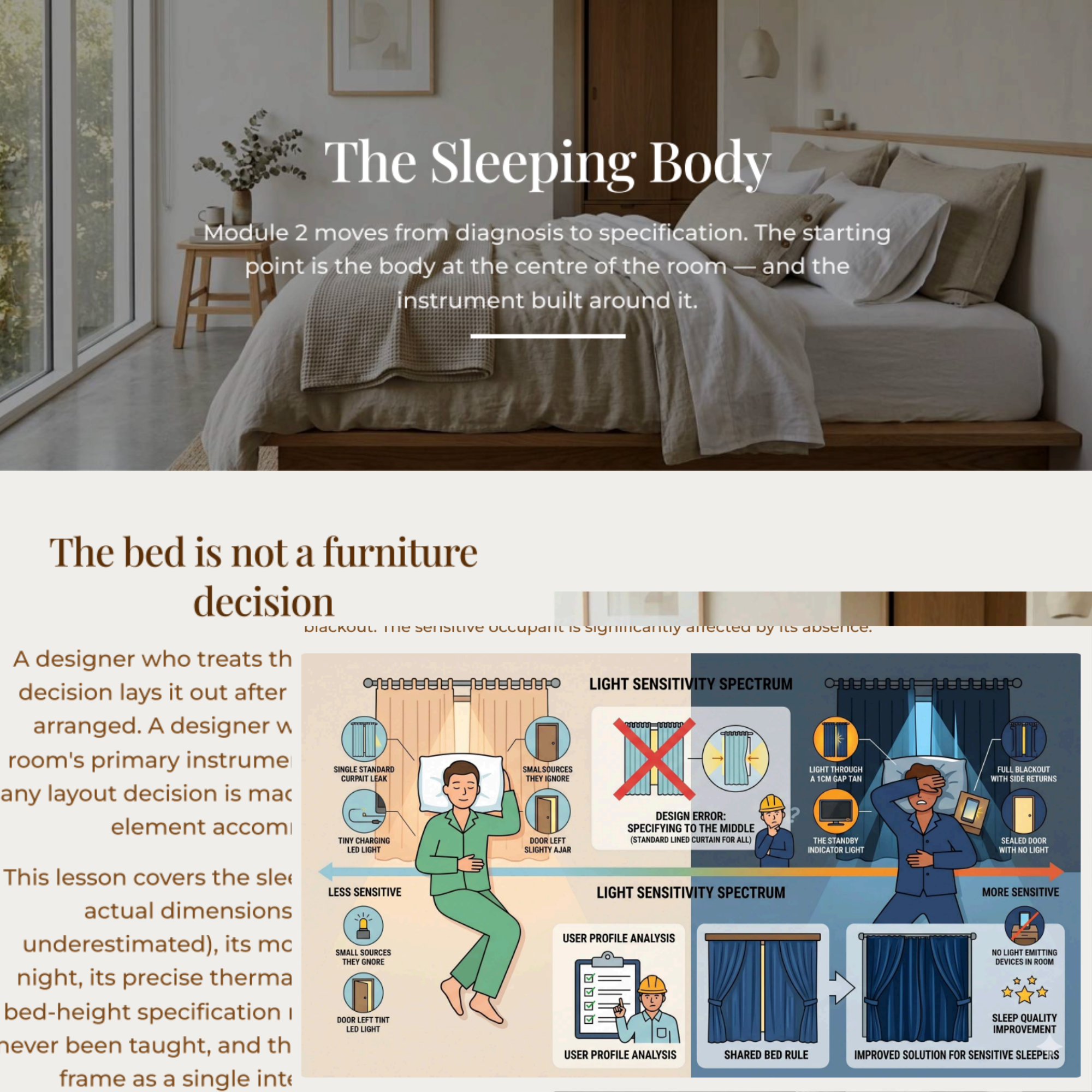
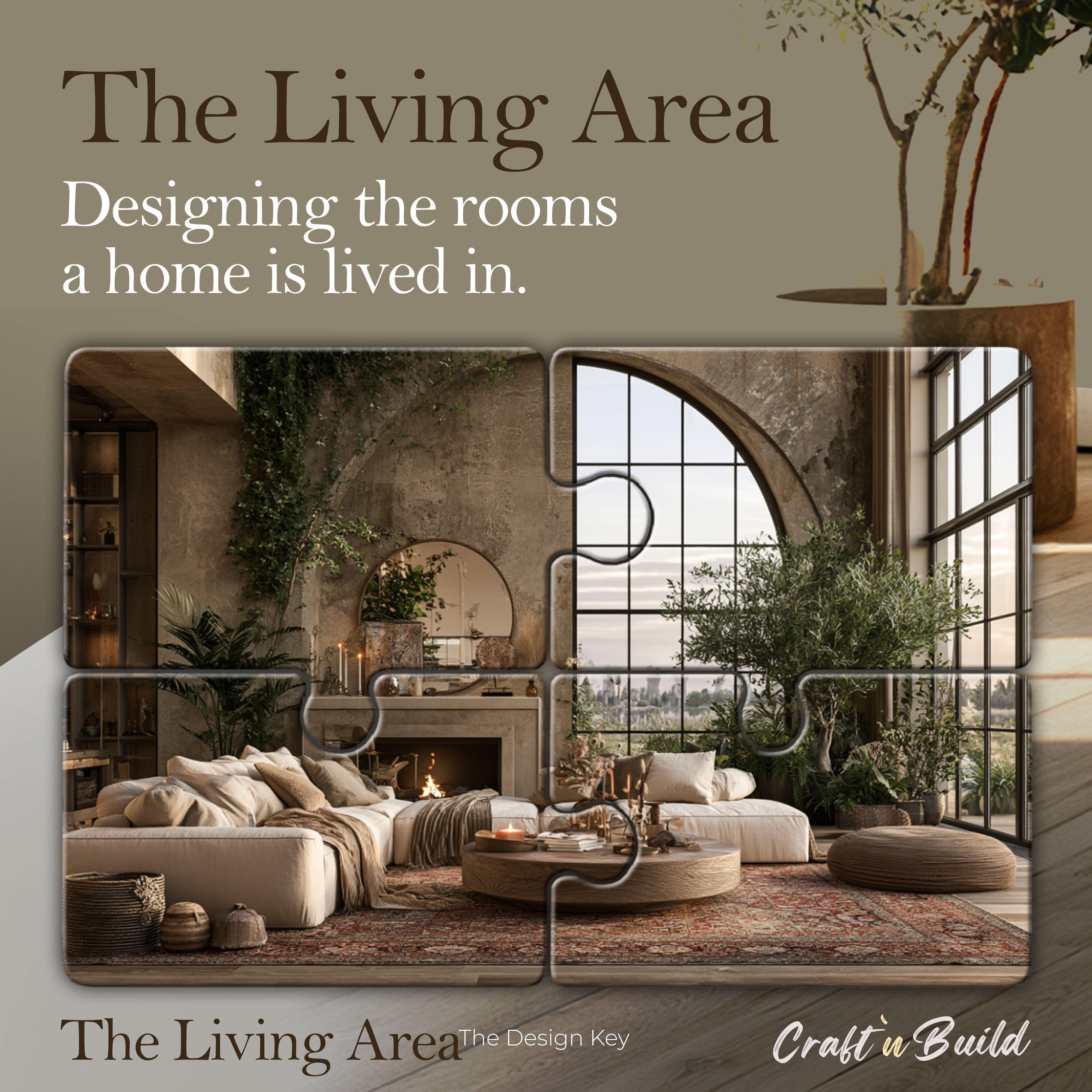
Not slides. Not tips. These are real pages from inside the courses — the kind of professional documentation The Design Key teaches you to produce.
01
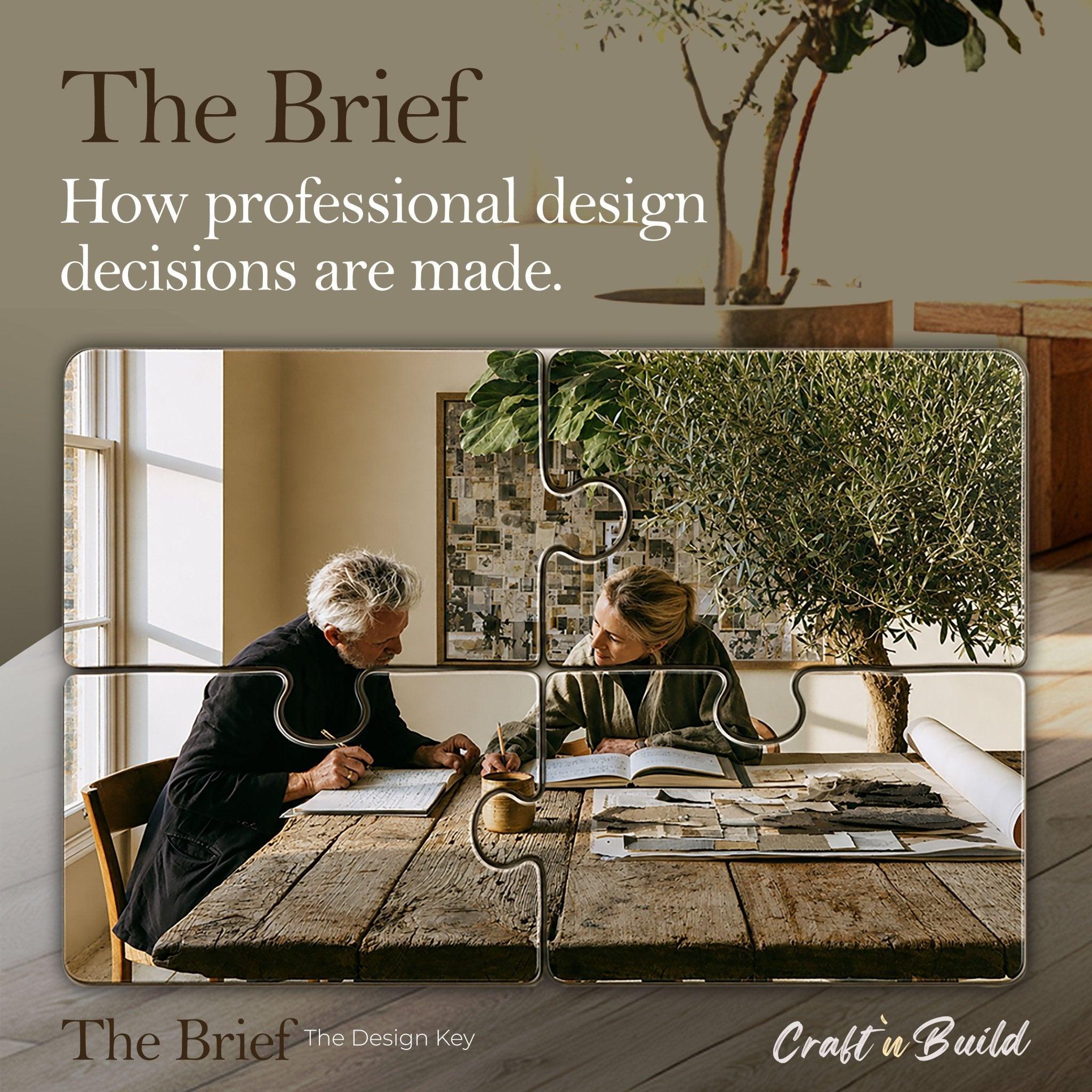
The Brief
Every project begins by defining what it actually is. The Brief teaches the four-dimension framework that stops a project breaking down before it's finished — documented the way a working studio does it.
02
The Moodboard
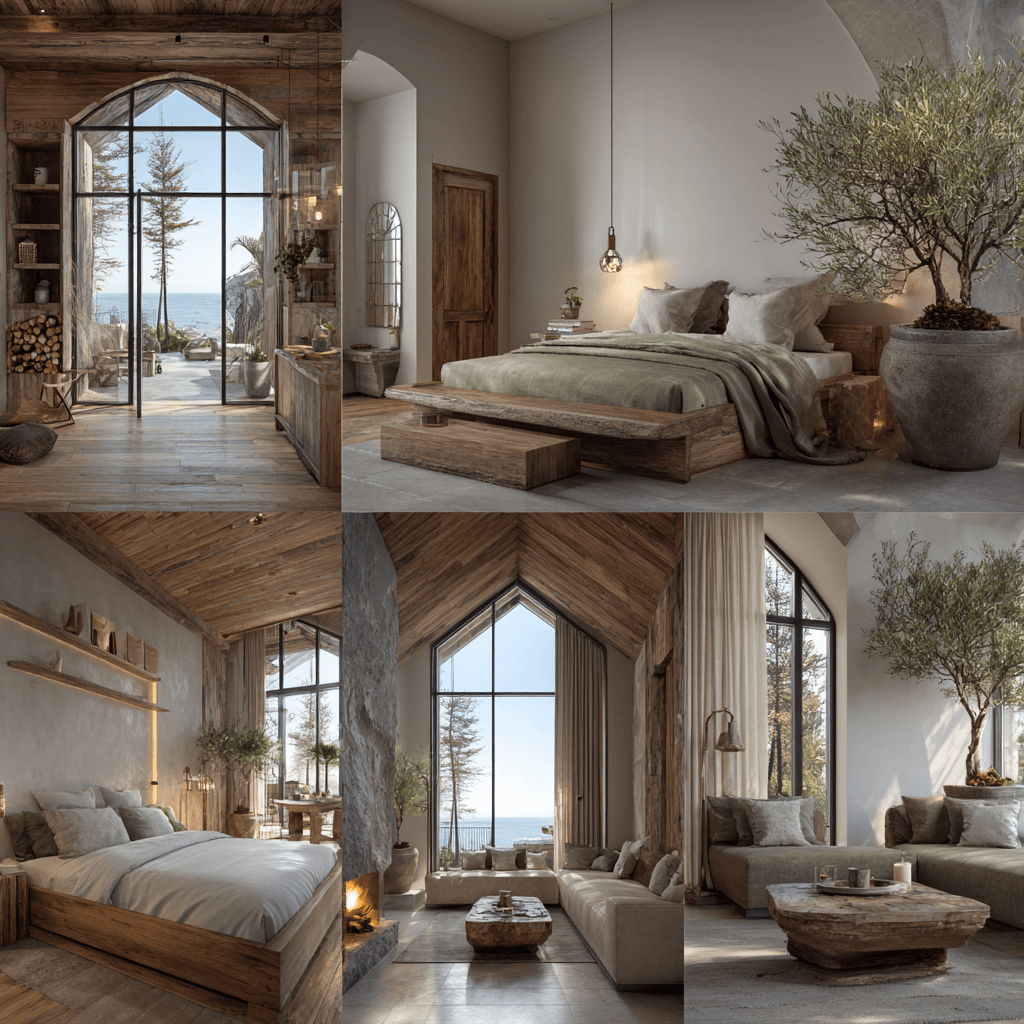
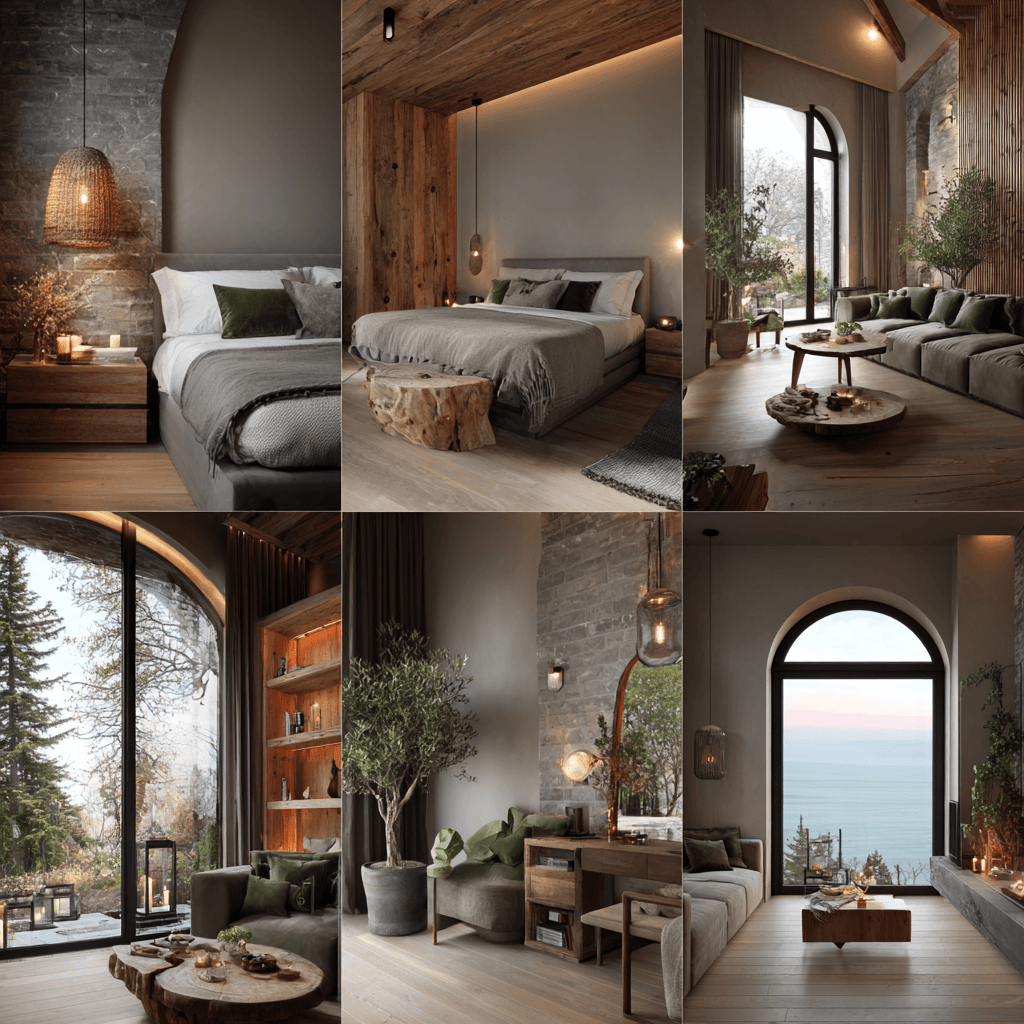
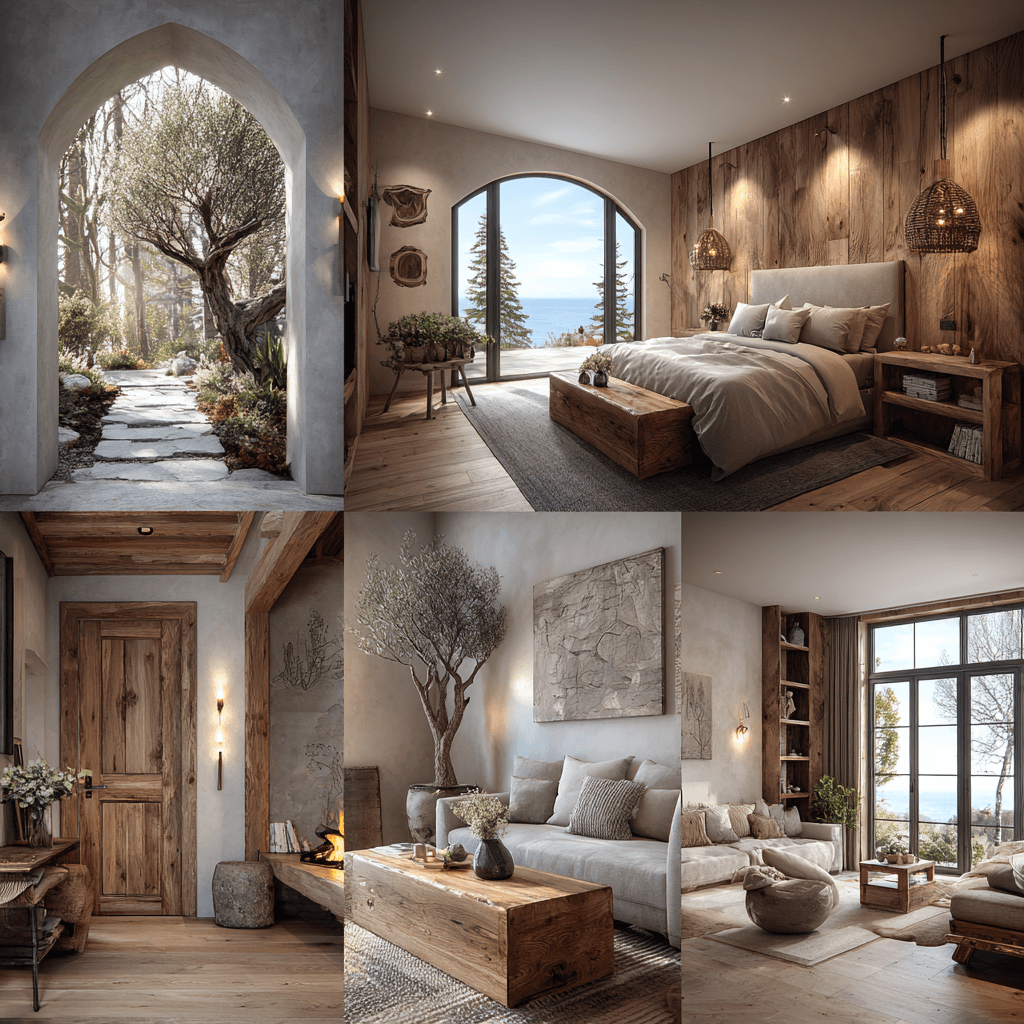
The difference between a professional moodboard and a Pinterest board, made explicit. You learn to build a strategic visual document that directs a project — not a folder of images you happen to like.


03
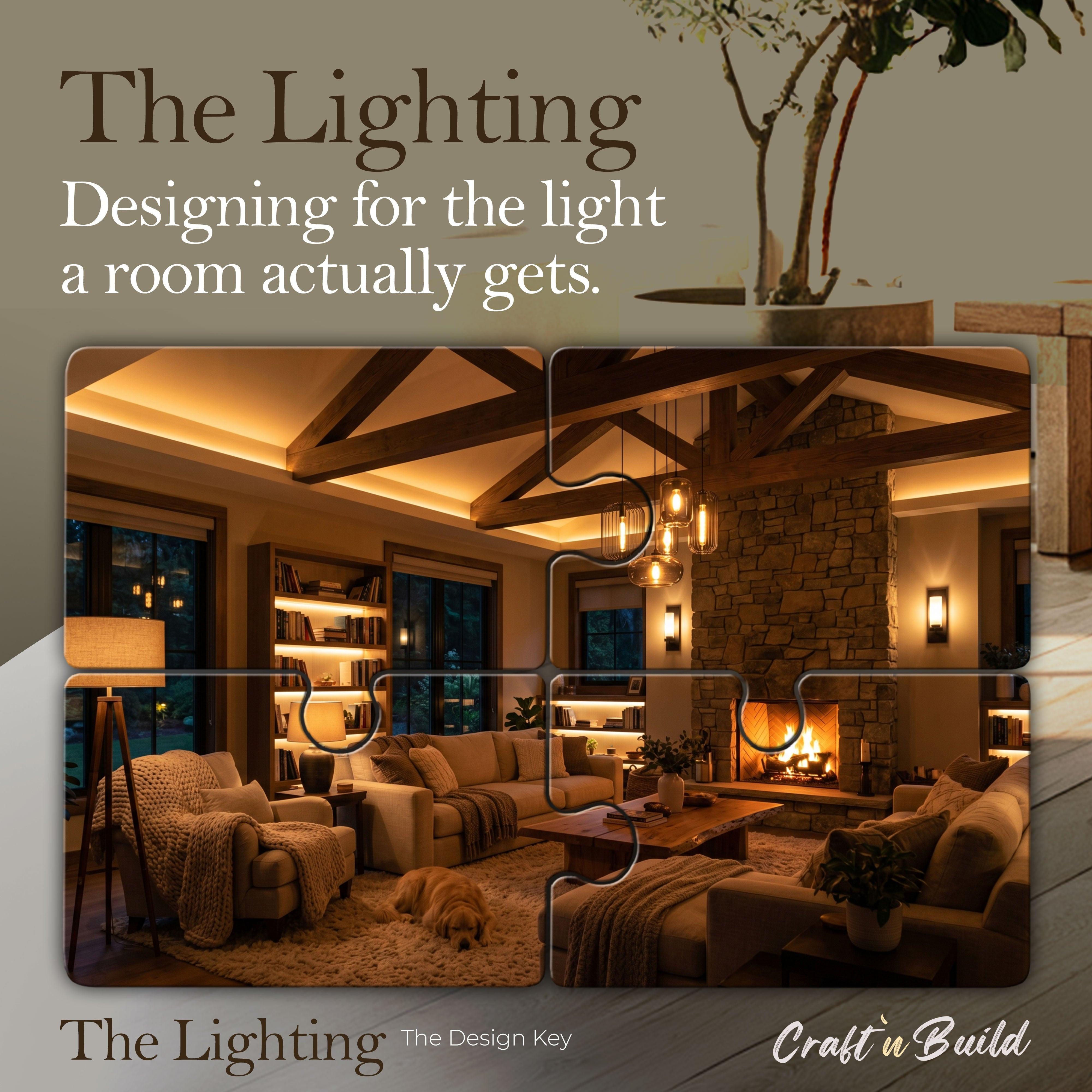
The Lighting
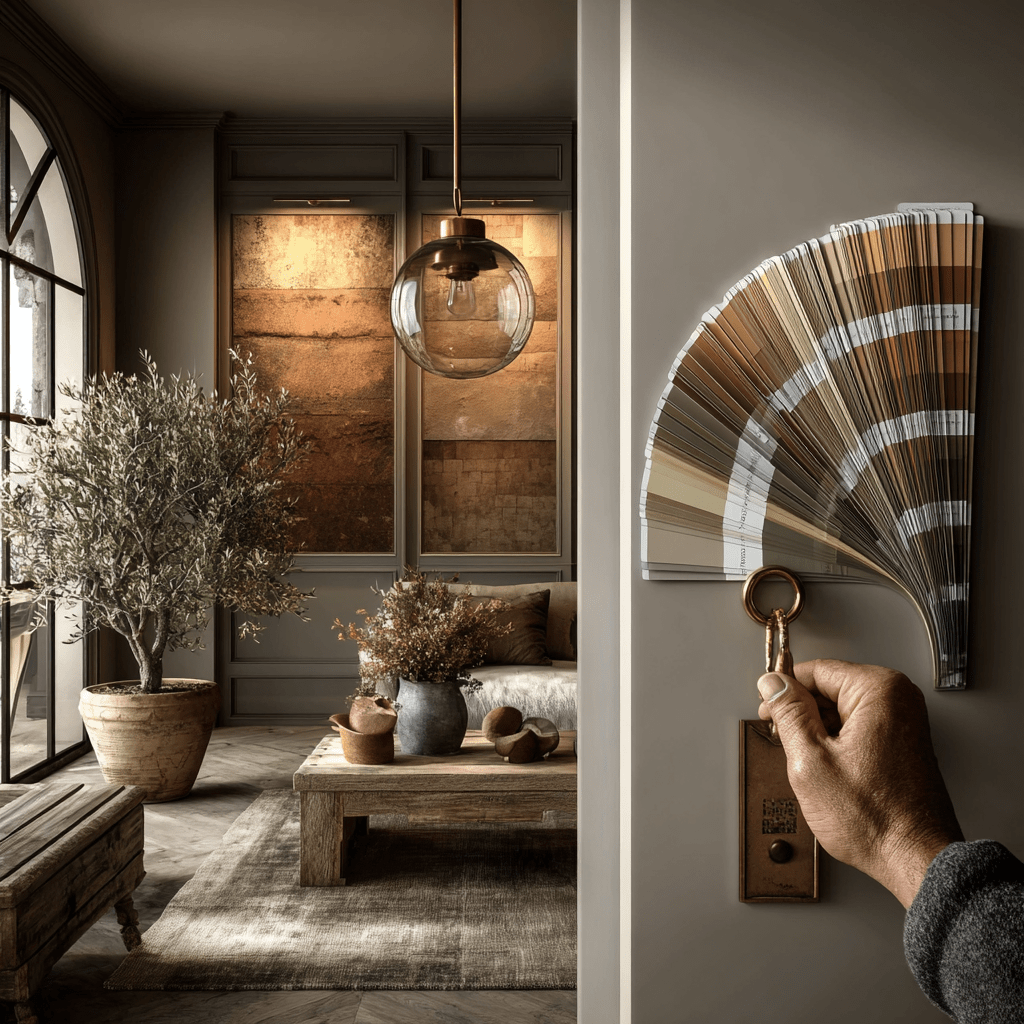
Light designed as a system, not chosen as a fixture. The Lighting teaches you to read how daylight enters a room hour by hour, and to plan an artificial scheme that works with it instead of fighting it.
04
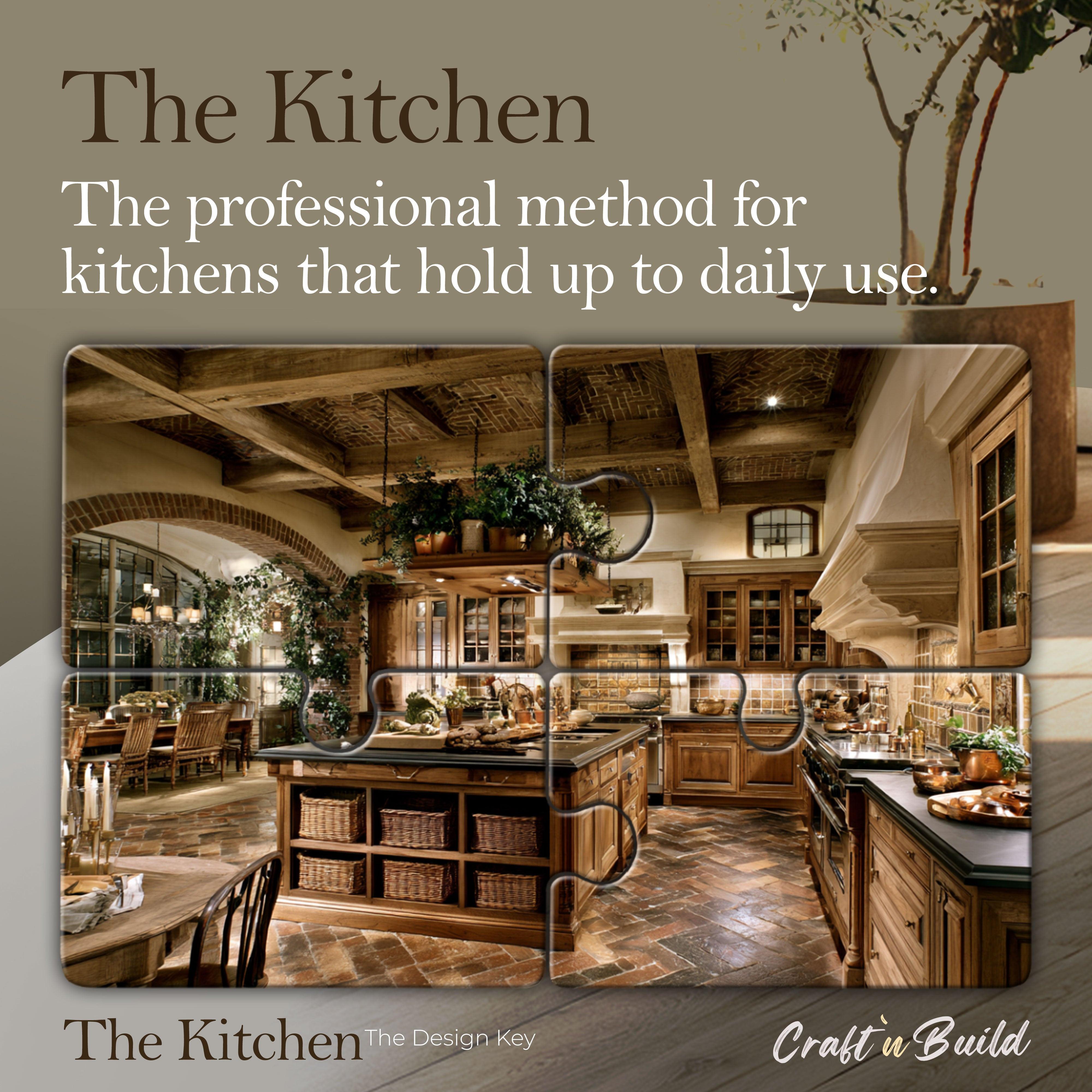
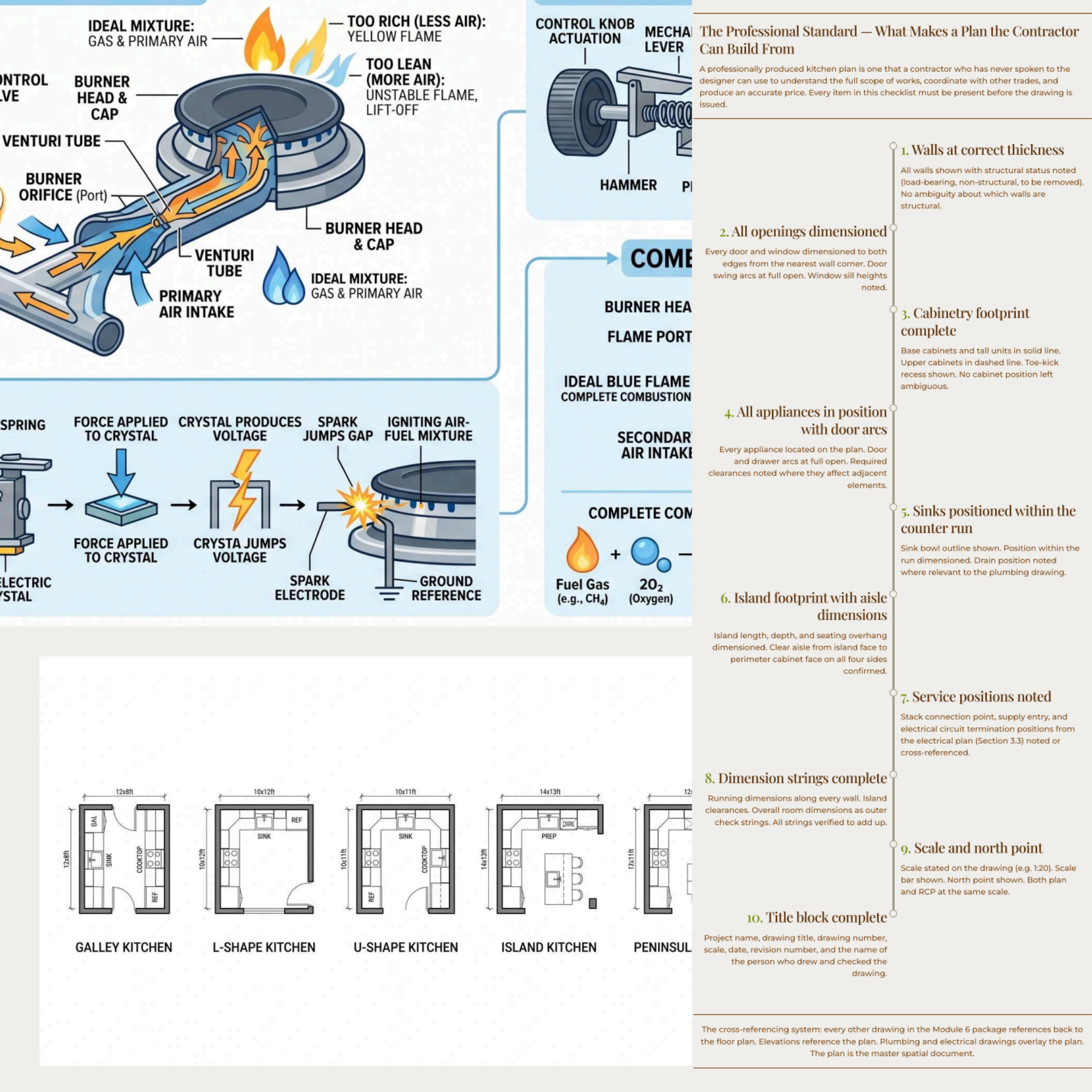
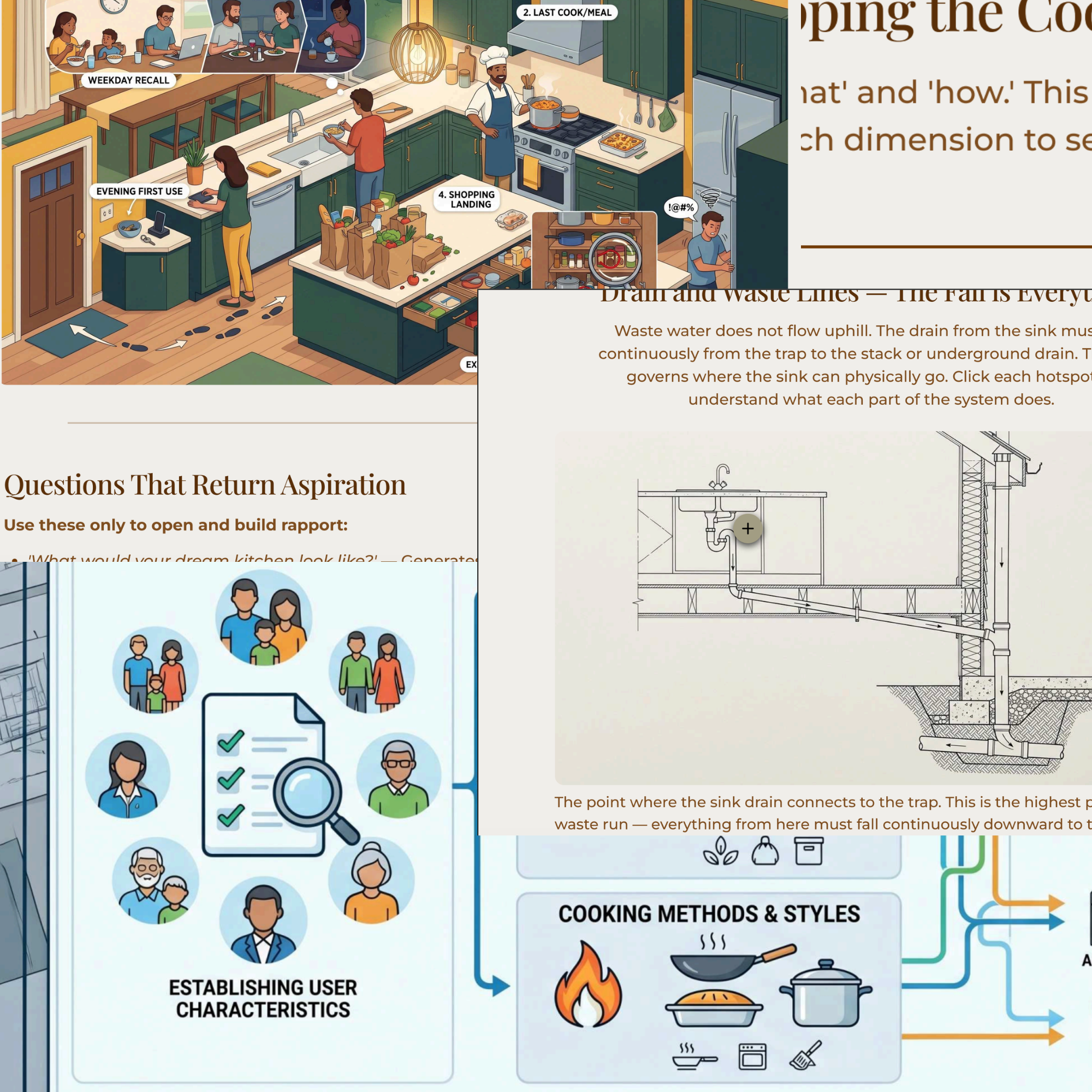
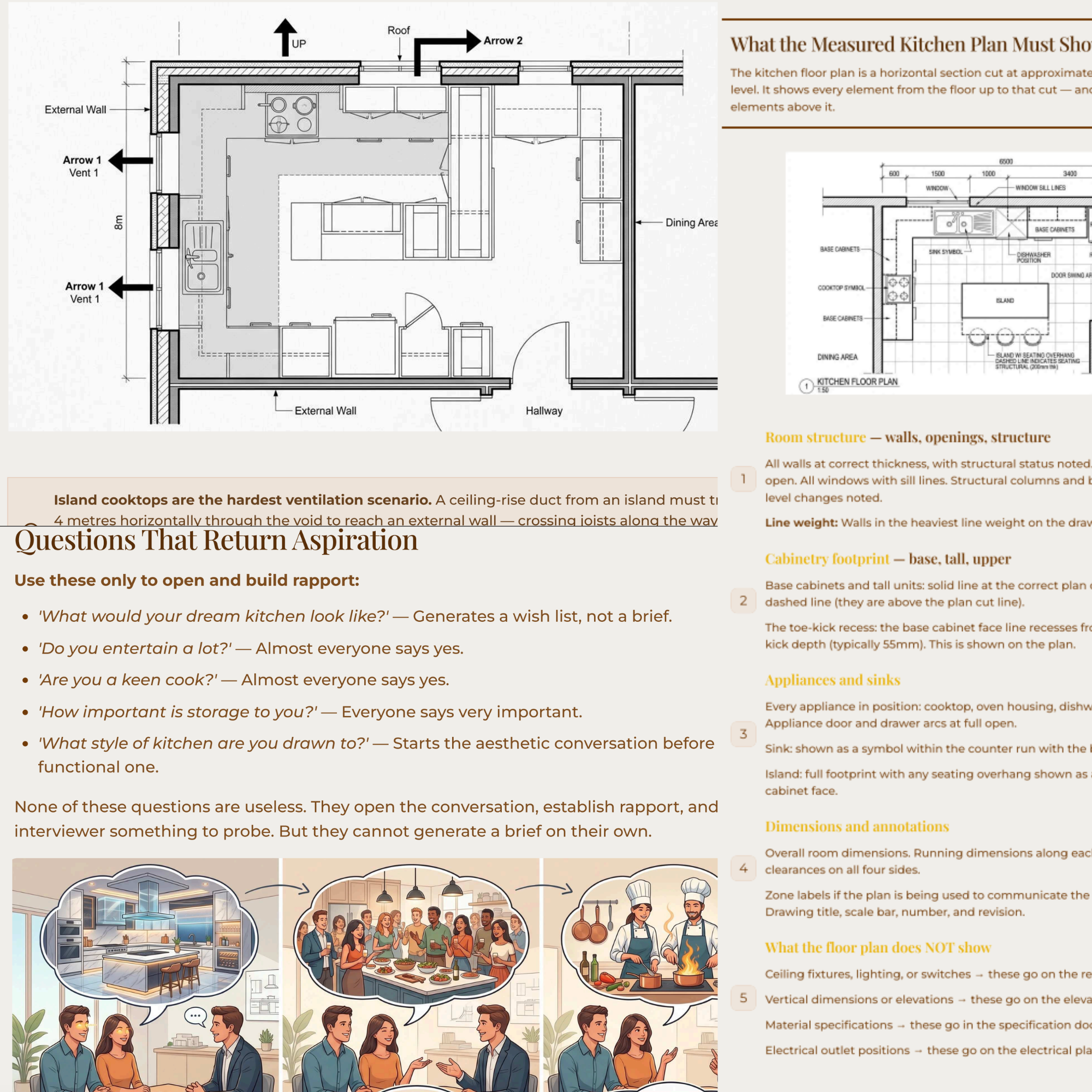
The Kitchen
Where the method meets millimetres. The Kitchen takes you into real fabrication-level decisions — joint placement, material limits, service coordination — the technical depth that separates a finished room from a styled one.


FAQ
What is "The Design Key"?
The Design Key is a series of professional methodology courses from Craft'n Build, each covering one core discipline of interior design — the Brief, the Mood Board, the Floor Plan, Lighting, the Kitchen, and more. It teaches how working designers actually think, plan and execute, through the same rigorous framework used in real practice. It's about method, not aesthetics or inspiration.
Who is this for?
Anyone who wants to learn professional interior design method, whatever their starting point — working designers, students and career-changers, homeowners approaching their own space properly, and project owners who need to brief and judge the work. No credentials or prior experience required. The method is the same for everyone.
What do I get, and how do I access it?
Everything is online and yours the moment you buy — instant access, no waiting, nothing shipped. You watch the course in your browser on any device and download the accompanying course material to keep. Access doesn't expire.
Is the course video, text, or both?
Both. Each course combines video lessons with a downloadable written guide and practical exercises, so you can watch, read, and work through the method by hand — which is how it's designed to be learned.
Do I need any experience or special software?
No. The courses assume no prior experience and no expensive software — just a willingness to work through the method. Where a tool is useful, the course shows you accessible options. The method matters more than the software.
How long do I have to complete a course?
As long as you like — access is for life, with no deadline. Most people work through a course in about a week at a relaxed module-a-day pace, faster if they push. You set the speed and can return to the material whenever you need it.
Do I get a certificate?
Yes. Complete any course and you earn a Certificate for that discipline. Complete all twelve and pass the final synthesis exam — which tests your ability to solve real problems across several disciplines at once — and you earn the Design Key Diploma, a credential that reflects mastery of the whole method, not just course completion.
What is "The Master Programme"?
The Master Programme is the full path: all twelve courses together, leading to the Design Key Diploma. You don't commit up front — every single course you take counts toward it. Start with one; the whole programme stays open to you.
Can I just buy one course, or do I have to take the whole series?
Start with a single course — most people do. There's no obligation to take more, but everything you complete counts toward the Master Programme and the Diploma, so a single course is also a first step if you decide to go further.
Do you offer a refund?
Yes — if a course isn't right for you, contact us and we'll make it right.
THE DESIGN KEY
About the Programme

Start with one course
Learn a complete discipline — the Brief, the Mood Board, a room — and earn its Certificate. One course is a real skill on its own.

Build toward the whole
Every course you complete counts toward the Master Programme. You're never starting over — always adding to the same path.

Earn the Diploma
Complete all twelve and pass the synthesis exam to earn the Design Key Diploma — proof you can integrate the whole method, not just finish the courses.
The Design Key Series
Full Interior Design Diploma Programme
Description
Short description
Full description
The Mood Board - Design Key
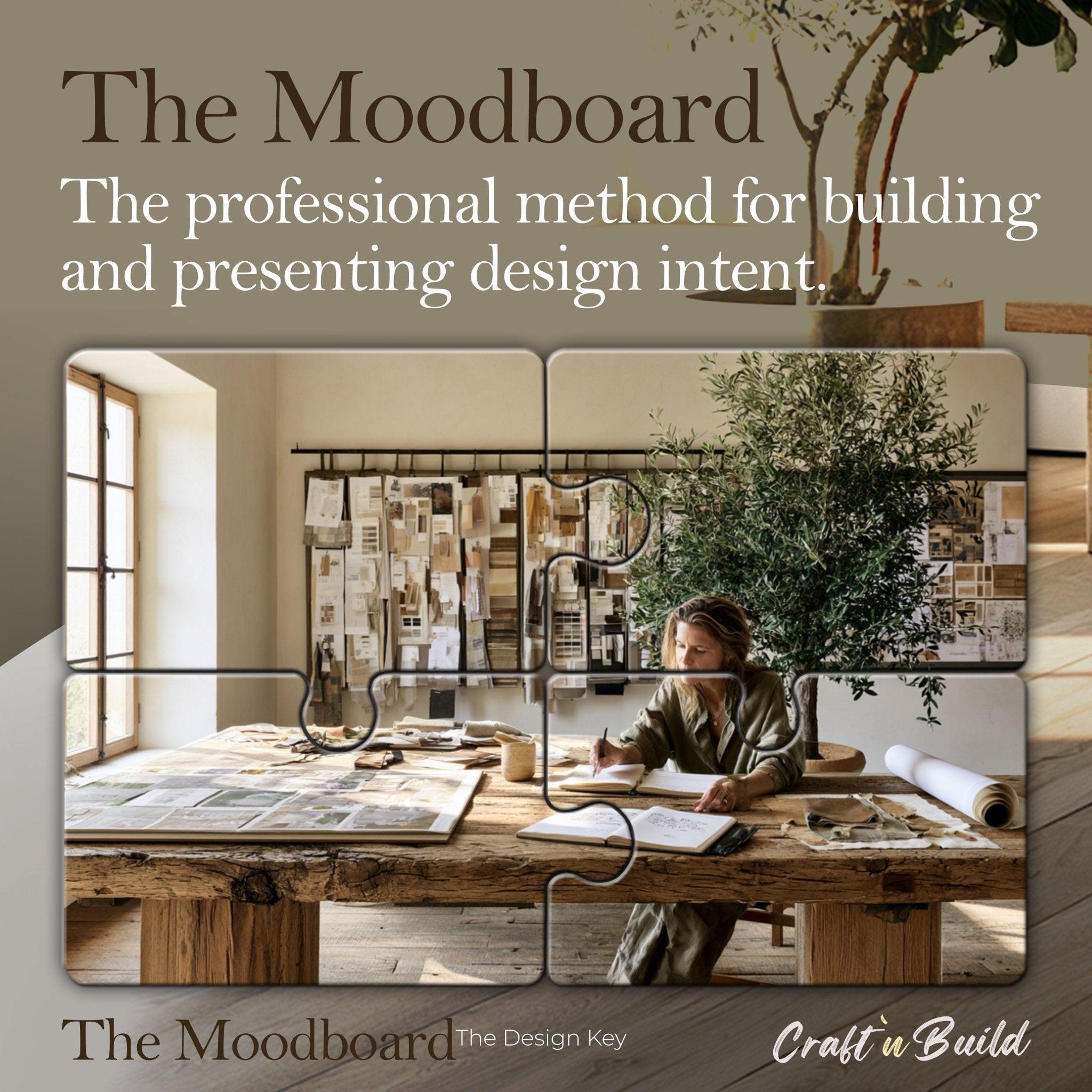
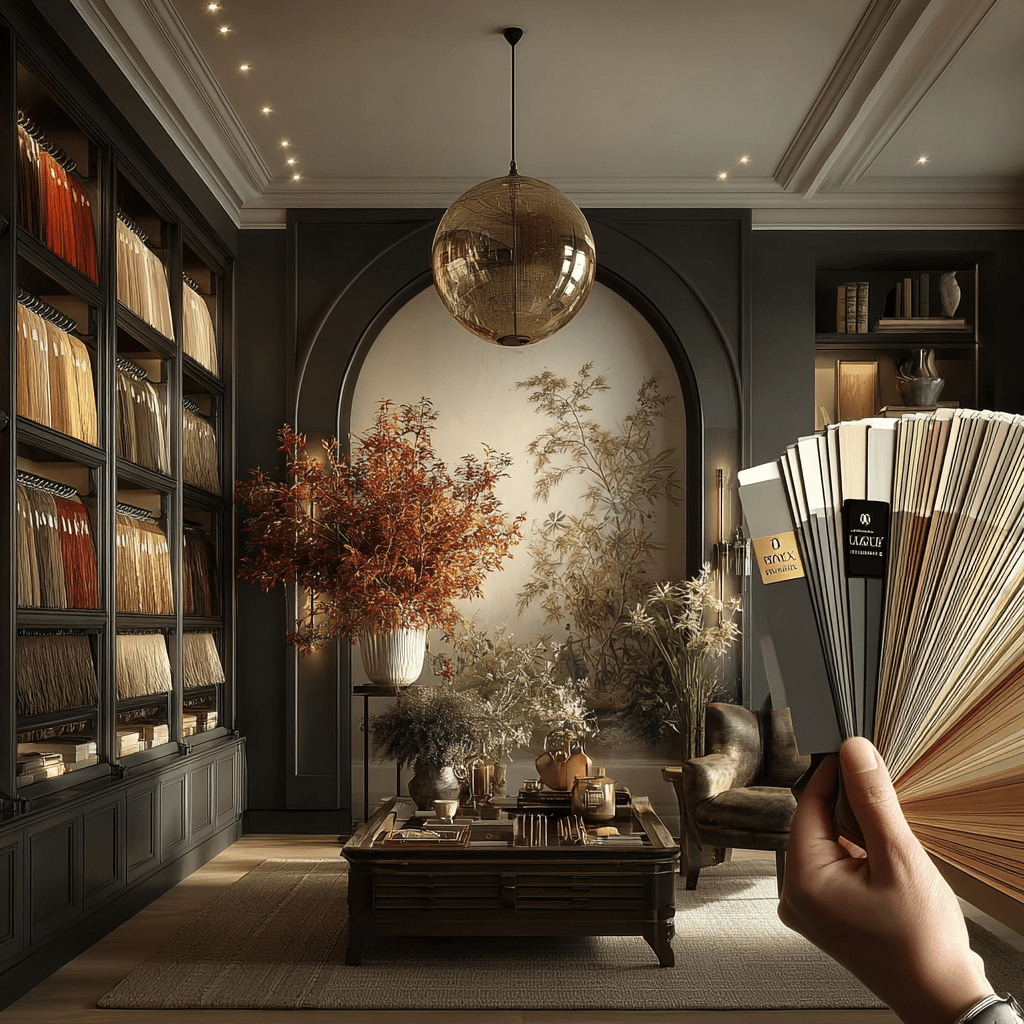
Transform the way you design. Learn the professional methodology behind one of the most powerful tools in interior design — the moodboard — and discover how color, material, and finish work together to create spaces that feel intentional, cohesive, and truly alive.
You've saved hundreds of images. You've built Pinterest boards that make your heart race. You have a sense — a strong one — of what beautiful looks like.
But when it comes to pulling it all together into something that actually works in a real space, for a real client, or for your own home, something gets lost in translation.
That gap between inspiration and execution? That's exactly what this course closes.
What This Course Is About
The Design Key — Color, Material & Finish is a professional-grade interior design course built around one of the most underestimated and misunderstood tools in the designer's toolkit: the mood-board.
Not the Pinterest board. Not the folder of saved screenshots. The professional moodboard — a curated, strategic, visual document that defines the entire direction of a design project before a single piece of furniture is ordered or a single wall is painted.
In professional interior design practice, a moodboard is three things simultaneously: a decision-making tool, a communication instrument, and a visual contract between designer and client. When it's done well, it eliminates guesswork, prevents expensive mistakes, and ensures that the space you deliver is the space the client imagined — not a costly approximation of it.
This course teaches you to build that kind of mood-board. From scratch. With intention, coherence, and professional confidence.
Who This Course Is For
This course was built for people who take design seriously — regardless of whether they hold a formal qualification.
You'll thrive here if you are:
A self-taught interior designer or decorator who is ready to move beyond intuition and develop a repeatable professional methodology that clients trust and respect.
An architect or design professional who wants to sharpen the front-end of your project process — the phase where visual alignment with the client is made or lost.
A furniture designer, maker, or craftsperson who works with clients on spatial projects and needs a structured way to present and communicate design direction.
A design-minded homeowner or renovator who is about to undertake a significant project and wants to approach it the way a professional would — with clarity, strategy, and a plan that actually holds together under pressure.
A design student who wants real-world methodology to complement your academic training — the kind of practical, professional framework that studios use on live projects.
No credentials required. A professional mindset is enough.
What Makes This Course Different
Most design courses teach you what things look like. This one teaches you how design decisions are made — and why the process matters as much as the outcome.
The approach here is deliberately professional-grade but universally accessible. Every concept is grounded in real project practice. Every framework is something you can take directly into your next project, whether that's a client commission or your own living room.
You will not find generic Pinterest-style inspiration here. What you will find is a methodology — a structured, repeatable way of thinking about color, material, and finish that produces coherent, confident, and beautifully resolved design every time.
What You Will Learn
The strategic value of the mood-board Understand why a professional moodboard is not a collage — it is a curated visual argument for a space that has not yet been built. Learn how it functions as a decision-making tool, a client communication instrument, and a formal checkpoint in the design process. Understand the real financial and professional cost of skipping or rushing this step.
How to read a client and a space Master the discipline of decoding a design brief — hearing what clients are actually communicating beneath the words they use, identifying unstated needs, and translating emotional language into precise visual direction. Learn to read a physical space analytically: light quality, spatial proportions, fixed constraints, and how each one shapes your design choices before you select a single material.
The visual language of color, material, and finish Develop a working understanding of color theory as it applies in real interior spaces — not on a color wheel in isolation, but in relationship to light, material, and the human experience of a room. Learn to read and use materials as a design language: the inherent character of wood, stone, metal, textile, and ceramic, and how finishes transform that character from warm to cool, from intimate to formal, from rustic to refined.
How to source and curate with professional discipline Learn the difference between sourcing and curating — between gathering and deciding. Develop the skill of intentional image sourcing from professional-grade references, and master the discipline of ruthless curation: testing every image against your design intent and removing anything that creates ambiguity. Learn the 20-to-10-to-6 reduction method used by professional designers to distill a broad collection into a focused, coherent visual argument.
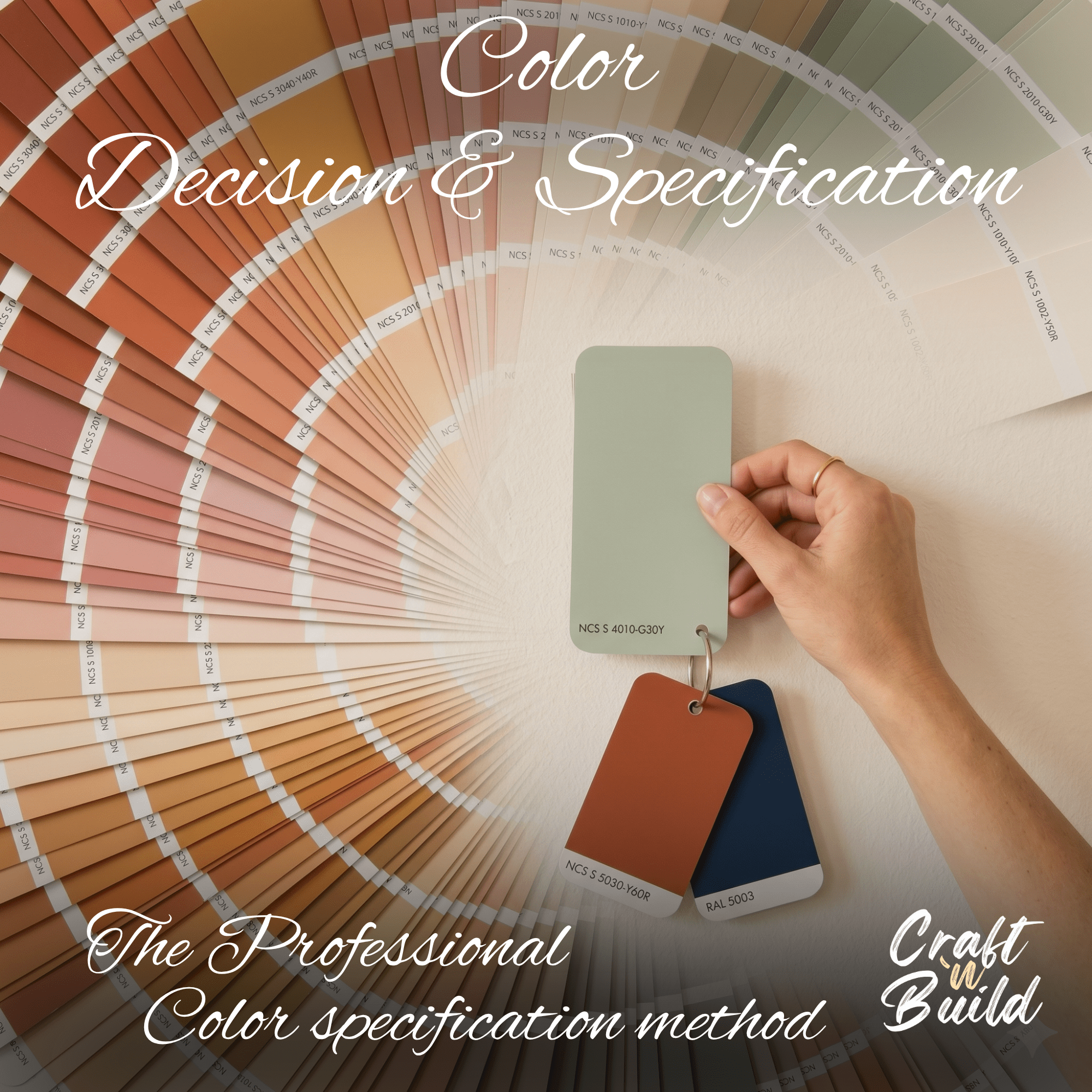
How to build a professional color and material palette Extract a palette directly from your curated imagery, apply the 60-30-10 principle to achieve visual balance, and represent your palette on the board with precision. Understand the finish dimension of a palette — how sheen levels from matte to gloss alter the mood of a space — and how to test your palette against the atmosphere statement that anchors your design.
Composition, typography, and visual hierarchy Learn to treat the moodboard as a composition, not a layout. Understand how scale, placement, visual weight, and negative space guide the viewer's eye and communicate hierarchy. Make intentional typographic choices that reinforce the design direction rather than contradict it.
How to present a moodboard professionally Structure a client presentation with confidence: how to set the context, introduce the atmosphere before the details, walk the board in a deliberate sequence, and invite feedback that is specific and actionable. Learn to distinguish between direction-level and element-level feedback, manage revisions without losing creative integrity, and use the approved moodboard as a decision filter throughout the rest of the project.
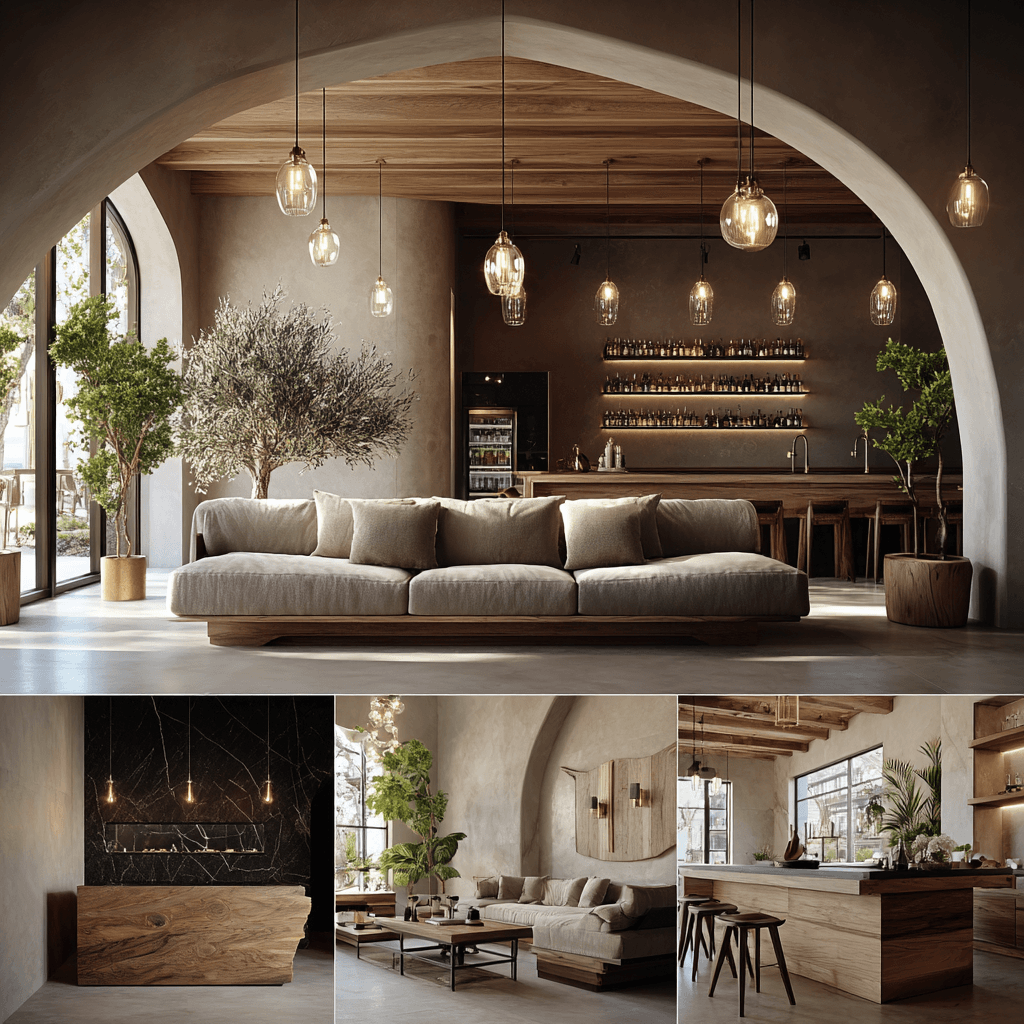
Real projects from brief to finished board Work through two complete real-world projects — a contemporary residential living room and a boutique commercial hospitality space — seeing every decision explained as it is made, from brief decoding to final annotated board.
What You Will Walk Away With
By the time you complete this course, you will have:
✦ A complete, professional-grade moodboard built from scratch using a real brief
✦ A personal design vocabulary — a precise understanding of how color, material, and finish work together to create atmosphere
✦ A client presentation framework you can use immediately on your next project
✦ A reusable professional workflow that you can apply to any design project, residential or commercial, small or large
✦ A set of professional templates: the Brief Intake Template, the Atmosphere Statement Framework, the Curation Checklist, the Palette Construction Sheet, the Presentation Script Outline, and the Feedback Translation Log
A Note on the Teaching Philosophy
This course does not gatekeep professional methodology behind academic credentials. The frameworks and tools taught here are the same ones used in professional design practice — and they are available to anyone with the commitment and curiosity to apply them.
Design is not a credential. It is a discipline. And this course treats you accordingly.
About the Series
This course is part of The Design Key — a professional methodology series from Craft'n Build that teaches the foundational skills of interior design practice. Each course in the series covers a core design discipline through the same rigorous, practical, real-world framework.
The Design Key is for designers who are serious about their craft — whatever their background, whatever their title.
Crafted by Craft'n Build — professional design education for the design-minded.