




-
Lifetime access.
-
Professional methodology
-
Learn at your pace
-
No experience needed
-
Immediate course access
-
Real-world application
-
Taught by practitioner
-
Constantly updated content
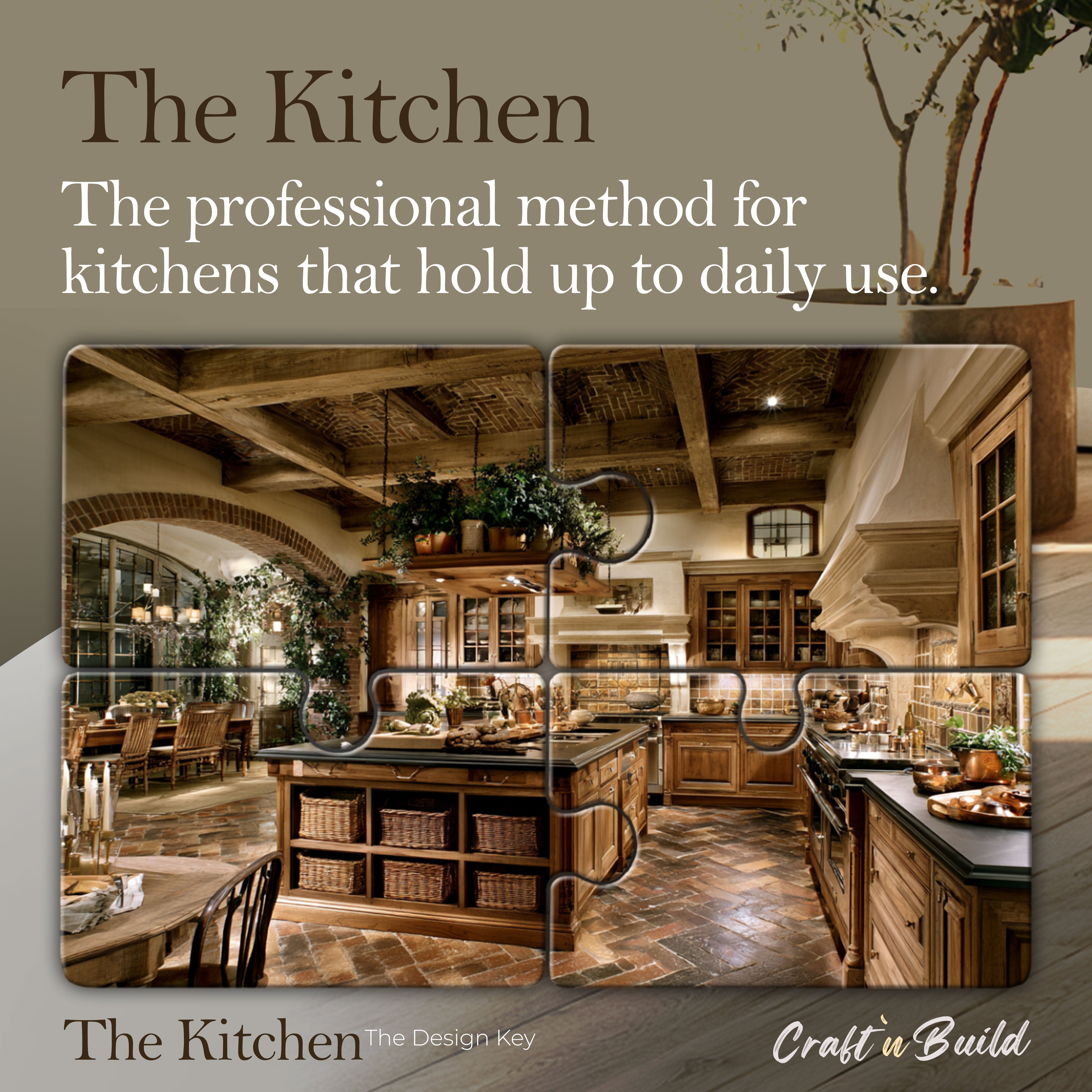
The Kitchen- The Design Key Series.

ALL.
Secure checkout — all major payment methods accepted
Pairs well with
The Kitchen- The Design Key Series.
What our students say.


Color-Material-Finish

Color-Material-Finish

Color-Material-Finish

Color-Material-Finish

Color-Material-Finish

Color-Material-Finish
What You'll Learn
-
Survey discipline
-
The cooking brief
-
Systems before cabinetry
-
Workflow & geometry
-
One material story
-
Buildable documentation
If you have any questions, you are always welcome to contact us. We'll get back to you as soon as possible, within 24 hours on weekdays.
-
Shipping Information
Use this text to answer questions in as much detail as possible for your customers.
-
Customer Support
Use this text to answer questions in as much detail as possible for your customers.
-
FAQ’s
Use this text to answer questions in as much detail as possible for your customers.
-
Contact Us
Use this text to answer questions in as much detail as possible for your customers.
Description
Short description
Full description
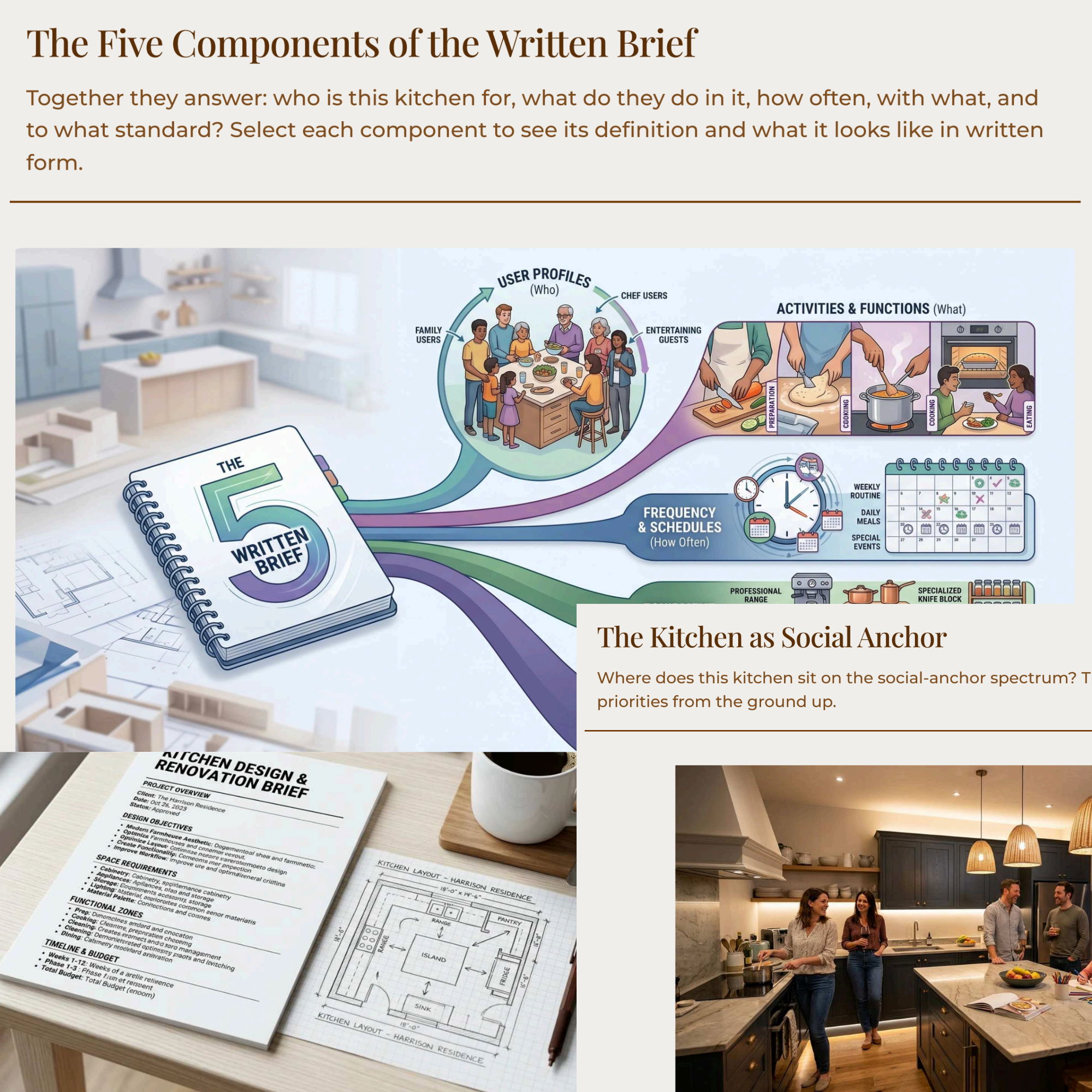
The Design Key — The Kitchen is a professional interior design course that teaches the renovation-first methodology for designing a kitchen from existing conditions to a contractor-ready specification. The kitchen is the most technically demanding room in a residential interior — fresh water, waste, gas, electricity at multiple loads, ventilation that has to reach outside, heat from cooking, moisture from cleaning, and structural load from cabinetry, appliances, and stone, all coexisting inside a finished room. Most kitchen failures are not aesthetic failures. They are decisions made in the wrong order. This course teaches the correct order across six modules and roughly twenty-five sections: read the existing conditions, write the cooking brief, resolve the systems, plan the cabinetry, specify the surfaces, and document everything to a standard a contractor can price and build from.
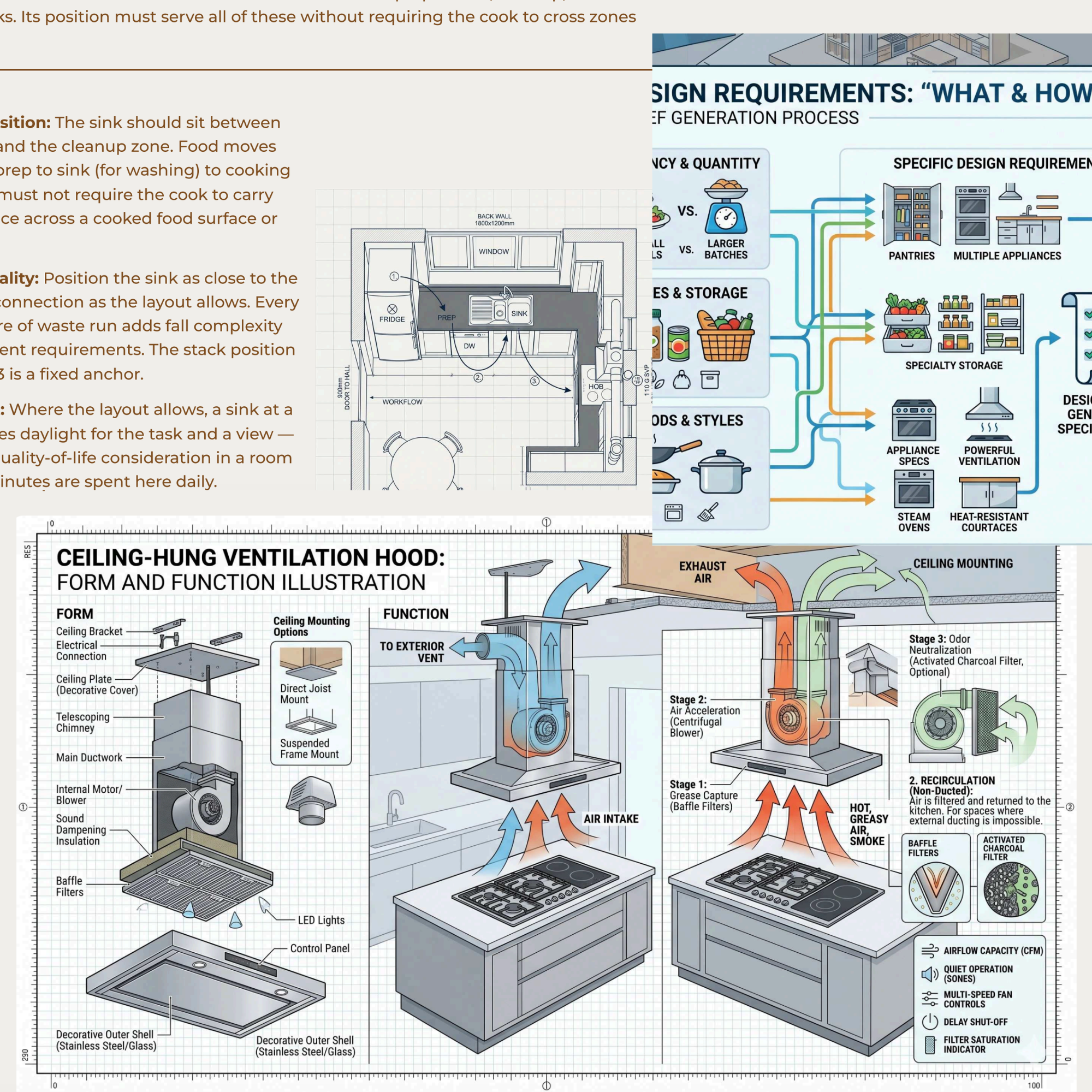
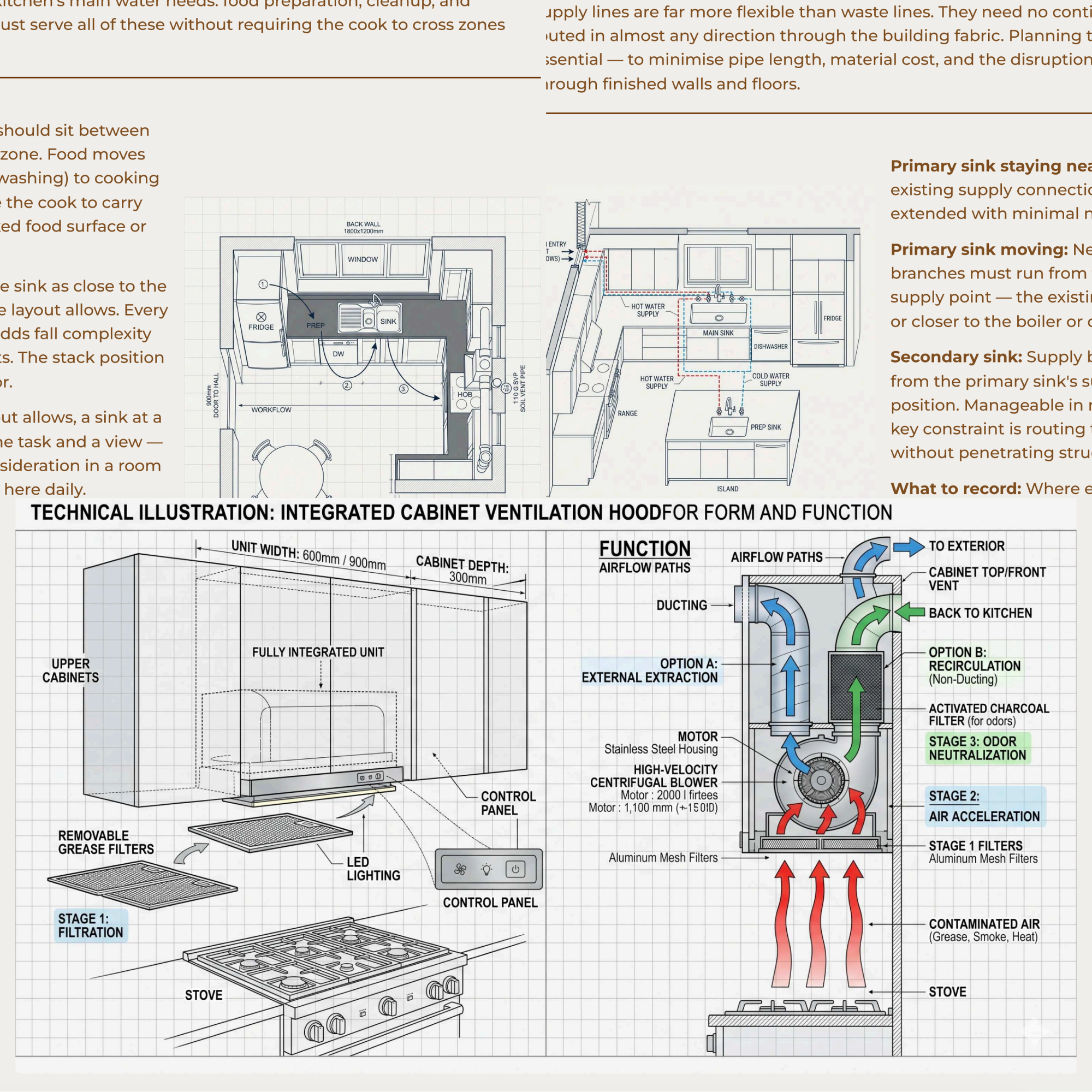
The most common kitchen mistake is choosing the cabinetry first. Cabinetry is the visible decision, the exciting decision — and it is the wrong one to make until the systems are resolved. By the time the joinery shop drawings arrive, the panel capacity, the ventilation path, the secondary sink, the heated floor, and the gas-or-electric decision should already be settled on paper. This course exists to enforce that order. You begin with what is already there — the walls, the supply lines, the panel, the ventilation paths, the floor structure — and you let those constraints shape every decision that follows. The result is a kitchen that works mechanically before it is asked to work visually.
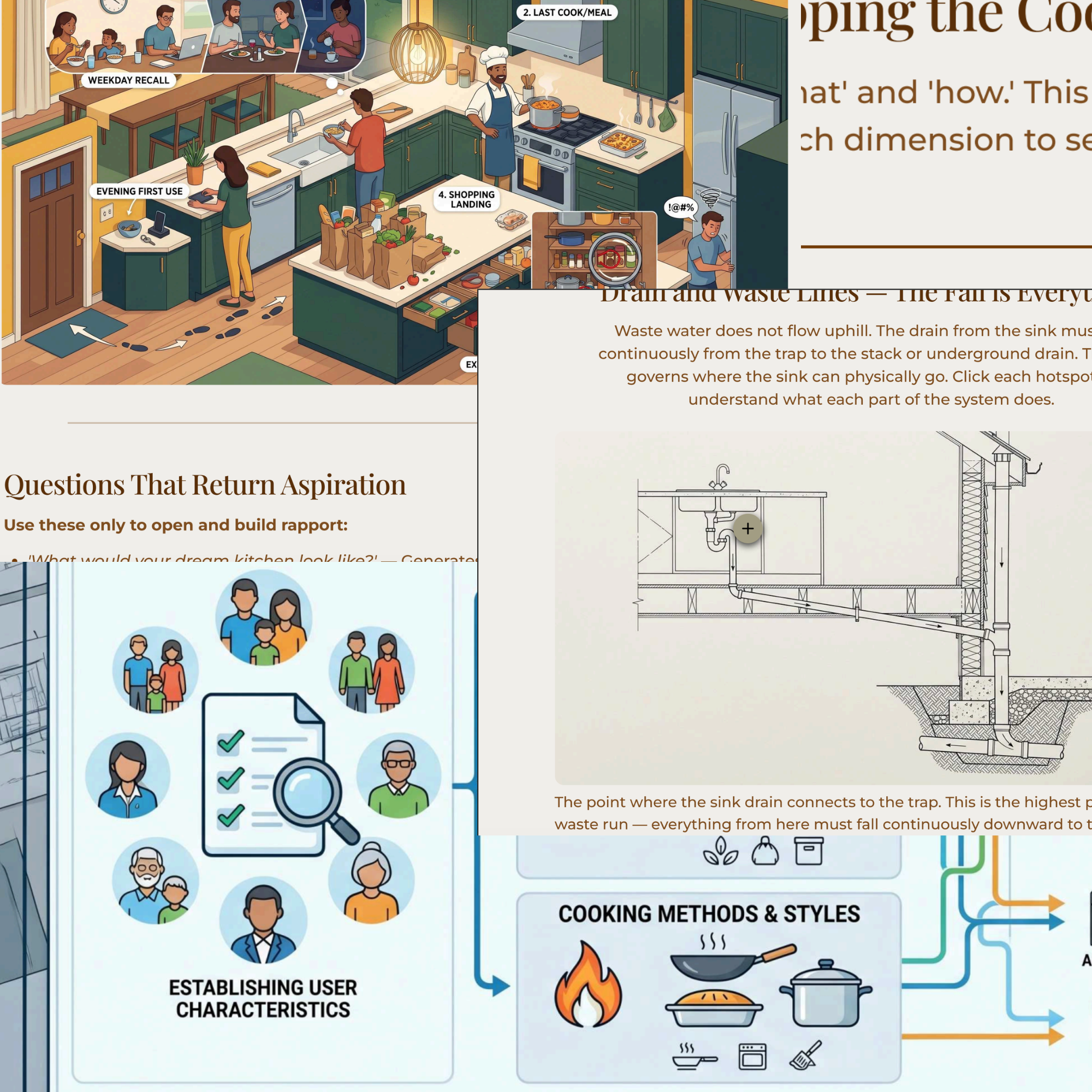
You will learn how to survey an existing kitchen the way a professional reads a building: physically, structurally, mechanically, and electrically. You will learn how to interview a household about how they actually cook — not how they imagine they cook — and how to turn that interview into a written cooking brief that becomes the decision filter for everything that follows. You will learn how to resolve plumbing, ventilation, electrical, gas, and heated-floor decisions in the correct sequence — before a single cabinet is drawn. You will learn how to translate the resolved systems and the written brief into a kitchen layout, define functional zones, dimension islands and peninsulas with intent, and plan storage in linear metres against a real equipment inventory.
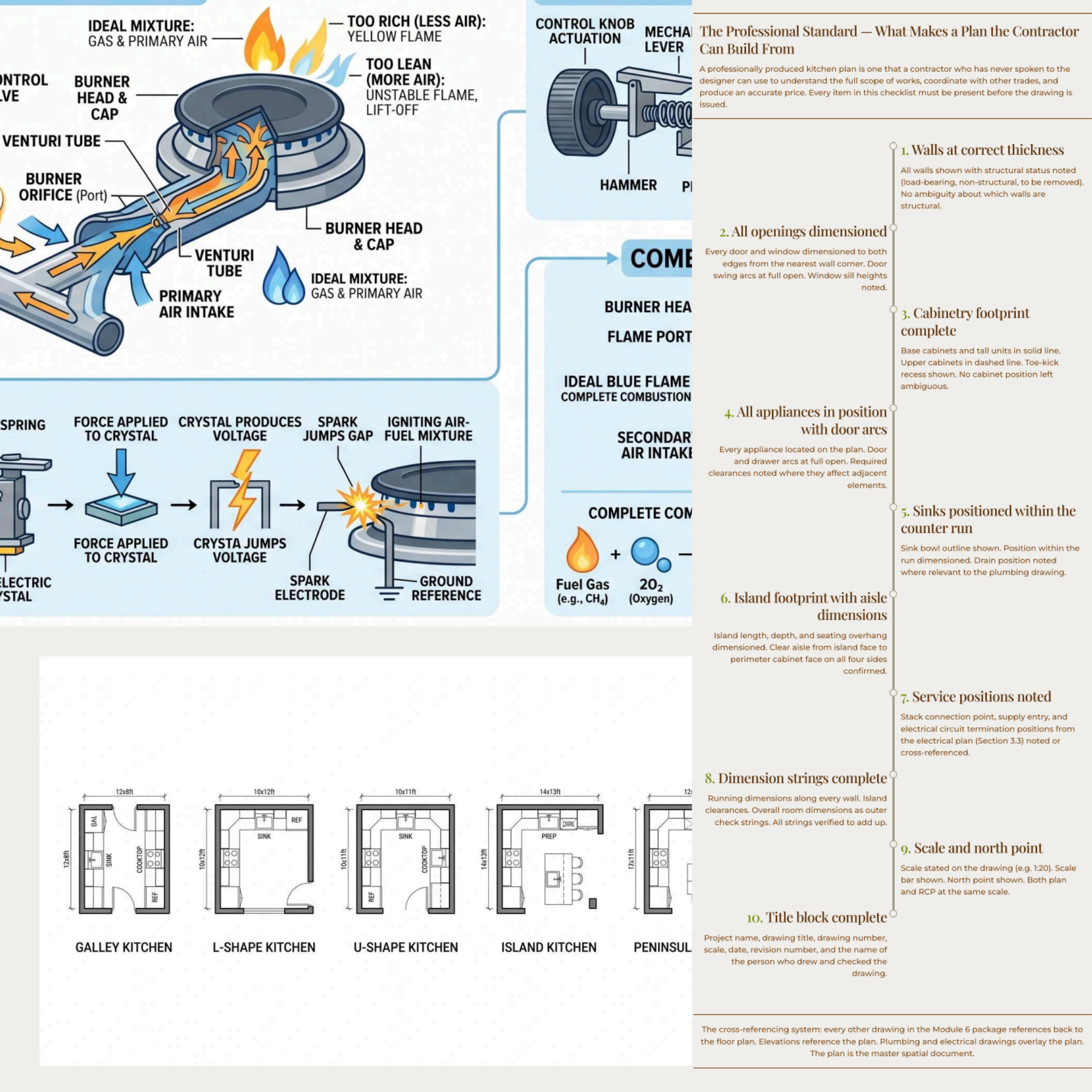
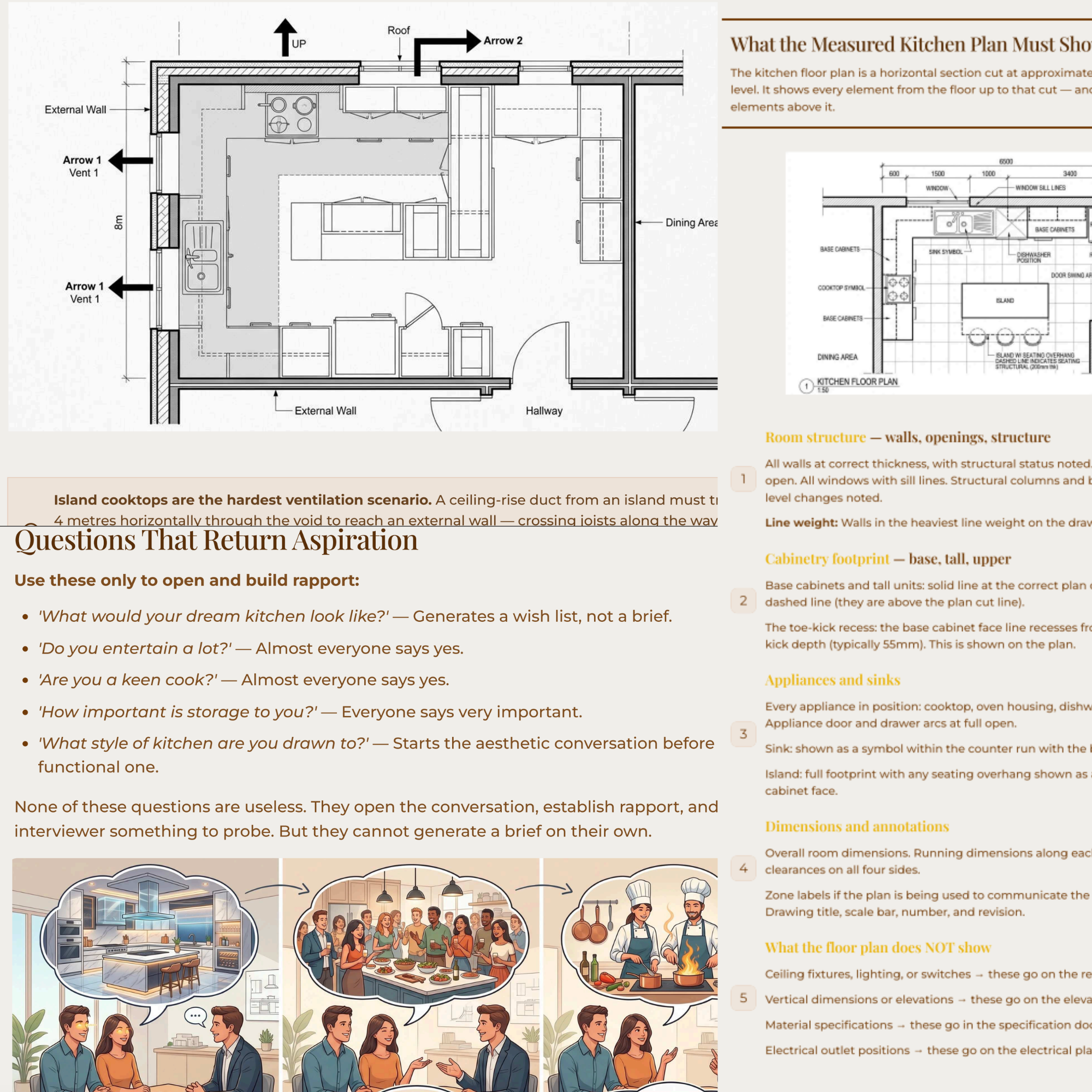
You will learn how to specify countertops, splashbacks, flooring, lighting, and hardware as one coordinated material story rather than five separate finish decisions. You will learn the lighting layers a kitchen actually needs — ambient, task, accent, decorative — and how to coordinate them with the switching plan resolved earlier. You will learn to write the consolidating specification: every material, finish, fixture and fitting, with model numbers, edge profiles, suppliers and quantities. And you will learn to produce the drawings that accompany it — measured plan, elevations on every wall, plumbing rough-in, electrical and switching, ventilation routing, cabinetry schedule, appliance schedule, hardware schedule — to a standard a contractor can price and build from.
The course is written for one audience: anyone who wants to design a kitchen using real professional methodology. Whether you are a homeowner planning your own renovation, a designer formalising your process, or a tradesperson who wants to think upstream of the contractor, the content does not change. The decisions are the same. The order is the same. The drawings are the same.
The Kitchen sits in the Rooms layer of The Design Key, alongside The Bathroom, The Bedroom, The Living Area, The Entry, and The Utility Room. It is a stand-alone course with its own Course Certificate, and it counts toward the Master Certificate of the full Design Key Master Programme. By the time you finish, you will have done what most kitchen projects never do: made every decision in the order that protects it. The catalogue will change, the client will change, the budget will change — the order will not. That order is the method. It is the same order you will apply to the next kitchen, and to every kitchen after.
Who is this for
Whether you're a working designer looking to sharpen your process, a design student building professional skills, or a homeowner who wants to approach their own space the way a professional would — the methodology is the same.
No credentials required. No prior experience assumed. Just a commitment to learning how design actually works.
About the Series
The Design Key is a professional methodology series from Craft'n Build. Each course covers a core discipline of interior design practice — taught through the same rigorous, real-world framework used by working designers.
This is not a series about aesthetics. It is a series about method. How professionals think, plan, and execute — and how those skills are available to anyone willing to learn them.
Color, Material & Finish is the first course in the series. Floor Plan, Bathroom, Kitchen and more follows.