


Start every project with a clear, defensible professional brief
Start every project with a clear, defensible professional brief


Le Résumé
1 cours
6 modules
32 leçons
Start every project with a clear, defensible professional brief
Eliminate early scope creep
Guide client decisions confidently
Reduce revision cycles
$89.00
Description
Chaque projet d’aménagement intérieur commence par un cahier des charges, qu’il soit écrit ou non. Le cahier des charges implicite — constitué de conversations dont on ne se souvient qu’à moitié, d’hypothèses optimistes et d’intentions enthousiastes mais vagues du client — est à l’origine de la plupart des frictions, des dérives de périmètre, des cycles de révision et des discussions budgétaires inconfortables. Lorsque ces problèmes apparaissent au milieu d’un projet, le coût de leur résolution est déjà bien supérieur à celui de leur prévention.
Le cahier des charges professionnel est tout autre chose. Il s’agit d’un document structuré, élaboré à partir d’un processus de collecte d’informations délibéré, rédigé de manière à protéger à la fois le designer et le client, et utilisé comme référence décisionnelle évolutive du premier contact jusqu’à la validation finale. Il élimine la sensation de page blanche au début d’un projet, car une fois le cahier des charges établi, c’est là que le travail commence. Il donne également au client son premier signal qu’il travaille avec un professionnel doté d’un processus — un signal qui se renforce à chaque étape suivante de la relation.
Ce cours enseigne le cahier des charges comme une discipline à part entière. Il constitue le point d’entrée fondamental de la série The Design Key — la méthodologie qui alimente tous les autres cours du programme. Le même cahier des charges que vous produirez à la fin de ce cours deviendra le point de départ du plan d’aménagement, de la palette de couleurs, du moodboard et de la méthodologie de rénovation enseignés dans les cours consacrés aux cuisines et aux salles de bains. Maîtrisez le cahier des charges, et vous transformerez la manière dont commence chacun de vos projets.
Vous apprendrez à mener un entretien de découverte client qui produit des informations utiles plutôt que des abstractions enthousiastes — quand écouter, quand insister, quand approfondir, quand vous arrêter. Vous découvrirez le questionnaire structuré qui guide la conversation sans lui donner l’allure d’un simple formulaire à remplir, ainsi que la préparation en amont qui transforme le premier échange, d’une discussion informelle en un entretien professionnel. Vous apprendrez à reconnaître lorsqu’un client joue un rôle plutôt qu’il ne révèle véritablement ses besoins, et à conclure la réunion par une prochaine étape claire plutôt que par une promesse sans échéance.
Vous apprendrez la discipline de la traduction — comment prendre le vocabulaire d’un client, fait de termes comme chaleureux, frais, apaisant, audacieux et intemporel, pour le convertir en exigences spécifiques, mesurables et défendables sur lesquelles reposera la suite du projet. Vous découvrirez la discipline en trois volets au cœur de tout cahier des charges professionnel : distinguer les contraintes, les préférences et les exigences non négociables. Confondre ces catégories est le moyen le plus rapide de faire dérailler un projet ; les documenter de façon à ce qu’elles ne puissent plus être confondues constitue la signature méthodologique d’un cahier des charges professionnel.
Vous apprendrez à rédiger le cahier des charges lui-même — sa structure, son ton, son niveau de détail et son processus de validation — et repartirez avec un modèle complet et réutilisable, adaptable aux projets résidentiels, commerciaux et de rénovation. Vous apprendrez à identifier les parties prenantes cachées qui ne participent pas à l’entretien initial mais qui influenceront le projet, ainsi qu’à cartographier les pouvoirs de décision afin que le partenaire absent qui intervient au troisième mois du projet découvre un document qui a déjà pris sa position en compte.
Plus important encore, vous apprendrez à maintenir le cahier des charges vivant. La principale originalité de ce cours réside dans le module consacré au cahier des charges évolutif — comment l’utiliser comme référence décisionnelle du projet tout au long de son déroulement, comment gérer les moments où il commence à perdre sa pertinence et comment redresser un projet qui s’est éloigné de ses fondations. C’est ce module qui distingue les praticiens utilisant le cahier des charges comme une formalité administrative de ceux qui l’utilisent comme un véritable outil professionnel.
Le cours se termine par deux cahiers des charges complets et commentés — l’un résidentiel, l’autre commercial — ainsi que par la boîte à outils professionnelle complète : le questionnaire de découverte, la matrice des contraintes et des préférences, le modèle de cahier des charges, le bilan de santé du cahier des charges et le protocole de gestion des changements. Chaque outil est prêt à être utilisé immédiatement dans votre prochain projet client réel. À la fin du cours, vous saurez non seulement rédiger un cahier des charges, mais vous disposerez aussi de la méthodologie, des outils et de la posture professionnelle qui en feront une composante permanente de votre pratique.

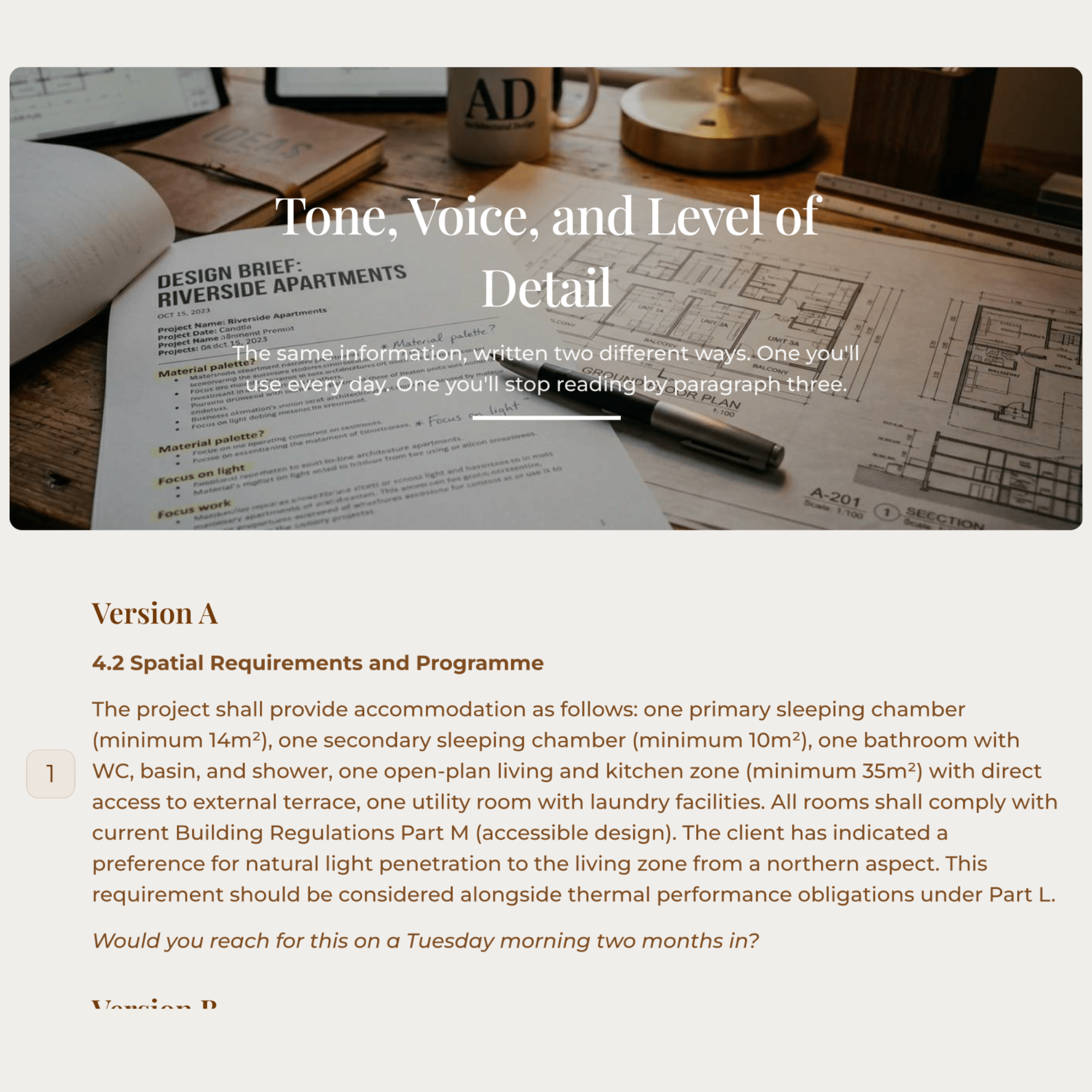
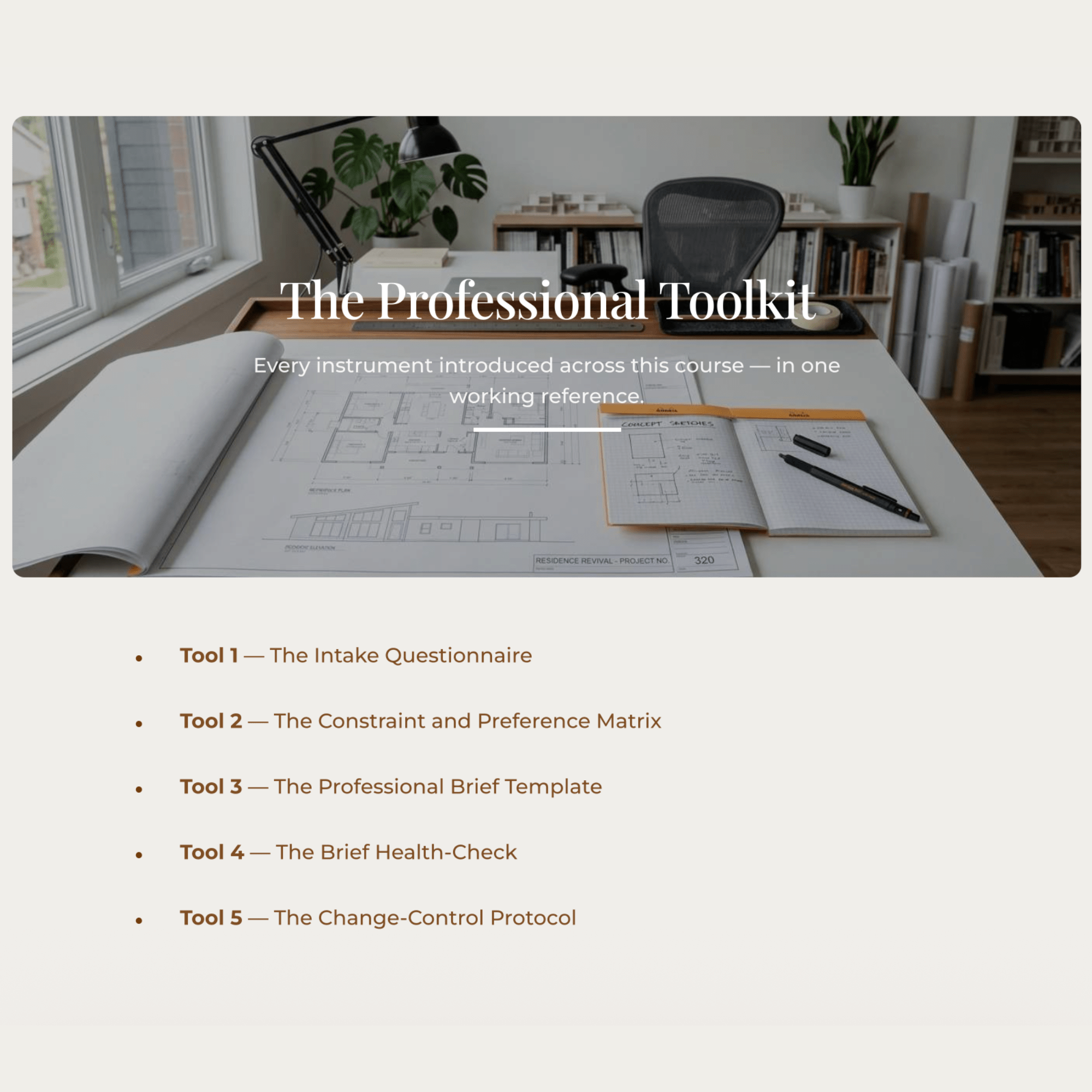
Le Résumé
$89.00
1 cours
6 modules
32 leçons
Start every project with a clear, defensible professional brief
Eliminate early scope creep
Guide client decisions confidently
Reduce revision cycles
Description
Chaque projet d’aménagement intérieur commence par un cahier des charges, qu’il soit écrit ou non. Le cahier des charges implicite — constitué de conversations dont on ne se souvient qu’à moitié, d’hypothèses optimistes et d’intentions enthousiastes mais vagues du client — est à l’origine de la plupart des frictions, des dérives de périmètre, des cycles de révision et des discussions budgétaires inconfortables. Lorsque ces problèmes apparaissent au milieu d’un projet, le coût de leur résolution est déjà bien supérieur à celui de leur prévention.
Le cahier des charges professionnel est tout autre chose. Il s’agit d’un document structuré, élaboré à partir d’un processus de collecte d’informations délibéré, rédigé de manière à protéger à la fois le designer et le client, et utilisé comme référence décisionnelle évolutive du premier contact jusqu’à la validation finale. Il élimine la sensation de page blanche au début d’un projet, car une fois le cahier des charges établi, c’est là que le travail commence. Il donne également au client son premier signal qu’il travaille avec un professionnel doté d’un processus — un signal qui se renforce à chaque étape suivante de la relation.
Ce cours enseigne le cahier des charges comme une discipline à part entière. Il constitue le point d’entrée fondamental de la série The Design Key — la méthodologie qui alimente tous les autres cours du programme. Le même cahier des charges que vous produirez à la fin de ce cours deviendra le point de départ du plan d’aménagement, de la palette de couleurs, du moodboard et de la méthodologie de rénovation enseignés dans les cours consacrés aux cuisines et aux salles de bains. Maîtrisez le cahier des charges, et vous transformerez la manière dont commence chacun de vos projets.
Vous apprendrez à mener un entretien de découverte client qui produit des informations utiles plutôt que des abstractions enthousiastes — quand écouter, quand insister, quand approfondir, quand vous arrêter. Vous découvrirez le questionnaire structuré qui guide la conversation sans lui donner l’allure d’un simple formulaire à remplir, ainsi que la préparation en amont qui transforme le premier échange, d’une discussion informelle en un entretien professionnel. Vous apprendrez à reconnaître lorsqu’un client joue un rôle plutôt qu’il ne révèle véritablement ses besoins, et à conclure la réunion par une prochaine étape claire plutôt que par une promesse sans échéance.
Vous apprendrez la discipline de la traduction — comment prendre le vocabulaire d’un client, fait de termes comme chaleureux, frais, apaisant, audacieux et intemporel, pour le convertir en exigences spécifiques, mesurables et défendables sur lesquelles reposera la suite du projet. Vous découvrirez la discipline en trois volets au cœur de tout cahier des charges professionnel : distinguer les contraintes, les préférences et les exigences non négociables. Confondre ces catégories est le moyen le plus rapide de faire dérailler un projet ; les documenter de façon à ce qu’elles ne puissent plus être confondues constitue la signature méthodologique d’un cahier des charges professionnel.
Vous apprendrez à rédiger le cahier des charges lui-même — sa structure, son ton, son niveau de détail et son processus de validation — et repartirez avec un modèle complet et réutilisable, adaptable aux projets résidentiels, commerciaux et de rénovation. Vous apprendrez à identifier les parties prenantes cachées qui ne participent pas à l’entretien initial mais qui influenceront le projet, ainsi qu’à cartographier les pouvoirs de décision afin que le partenaire absent qui intervient au troisième mois du projet découvre un document qui a déjà pris sa position en compte.
Plus important encore, vous apprendrez à maintenir le cahier des charges vivant. La principale originalité de ce cours réside dans le module consacré au cahier des charges évolutif — comment l’utiliser comme référence décisionnelle du projet tout au long de son déroulement, comment gérer les moments où il commence à perdre sa pertinence et comment redresser un projet qui s’est éloigné de ses fondations. C’est ce module qui distingue les praticiens utilisant le cahier des charges comme une formalité administrative de ceux qui l’utilisent comme un véritable outil professionnel.
Le cours se termine par deux cahiers des charges complets et commentés — l’un résidentiel, l’autre commercial — ainsi que par la boîte à outils professionnelle complète : le questionnaire de découverte, la matrice des contraintes et des préférences, le modèle de cahier des charges, le bilan de santé du cahier des charges et le protocole de gestion des changements. Chaque outil est prêt à être utilisé immédiatement dans votre prochain projet client réel. À la fin du cours, vous saurez non seulement rédiger un cahier des charges, mais vous disposerez aussi de la méthodologie, des outils et de la posture professionnelle qui en feront une composante permanente de votre pratique.
Méthodologie professionnelle
Aucun prérequis
Application dans le monde réel
Enseigné par un praticien

From scattered notes to complete design clarity.
Choisissez votre parcours
Commencez par n’importe quelle pièce ou suivez la méthode complète.


Portée et accès
Accès immédiat à la pièce ou au module système de votre choix
Accès instantané à vie aux 12 cours dès le premier jour
Point de départ
Commencez par la salle ou la compétence exacte dont votre projet actuel a besoin
Programme séquentiel complet : Fondations, systèmes et pièces
Engagement financier
Un paiement unique par cours. Aucun abonnement, aucun engagement
Un seul paiement initial — économisez 20 % par rapport à l’achat de modules individuels
Diplômes et titres de compétences
Certificat de cours vérifié pour chaque module terminé
Diplôme du programme complet, examen final complet et certificats individuels
Progression de l’apprentissage
100 % cumulables : chaque module terminé compte pour l’obtention de votre diplôme
Liberté totale de suivre la séquence structurée ou de passer librement d’une salle à l’autre


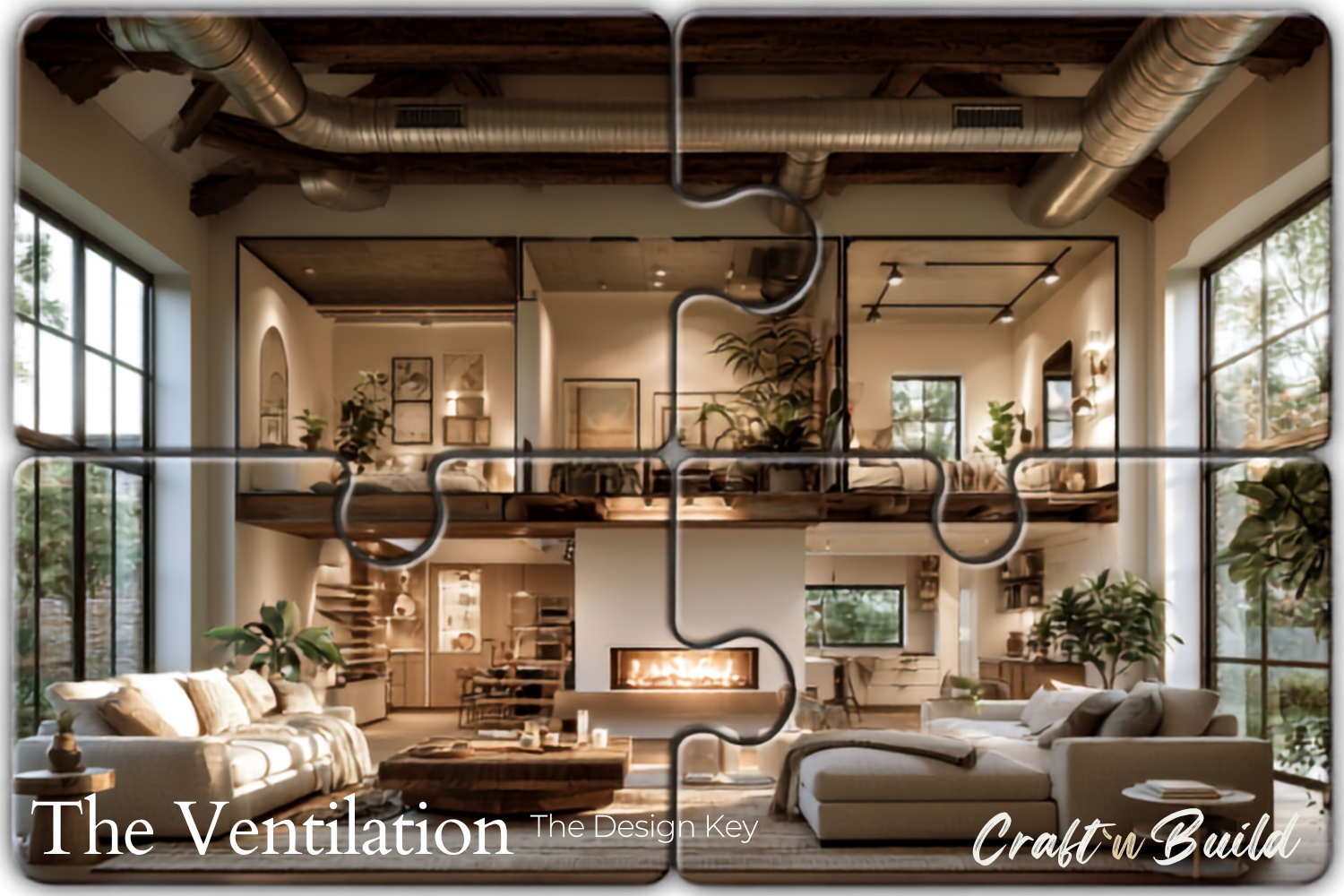
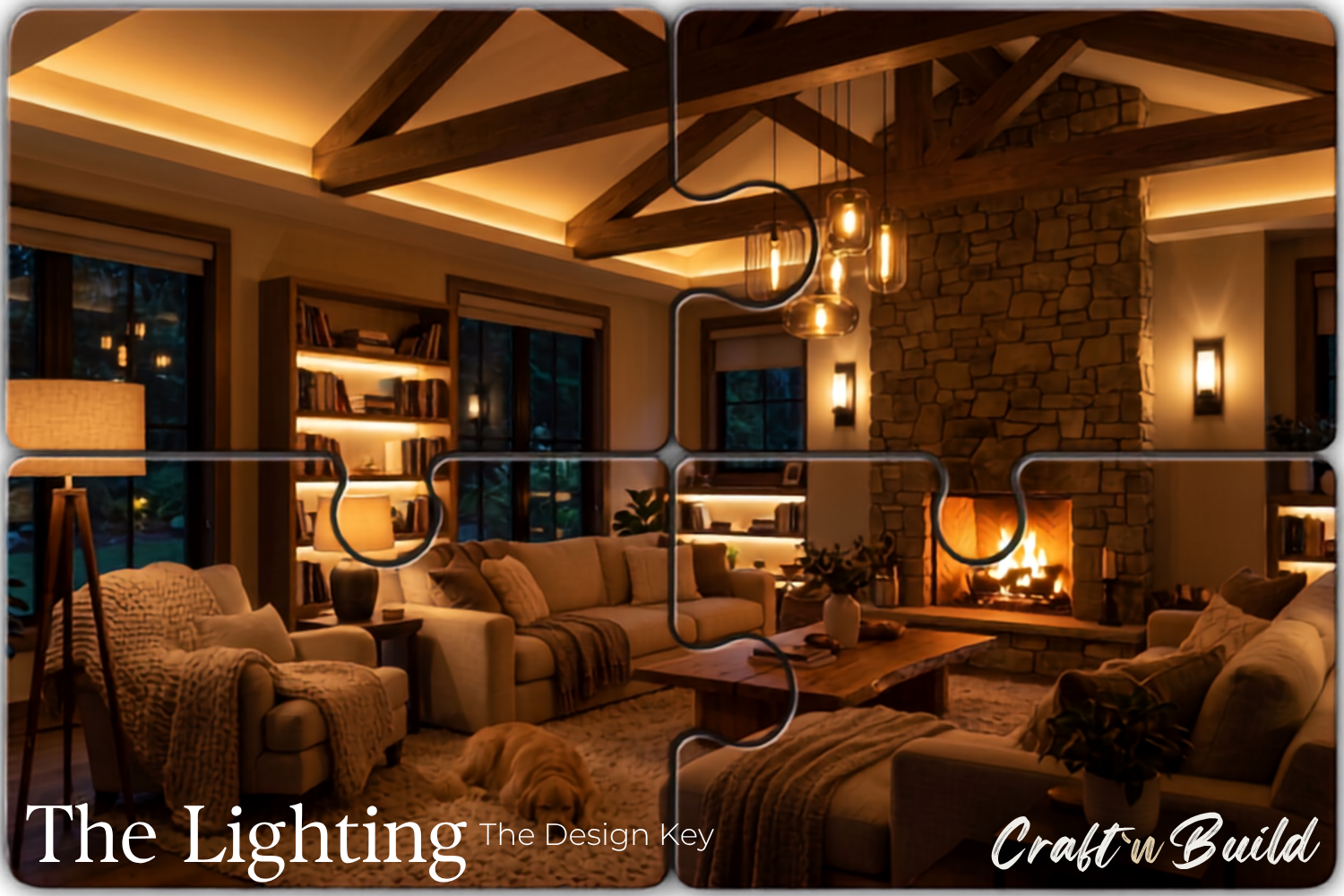

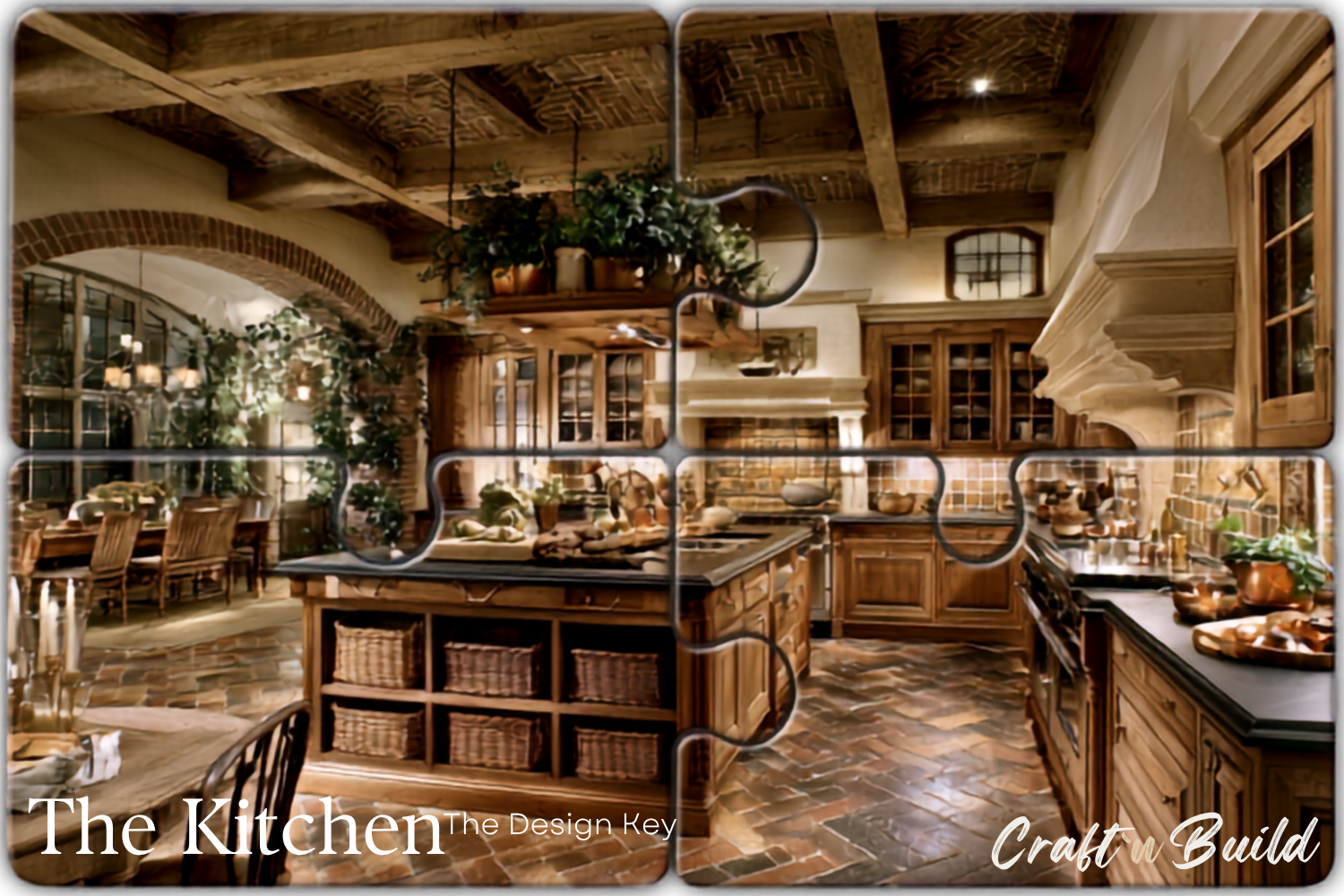
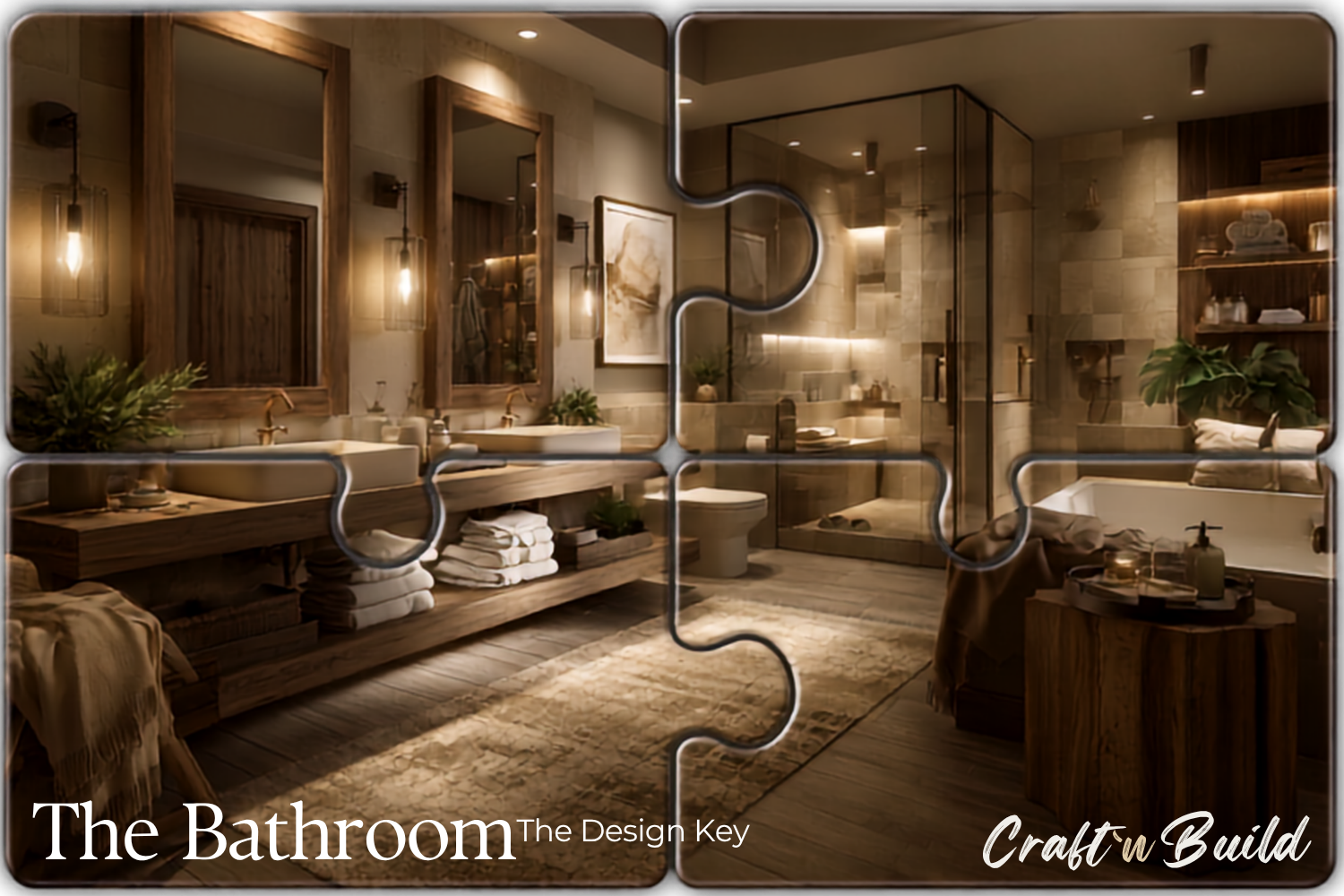
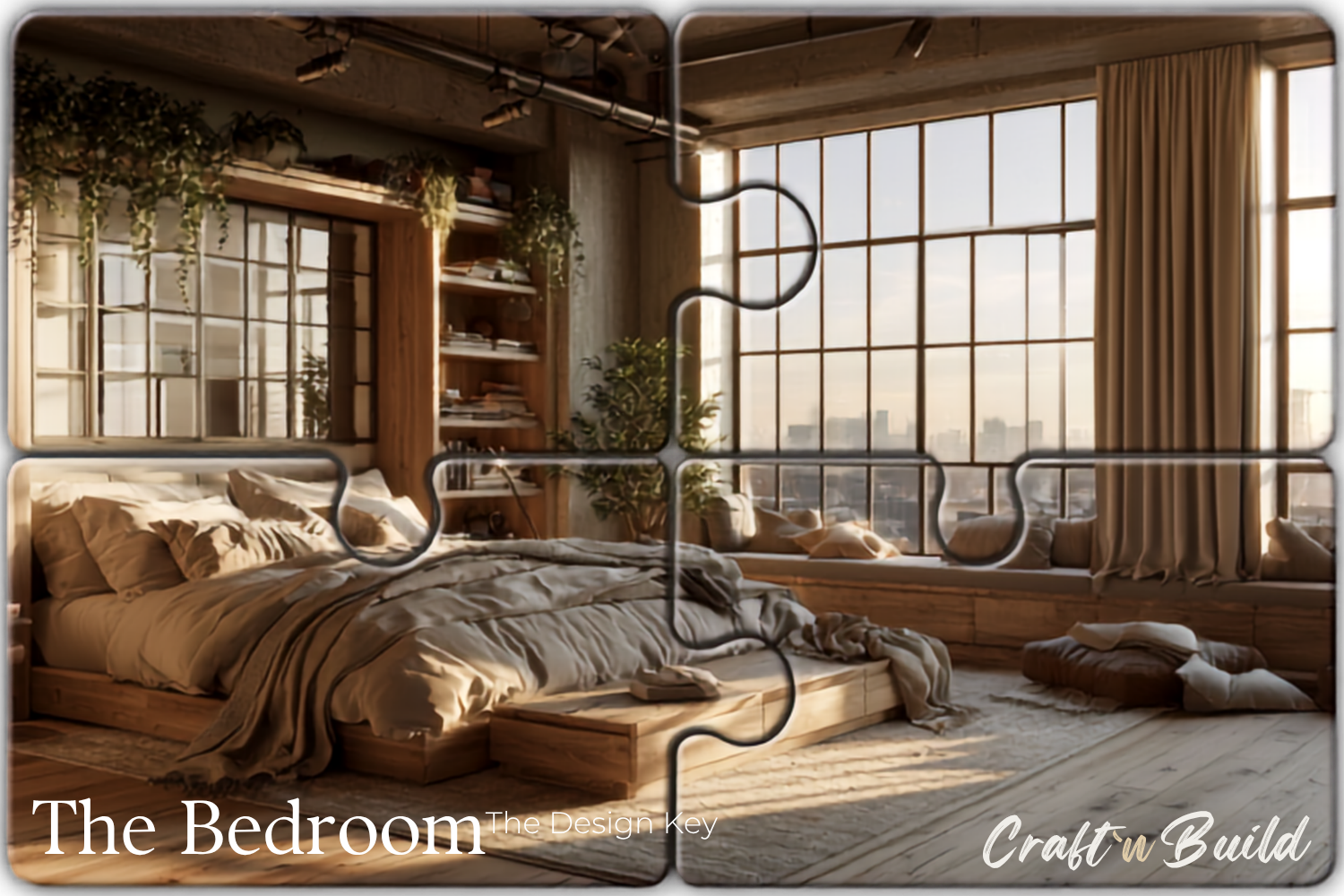

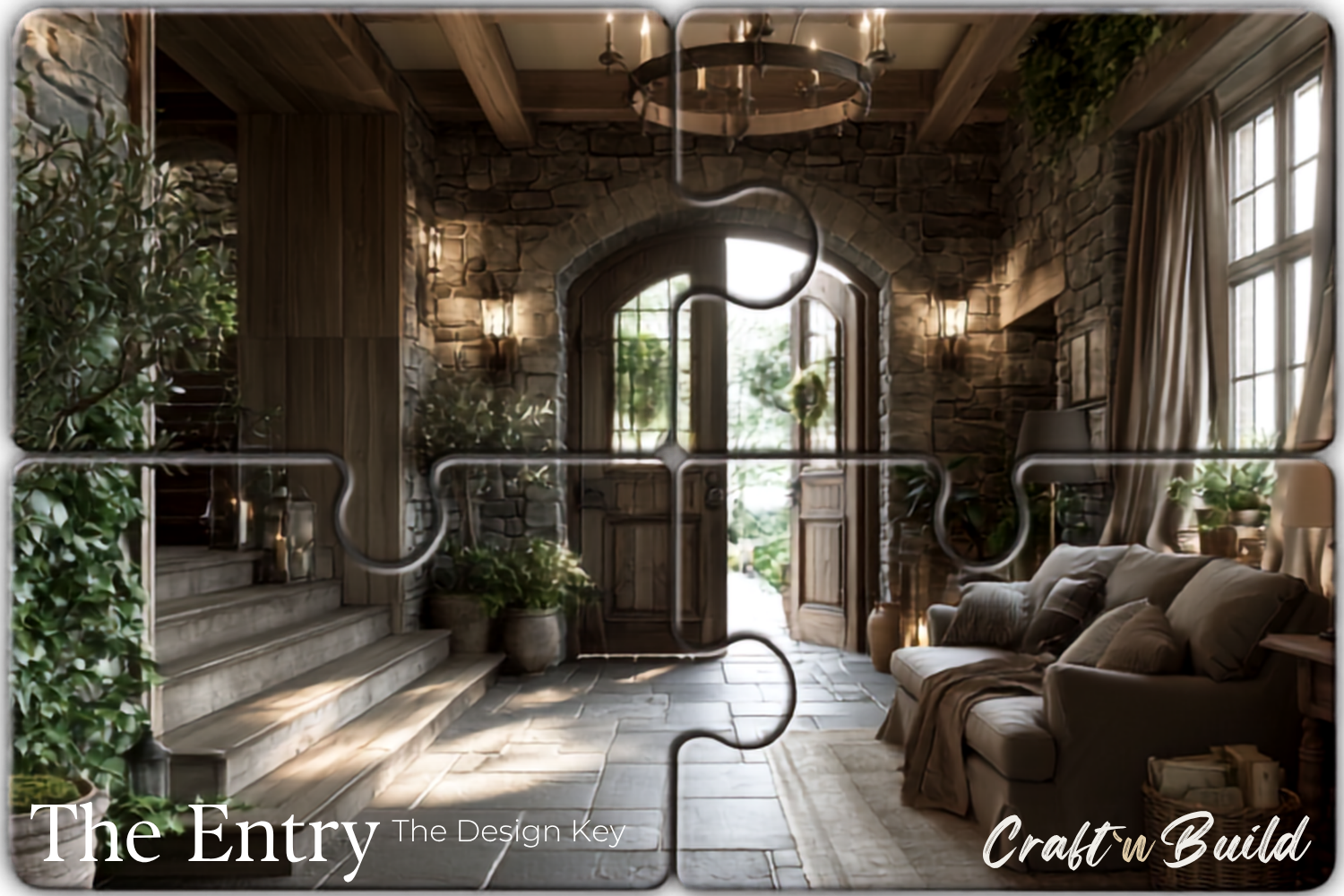
Un programme. 12 cours. Aucun engagement initial.
Nous avons conçu The Design Key comme le système de formation professionnelle le plus flexible du secteur. Que vous vous attaquiez à un seul projet client concret ce week-end ou que vous visiez une maîtrise complète de votre carrière, vous gardez le contrôle total de votre budget et de votre calendrier.
Voici comment notre système modulaire s’adapte à vos besoins :
- Le parcours à projet unique : Vous avez simplement besoin de maîtriser les plans de cuisine ou les schémas d’éclairage ? Inscrivez-vous à ce cours individuel pour seulement 89 $ et commencez dès maintenant.
- Le parcours personnalisé : Combinez librement 2, 3 ou 5 cours selon vos objectifs professionnels actuels ou les exigences de votre projet. Apprenez ce dont vous avez besoin, exactement au moment où vous en avez besoin.
- Le parcours d’excellence : Chaque cours que vous terminez vous permet d’obtenir un certificat de cours individuel. Suivez les 12 cours à votre propre rythme pour être admissible à l’examen final et obtenir votre diplôme du programme.
Vous ne pouvez pas mal commencer.
Chaque cours que vous suivez est automatiquement pris en compte dans votre diplôme final. Vous n’avez jamais à vous engager dans plus d’un cours à la fois, ni financièrement ni structurellement. Modifiez votre stratégie, mettez votre apprentissage en pause ou réorientez votre attention quand vous le souhaitez.
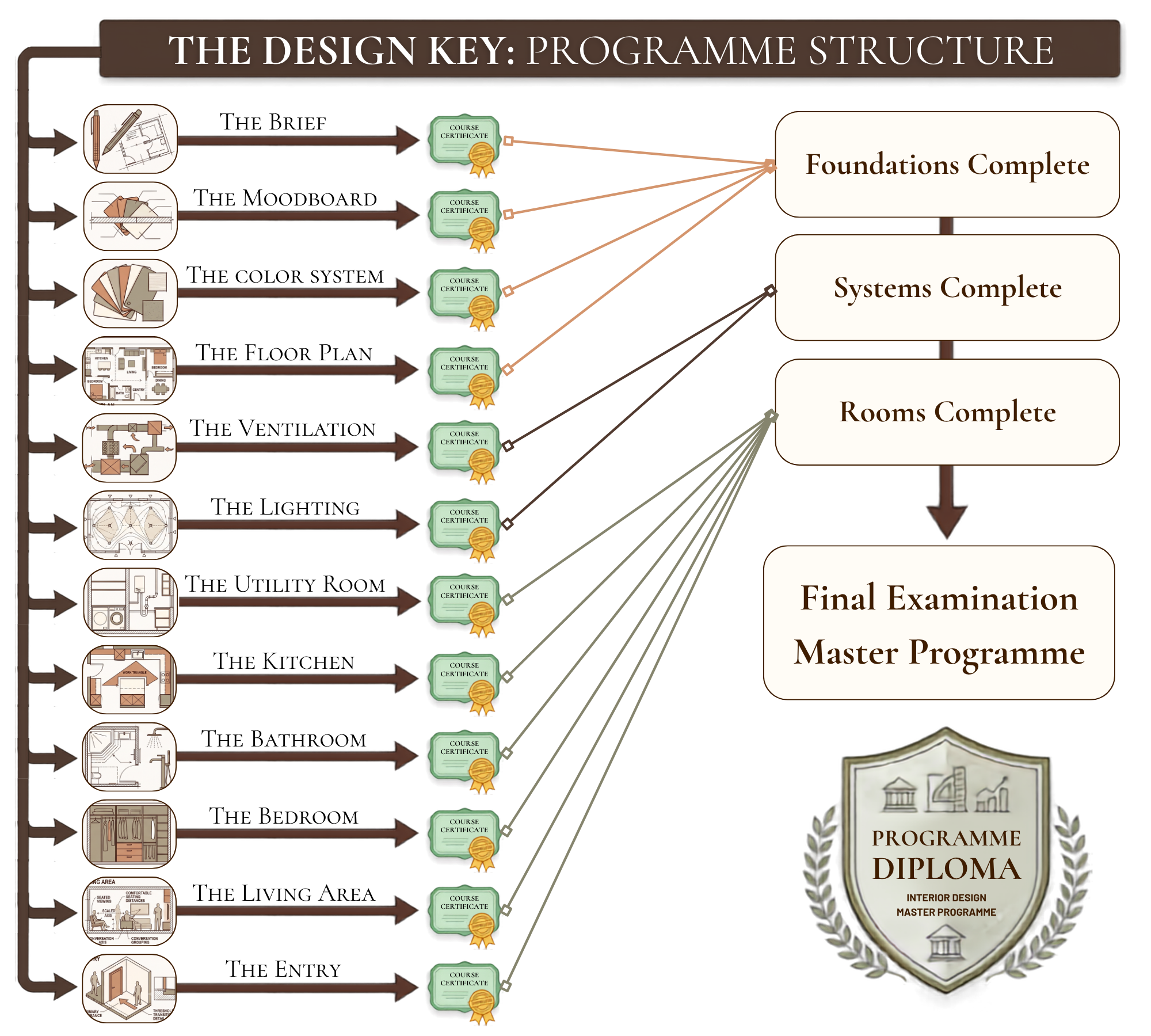
Quatre points de départ — une seule méthode.
À qui s’adressent ces cours ?

Designers en activité
Professionnels actifs
Ne vous fiez plus uniquement à votre instinct ni aux approximations nocturnes. Structurez votre flux de travail quotidien grâce à un système reproductible et infaillible qui vous fait gagner des heures, améliore votre précision spatiale et vous permet de facturer des honoraires de conception haut de gamme.

Designers en herbe
Lanceurs de carrière
Évitez le coûteux cursus universitaire de quatre ans. Constituez de zéro un portfolio puissant de compétences techniques en design de niveau professionnel et acquérez la confiance absolue nécessaire pour décrocher votre tout premier client rémunéré.

Architecte technique
Dessinateurs techniques
Faites le lien entre une vision créative brute et une exécution spatiale irréprochable. Maîtrisez les normes rigoureuses de dessin technique, l’ergonomie spatiale avancée et les flux de travail techniques capables de résister à l’examen minutieux des ingénieurs sur le terrain.

Propriétaire passionné
Propriétaires ambitieux
Ne prenez plus à la légère les décisions de conception à enjeux élevés qui coûtent cher. Apprenez à lire, dessiner et planifier votre espace comme un professionnel chevronné du secteur, afin de remettre des briefs impeccables et de construire la maison de vos rêves exactement comme vous l’aviez imaginée.
Comment tirer le meilleur parti de ces cours :
Quatre étapes pour passer du visionnage à l’action.
1
Conçu pour travailler, pas seulement regarder
Gardez un stylo et du papier à portée de main. C’est un cours que vous pratiquez, et non un cours que vous regardez passivement — la méthode s’ancre mieux lorsque vous la mettez vous-même en pratique.

Gardez un stylo et du papier à portée de main. C’est un cours que vous pratiquez, et non un cours que vous regardez passivement — la méthode s’ancre mieux lorsque vous la mettez vous-même en pratique.
2
Traitez un module à la fois
Chaque module constitue une idée complète. Travaillez-en un par séance, terminez son exercice avant de passer au suivant et laissez-le vous imprégner au lieu de vous précipiter jusqu’à la fin.

3
Appliquez-le à un espace réel au fur et à mesure
Utilisez votre propre maison, un projet passé ou un brief imaginé. Appliquez chaque méthode à quelque chose de réel pour en faire une compétence, pas seulement des notes.

4
Prévoyez environ une semaine, à votre rythme
La plupart des gens terminent un cours en environ une semaine, à raison d’un module par jour, tranquillement — plus vite si vous accélérez, plus lentement si vous prenez le temps d’en profiter. Il n’y a pas de chronomètre : l’accès à vie vous permet de choisir votre rythme.

FAQ
Qu’est-ce que « The Design Key » ?
Design Key est une série de formations professionnelles en méthodologie proposées par Craft'n Build, chacune couvrant une discipline essentielle de l'architecture d’intérieur — le brief, le moodboard, le plan d’aménagement, l’éclairage, la cuisine, et bien d’autres. Elle enseigne la manière dont les designers en exercice réfléchissent, planifient et concrétisent réellement leurs projets, à travers le même cadre rigoureux que celui utilisé dans la pratique professionnelle. Il s’agit de méthode, pas d’esthétique ni d’inspiration.
Pour qui est-ce ?
Toute personne souhaitant apprendre une méthode professionnelle de design d’intérieur, quel que soit son point de départ — designers en activité, étudiants et personnes en reconversion, propriétaires souhaitant aménager leur espace dans les règles de l’art, ainsi que maîtres d’ouvrage ayant besoin de rédiger un brief et d’évaluer le travail. Aucun diplôme ni aucune expérience préalable ne sont requis. La méthode est la même pour tout le monde.
Qu’est-ce que j’obtiens et comment puis-je y accéder ?
Tout est disponible en ligne et vous appartient dès que vous achetez — accès instantané, aucune attente, rien n’est expédié. Vous suivez le cours dans votre navigateur, sur n’importe quel appareil, et téléchargez les supports de cours inclus pour les conserver. L’accès n’expire pas.
Le cours est-il en vidéo, en texte ou les deux ?
Les deux. Chaque cours combine des leçons vidéo avec un guide écrit téléchargeable et des exercices pratiques, afin que vous puissiez regarder, lire et appliquer la méthode vous-même — c’est ainsi qu’elle est conçue pour être apprise.
Ai-je besoin d’une expérience ou d’un logiciel particulier ?
Non. Les cours ne nécessitent aucune expérience préalable ni logiciel coûteux — seulement la volonté de suivre la méthode. Lorsqu’un outil est utile, le cours vous présente des options accessibles. La méthode compte plus que le logiciel.
Combien de temps ai-je pour terminer un cours ?
Aussi longtemps que vous le souhaitez — l’accès est valable à vie, sans date limite. La plupart des gens suivent un cours en une semaine environ, à raison d’un module par jour, tranquillement, ou plus rapidement s’ils accélèrent. C’est vous qui fixez le rythme et vous pouvez revenir au contenu chaque fois que nécessaire.
Est-ce que je reçois un certificat ?
Oui. Terminez n’importe quel cours et vous obtiendrez un certificat dans cette discipline. Terminez les douze et réussissez l’examen final de synthèse — qui évalue votre capacité à résoudre simultanément des problèmes réels relevant de plusieurs disciplines — et vous obtiendrez le diplôme Design Key, une qualification qui atteste la maîtrise de l’ensemble de la méthode, et pas seulement l’achèvement des cours.
Qu’est-ce que le « programme de master » ?
Le programme de master est le parcours complet : les douze cours réunis, qui mènent au diplôme Design Key. Vous ne vous engagez pas dès le départ : chaque cours suivi est pris en compte pour l’obtention du diplôme. Commencez par un cours ; l’ensemble du programme vous reste accessible.
Puis-je simplement acheter un seul cours, ou dois-je suivre toute la série ?
Commencez par un seul cours — c’est ce que font la plupart des gens. Vous n’êtes pas obligé d’en suivre d’autres, mais tout ce que vous terminez compte pour le programme de master et le diplôme. Ainsi, un seul cours constitue également une première étape si vous décidez d’aller plus loin.
Proposez-vous un remboursement ?
Oui — si un cours ne vous convient pas, contactez-nous et nous ferons le nécessaire.
LE PROGRAMME CLÉ DU DESIGN
Une méthode. Une infinité de façons d’apprendre.

La flexibilité ultime
Besoin de maîtriser dès maintenant l’agencement de la cuisine ou de décoder des systèmes d’éclairage complexes ? Pas besoin d’acheter un programme gigantesque pour acquérir des compétences techniques de niveau expert. Chacun de nos 12 cours se suffit entièrement à lui-même et constitue une masterclass approfondie et pratique. Commencez exactement là où votre projet l’exige.

Progression empilable
Votre progression est entièrement cumulative.
Chaque certificat de cours que vous obtenez constitue une étape qui compte pour l’obtention de votre diplôme final.
Commencez par une pièce aujourd’hui et, lorsque vous serez prêt à agrandir, votre travail précédent vous attendra : aucun recommencement, aucun investissement perdu.

L’autorité suprême
Suivez les 12 cours de nos trois piliers fondamentaux — Fondamentaux, Systèmes et Espaces — pour débloquer l’examen final de synthèse. Obtenez le prestigieux diplôme Design Key : une preuve définitive, reconnue par le secteur, de votre capacité à intégrer harmonieusement la conception de haut niveau, l’ingénierie technique et la réalisation des espaces.