


-
Lifetime access.
-
Professional methodology
-
Learn at your pace
-
No experience needed
-
Immediate course access
-
Real-world application
-
Taught by practitioner
-
Constantly updated content
The Entry- The Design Key Series.

ALL.
Secure checkout — all major payment methods accepted
Pairs well with
The Entry- The Design Key Series.
What our students say.


Color-Material-Finish

Color-Material-Finish

Color-Material-Finish

Color-Material-Finish

Color-Material-Finish

Color-Material-Finish
What You'll Learn
-
Threshold-First Design
-
The Arrival Sequence
-
One Method, Three Entries
-
Storage at the Threshold
-
The Utility Boundary
-
A Material Welcome
If you have any questions, you are always welcome to contact us. We'll get back to you as soon as possible, within 24 hours on weekdays.
-
Shipping Information
Use this text to answer questions in as much detail as possible for your customers.
-
Customer Support
Use this text to answer questions in as much detail as possible for your customers.
-
FAQ’s
Use this text to answer questions in as much detail as possible for your customers.
-
Contact Us
Use this text to answer questions in as much detail as possible for your customers.
Description
Short description
Full description
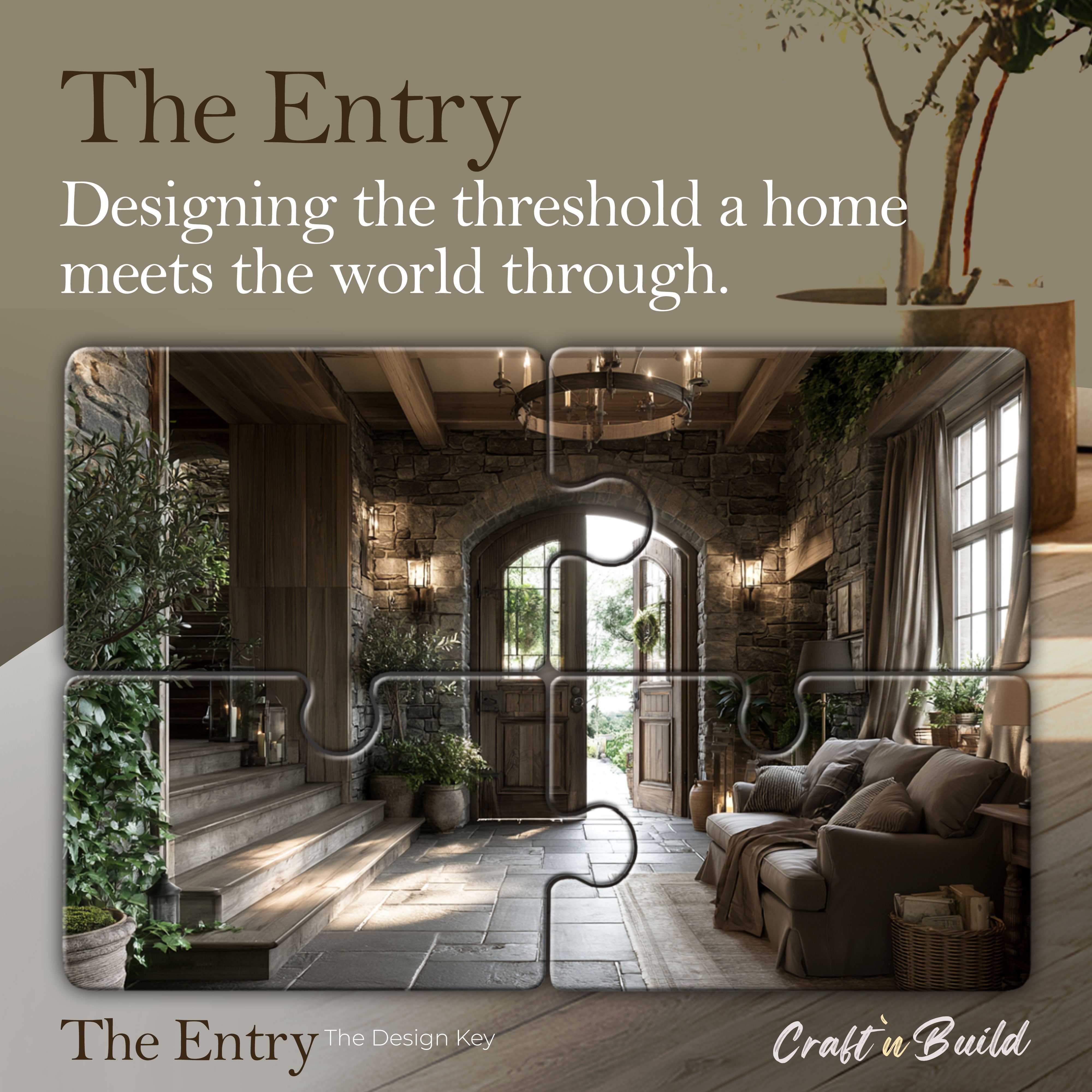
The Design Key — The Entry is a professional interior design course that teaches how to design the entry, hallway, or foyer of a home — the threshold where a person crosses between outside and inside. It uses a threshold-first method: read how people arrive and leave, design the experience of crossing in and the welcome it offers, plan storage and the arrival sequence for everything a person wears and carries, then specify the space for the busiest traffic in the home. The course applies one method to three cases — the formal front entry, the working daily entry, and the combined apartment entry — and treats the grand hall and the compact apartment entry as one discipline at different scales. It is six modules and twenty-nine lessons with lifetime access, and as the final course in the series it completes the path to The Design Key Master Certificate.
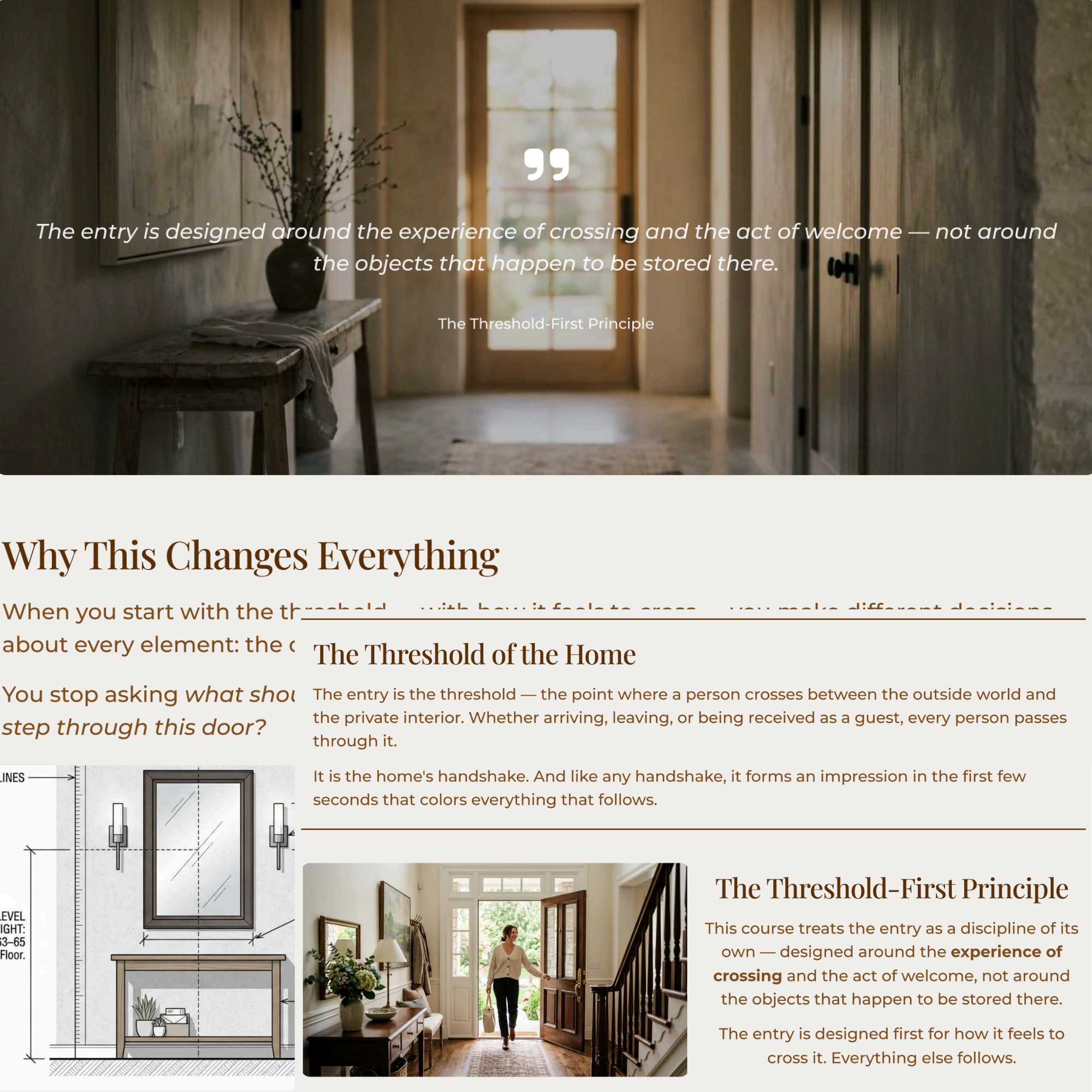
The entry is the room a home cannot avoid having and most homes never design. Every other room is chosen and arranged; the entry is whatever the front door happens to open onto. Yet it is the most-used threshold in the house and the first thing every guest — and every returning resident — experiences. The impression it makes is formed before anyone has taken off a coat, and a poor one is hard to recover from.
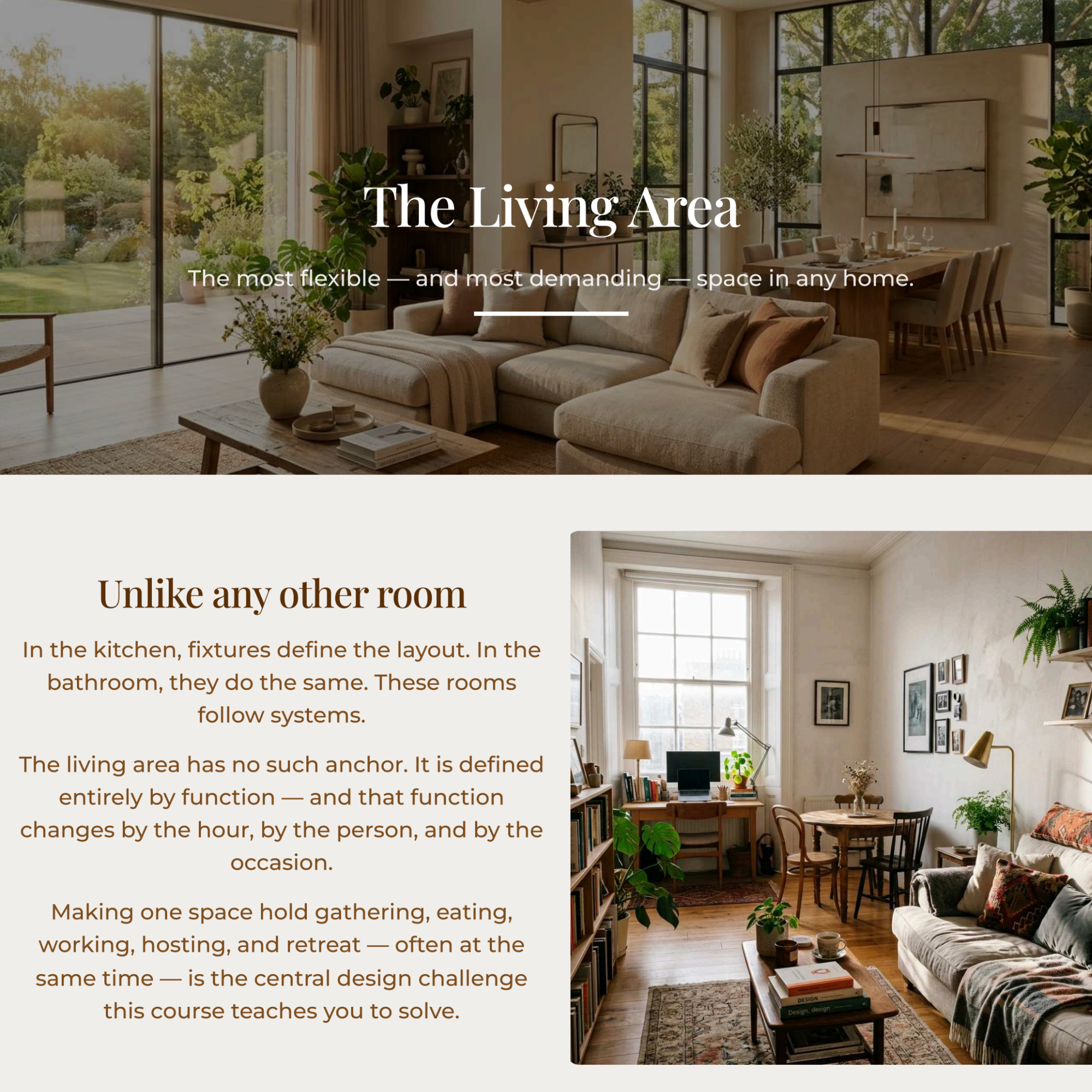
This course treats the entry as a discipline with two jobs at once. It is an experience — the welcome, the first impression, the decompression of arriving home — and it is a working space, storing coats, shoes, bags, and keys and carrying the daily traffic of every coming and going. Most failures come from designing only one of the two: a beautiful entry with nowhere to put anything, or a functional one that greets no one. You learn to design both together.
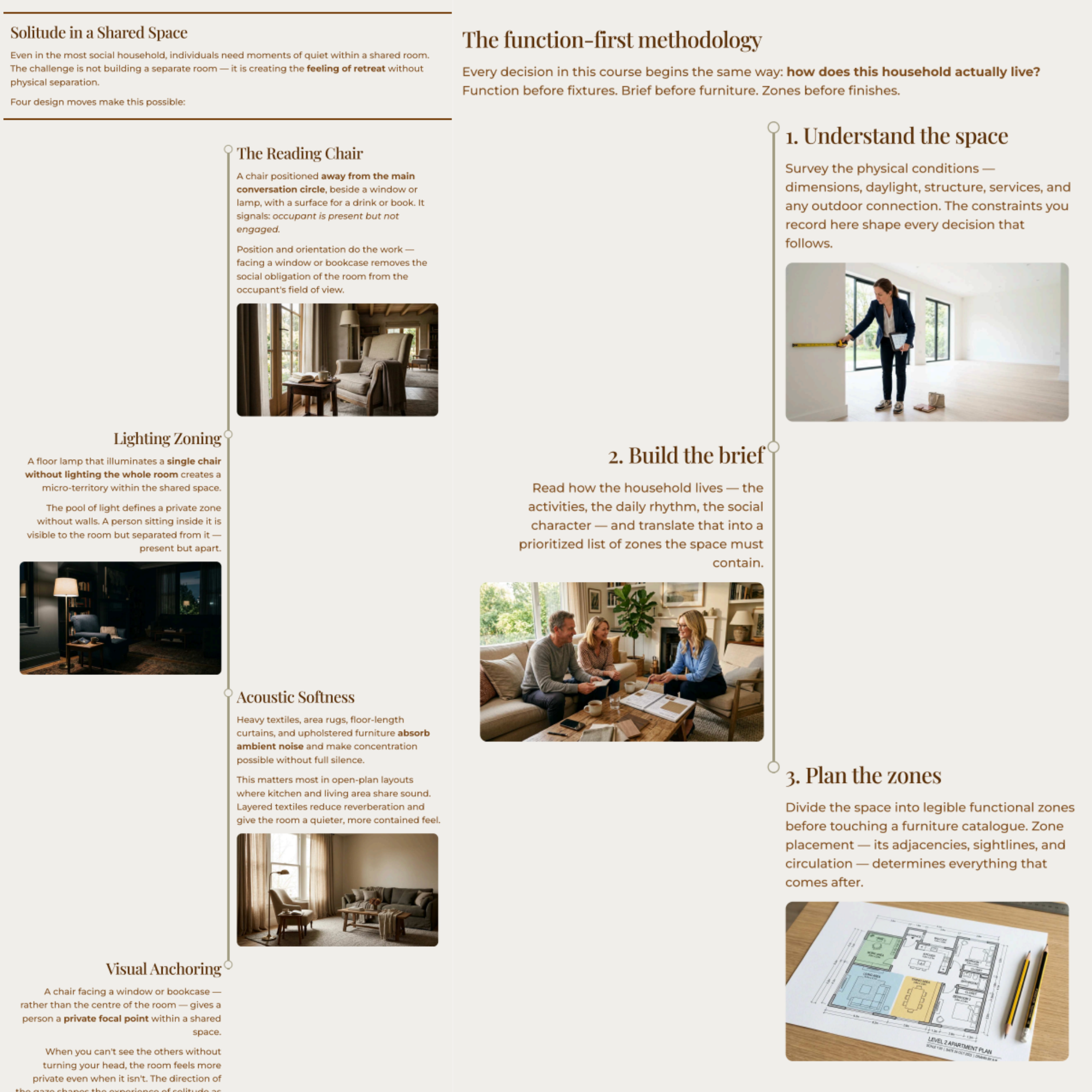
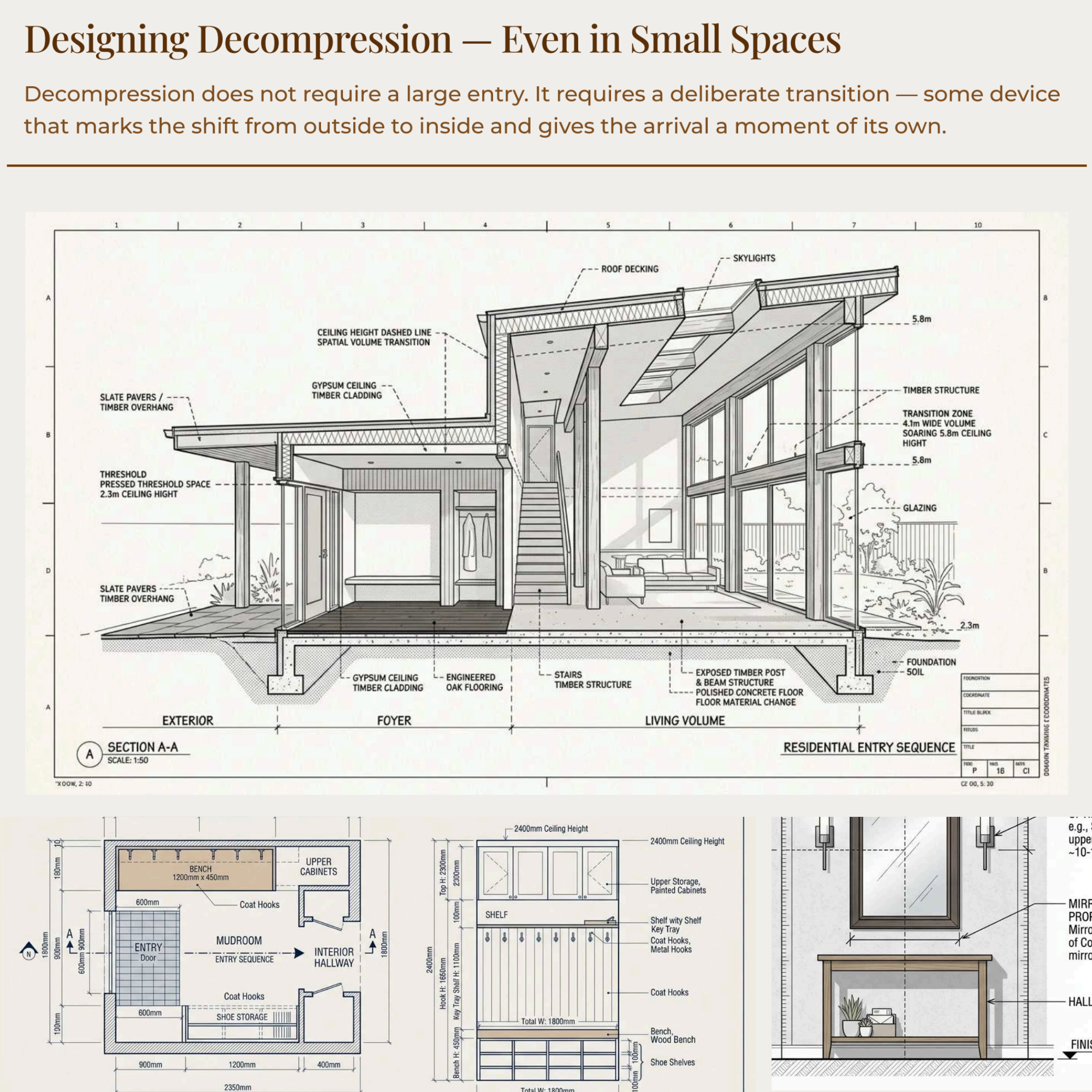
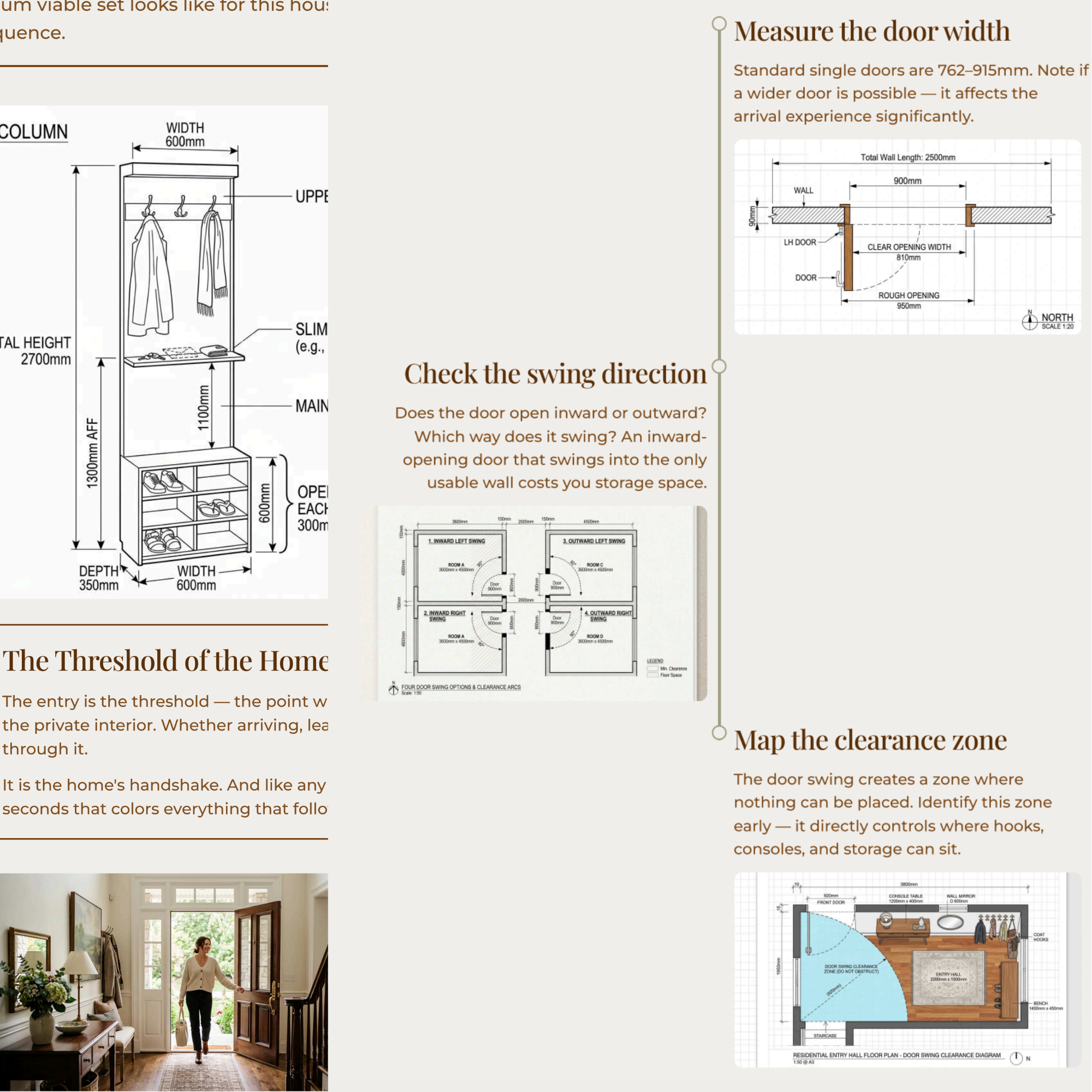
The method begins with the threshold, not the storage. You survey the entry and its approach — the door, its swing, the width and depth available, the daylight, the rooms beyond. You build an arrival brief from how people actually use it: who arrives by which door, how often, and the welcome the home intends to give. Then you design the crossing itself — the psychology of the threshold, the first view the open door reveals, the greeting light that meets a person, and the moment of decompression as the outside world is left behind. Only then do you plan the practical layer: the arrival sequence as a workflow, with somewhere to set down bags, hang a coat, remove shoes, and drop keys in the order a person needs them, and storage sized to the household for everything worn and carried across the threshold.
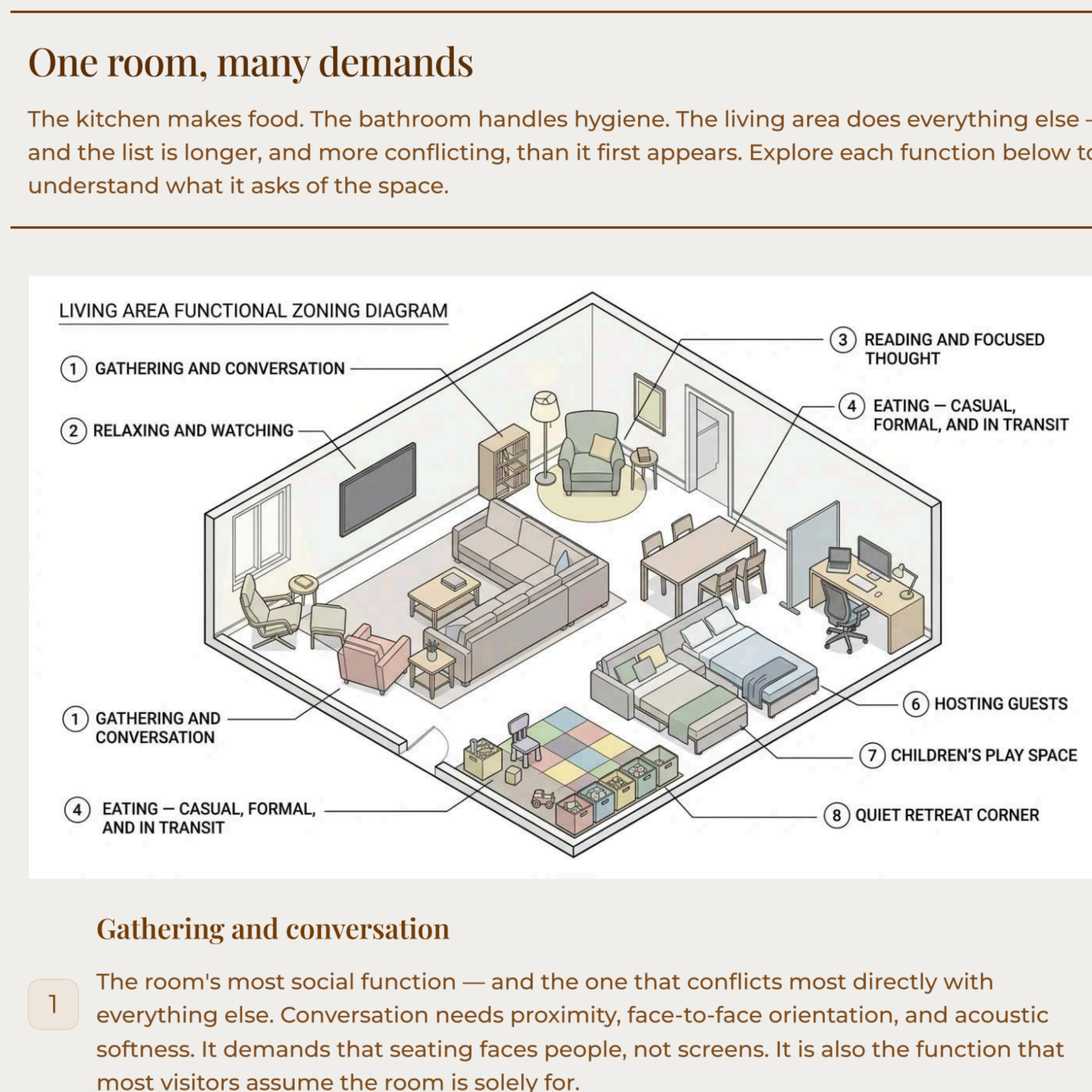
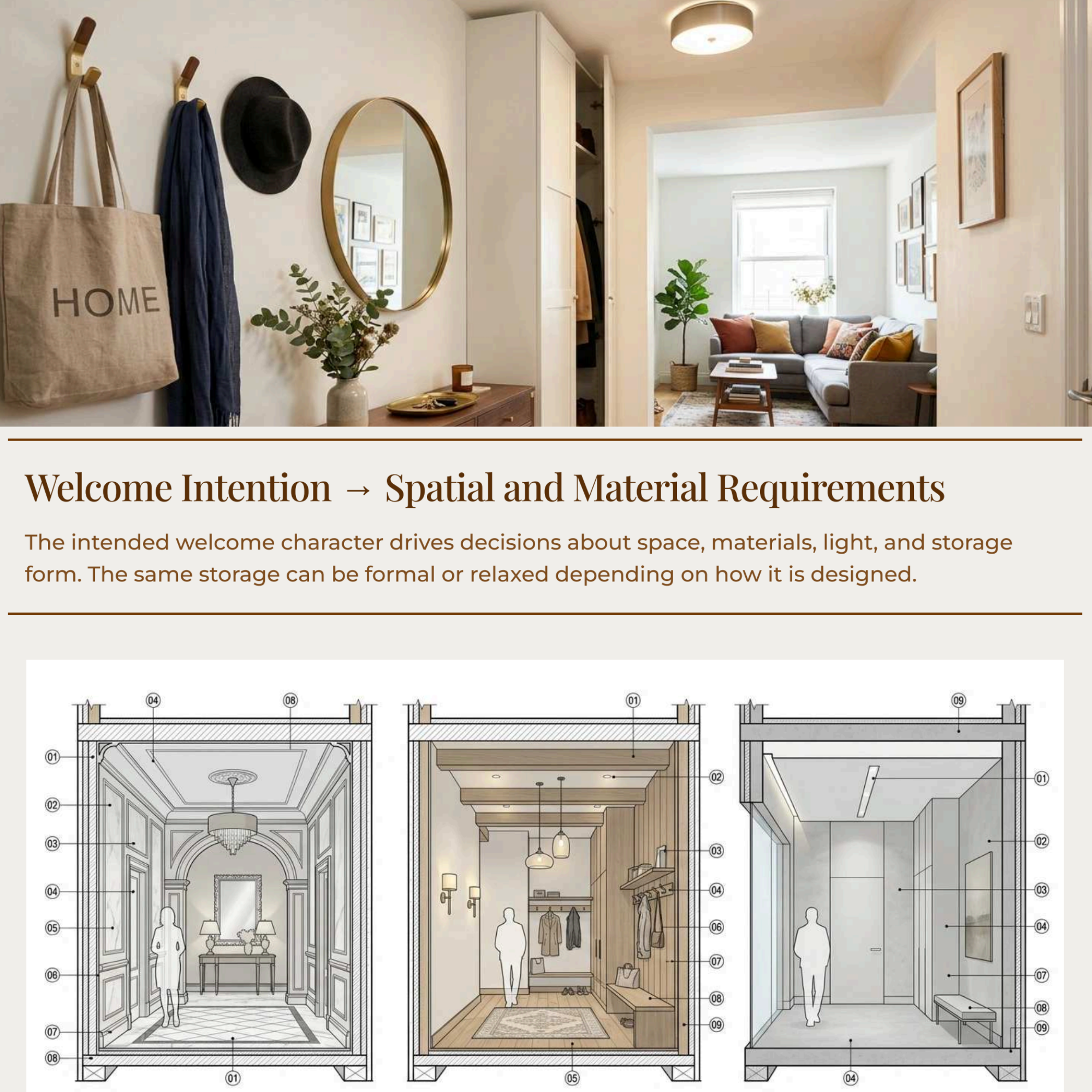
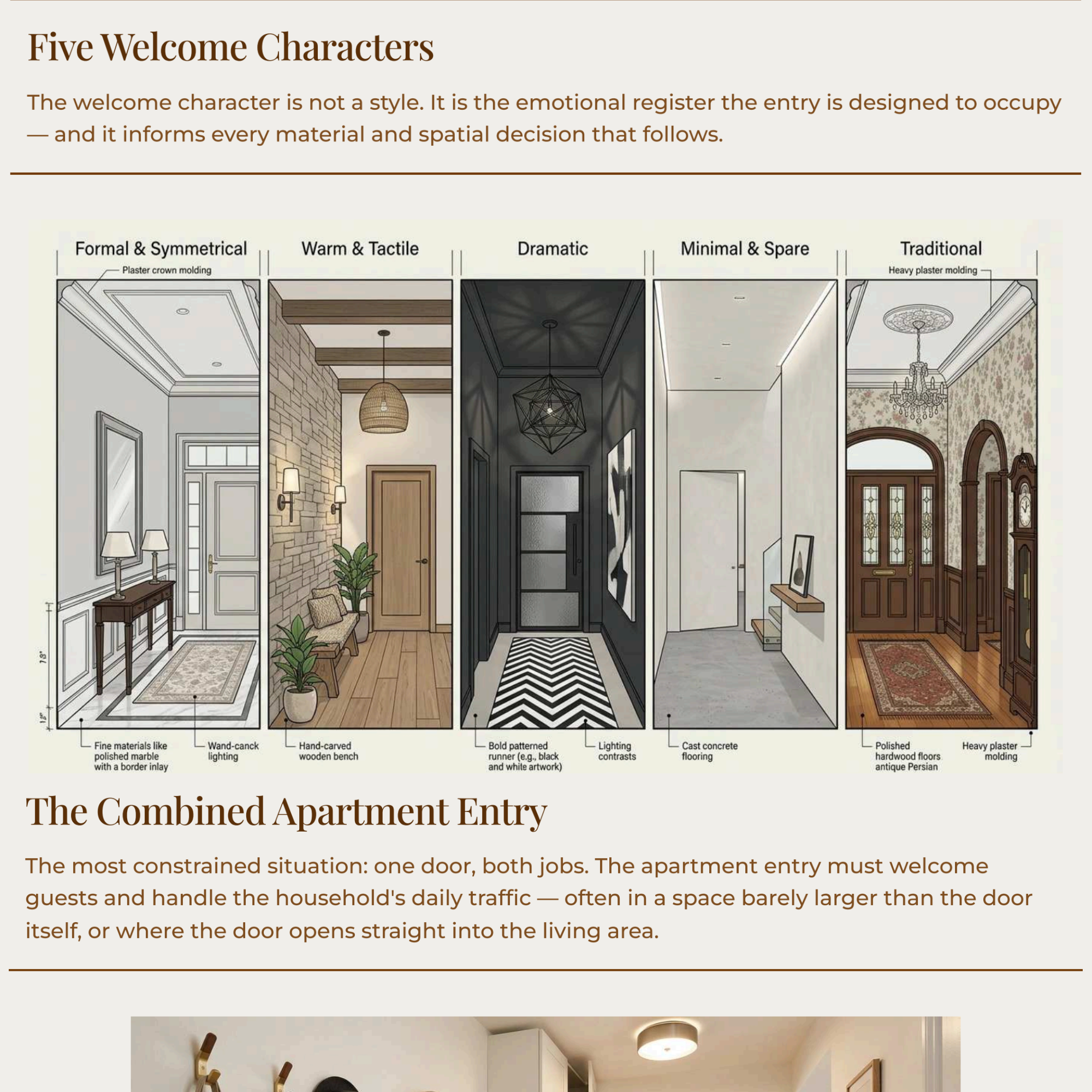
Because the entry takes different forms, one method is applied to three cases. The formal front entry exists to welcome, where first impression outweighs daily storage and the space is composed and expressive. The working daily entry carries the household's real traffic and must stay ordered under pressure. The combined apartment entry must welcome and work at once, often in a space barely larger than the door, or where the door opens straight into the living room — so you compress welcome, storage, and sequence into minimal space and create the sense of an entry where no dedicated room exists.
The same principles hold at every scale. And where the entry doubles as a back door, common across much of Europe, you design its welcoming and storage side — the coats, the shoes, the arrival — while the wet and dirty work, boot wash, drip, and mud, is designed in The Utility Room. The two courses meet cleanly at the back door without overlapping.
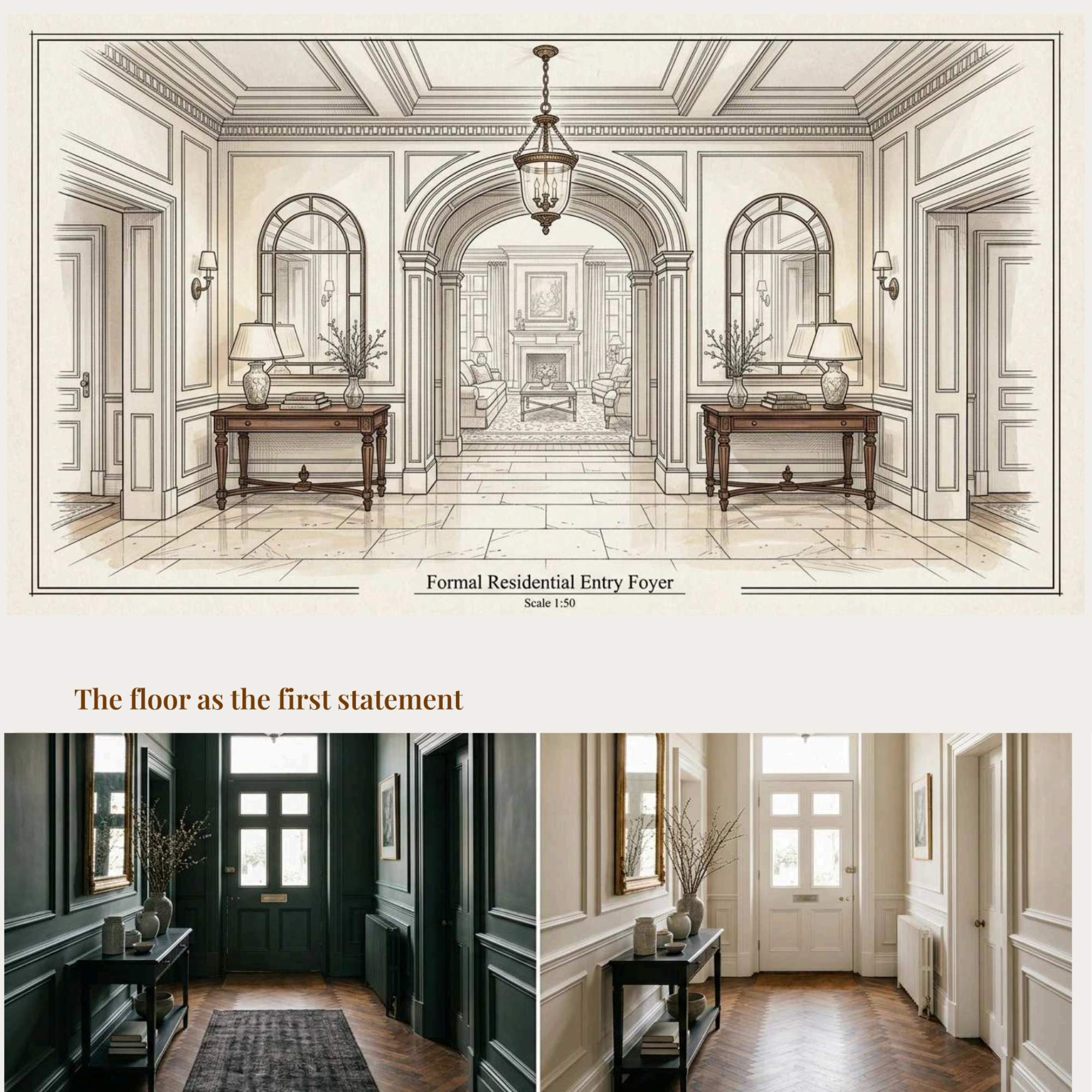
Finally you specify the material welcome: floors that set the right tone yet survive grit, wet, and the heaviest traffic in the home; walls and finishes that take knocks and bags; light layered to greet, function, and guide from door to interior; and details built to stay presentable for years. By the end, you can design the threshold of any home — grand, working, or compact — as both a welcome and a working space, and document it for a contractor to build. The Entry is the final course of The Design Key. With it, the home is complete: every room considered, every system resolved, and the threshold ready to welcome the world in.
Six modules. Twenty-nine lessons. Lifetime access. The course that completes the home.
Who is this for
Whether you're a working designer looking to sharpen your process, a design student building professional skills, or a homeowner who wants to approach their own space the way a professional would — the methodology is the same.
No credentials required. No prior experience assumed. Just a commitment to learning how design actually works.
About the Series
The Design Key is a professional methodology series from Craft'n Build. Each course covers a core discipline of interior design practice — taught through the same rigorous, real-world framework used by working designers.
This is not a series about aesthetics. It is a series about method. How professionals think, plan, and execute — and how those skills are available to anyone willing to learn them.
Color, Material & Finish is the first course in the series. Floor Plan, Bathroom, Kitchen and more follows.